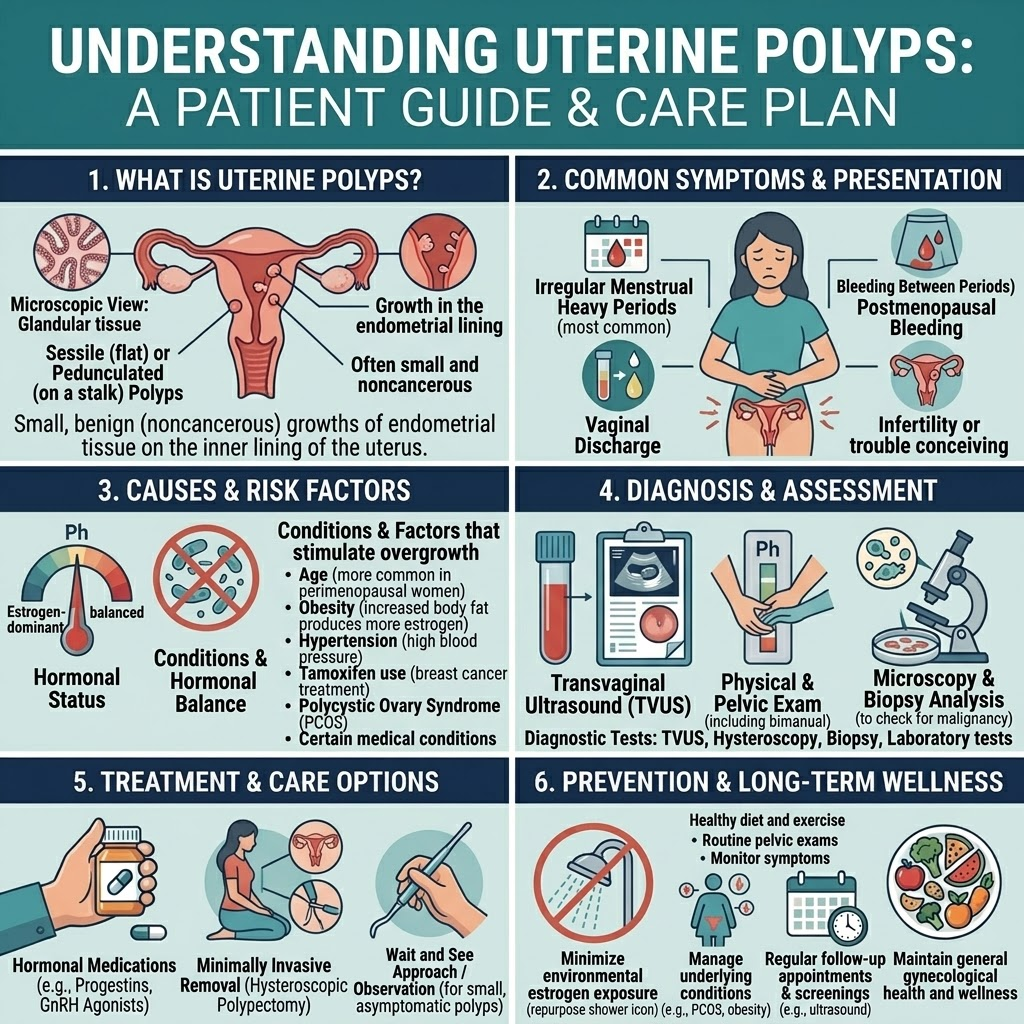
Uterine polyps, also known as endometrial polyps, are growths that attach to the inner wall of the uterus and extend into its cavity. They develop when cells in the uterine lining (endometrium) grow excessively. While usually non-cancerous (benign), some can be cancerous or have the potential to become cancerous. These polyps vary greatly in size, from tiny, like a sesame seed, to several centimeters, similar to a golf ball or larger. They can be attached by a wide base or a thin stalk. Most common in people experiencing or having completed menopause, they can also affect younger individuals. Typically, polyps remain within the uterus, but they can sometimes extend through the cervix (the opening of the uterus) into the vagina.
Understanding the Condition
Uterine Polyps: An Easy-to-Understand Guide
Understanding the Condition
Uterine polyps, also known as endometrial polyps, are growths that attach to the inner wall of the uterus and extend into its cavity. They develop when cells in the uterine lining (endometrium) grow excessively. While usually non-cancerous (benign), some can be cancerous or have the potential to become cancerous. These polyps vary greatly in size, from tiny, like a sesame seed, to several centimeters, similar to a golf ball or larger. They can be attached by a wide base or a thin stalk. Most common in people experiencing or having completed menopause, they can also affect younger individuals. Typically, polyps remain within the uterus, but they can sometimes extend through the cervix (the opening of the uterus) into the vagina.
Common Symptoms
Irregular Menstrual Bleeding: Periods that are unpredictable or vary significantly in length or heaviness.
Bleeding After Menopause: Any vaginal bleeding occurring after a person has completed menopause.
Very Heavy Menstrual Flow: Periods that are significantly heavier than usual.
Bleeding Between Periods: Spotting or bleeding that occurs when you are not on your period.
Light Bleeding or Spotting: Minimal bleeding that might only be noticed as a spot.
No Symptoms: Some individuals with uterine polyps experience no noticeable symptoms at all.
Consultation Guide
Which Specialist to Meet
You should consult with a gynecologist, a medical doctor specializing in female reproductive health.
Preparations Before Your Visit
Before your visit, it's helpful to keep a record of your symptoms, noting when they occur, their severity, and any factors that seem to trigger or worsen them. Prepare a list of questions you have for the doctor. Be ready to discuss your full medical history, including any current medications, and details about your menstrual cycle history.
Book a doctor visit near me
D&C is a procedure to remove tissue from the inside of your uterus. It's used both to diagnose and treat certain uterine conditions, such as heavy bleeding, and is also a common method for removing uterine polyps. It may be recommended if an endometrial biopsy needs further investigation or if symptoms are severe.
Polyp Removal Procedure (e.g., via Dilation and Curettage - D&C): This procedure involves widening the cervix and then using a special surgical tool or suction to scrape or remove the uterine lining, including any polyps. It allows for the removal of polyps that are causing symptoms, are large, or are suspected to be cancerous. For infertility linked to polyps, their removal might improve chances of pregnancy. (Duration: A single outpatient procedure; recovery usually takes a few days to a week.)
Promptly Report New Symptoms: If you experience any new or returning symptoms like unusual bleeding or changes in your menstrual cycle, report them to your doctor for timely evaluation.
Consultation Guide
Prevention / Risk Factor Management
Maintain a Healthy Weight: Obesity is a risk factor for uterine polyps, so maintaining a healthy body weight through a balanced diet and regular exercise can help reduce your risk.
Manage Blood Pressure: High blood pressure is another identified risk factor; regular monitoring and management under medical guidance can be beneficial.
Diagnostic Procedures
Endometrial Sampling (Biopsy)
This procedure involves taking a small tissue sample from the lining of your uterus (endometrium) to be examined in a laboratory. It helps check for abnormal cells, infections, or signs of cancer. It may be recommended if you have abnormal uterine bleeding, have uterine cells found during a routine Pap test, or are taking certain medications that affect hormones.
What to Expect
You will lie on an examination table, similar to a routine pelvic exam. The doctor will insert a speculum into your vagina to gently open it and visualize your cervix. A thin, flexible tube will be passed through your cervix into your uterus to collect a small tissue sample. You might feel some cramping or discomfort similar to menstrual cramps during the collection. The procedure is usually quick and performed in the doctor's office.
Dilation and Curettage (D&C)
What to Expect
A D&C is typically performed in an operating room, often under anesthesia, meaning you will be asleep or partially sedated. The doctor will gently open (dilate) the lower, narrow part of your uterus (cervix). Then, a specialized surgical instrument called a curette, which can be a sharp spoon-shaped tool or a suction device, is used to carefully scrape or suction tissue from the uterine lining, including any polyps. The removed tissue is sent to a lab for analysis. You might experience some cramping and light bleeding for a few days afterward.
Treatment Options
Surgical Procedures
Discuss Hormone-Related Medications: If you are taking medications that affect hormones, such as certain breast cancer treatments, discuss any concerns about uterine polyps with your doctor to understand your individual risk and monitoring needs.
Regular Gynecological Check-ups: Continue with routine check-ups with your gynecologist, especially if you have a history of polyps, to monitor for any recurrence or new growths.
Tags & Topics
Notice an error or need an update?
Help us keep medical information accurate. Report incorrect info or suggest an edit.


