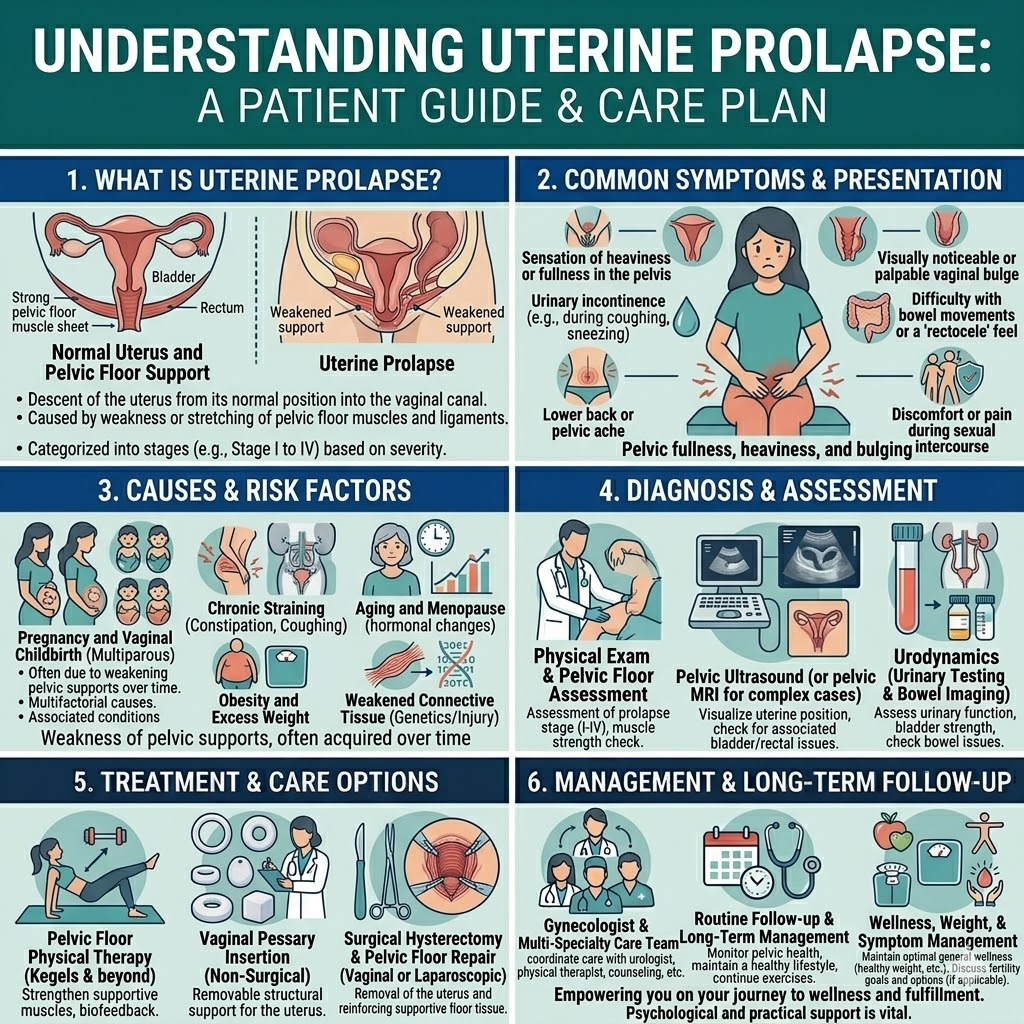
Uterine prolapse occurs when the supporting muscles and tissues in a woman's pelvis become weak or stretched. These muscles and tissues normally hold the uterus (womb) in place. When they weaken, the uterus can drop down into or even protrude out of the vagina. This condition most often affects women who have gone through menopause and have had one or more vaginal childbirths. Mild cases typically don't need treatment, but if the prolapse causes discomfort or interferes with daily life, treatment may be beneficial.
Understanding the Condition
Uterine Prolapse: Understanding and Managing a Common Pelvic Condition
Understanding the Condition
Common Symptoms
Feeling a Bulge: Seeing or feeling tissue bulging out of the vagina.
Pelvic Heaviness: A feeling of heaviness or pulling sensation in the pelvic area.
Incomplete Bladder Emptying: Feeling like the bladder hasn't fully emptied after urinating.
Urinary Leakage: Problems with unintentionally leaking urine, also known as incontinence.
Difficulty with Bowel Movements: Trouble having a bowel movement, sometimes needing to press on the vagina with fingers to help stool pass.
Sitting Sensation: A feeling as if sitting on a small ball or something is falling out.
Vaginal Rubbing: A sensation of vaginal tissue rubbing on clothing.
Pelvic or Lower Back Discomfort: Pressure or discomfort in the pelvis or lower back.
Sexual Concerns: Sexual concerns, such as feeling as though the vaginal tissue is loose.
Consultation Guide
Which Specialist to Meet
You should consult with a gynecologist, a doctor specializing in female reproductive health. For more complex cases, a urogynecologist, who specializes in pelvic floor disorders, may be recommended.
Preparations Before Your Visit
Before your visit, it's helpful to write down your symptoms, including when they started, how often they occur, and how they affect your daily life. Also, make a list of all medications you take, your medical history (including pregnancies, deliveries, and past surgeries), and any questions you have for the doctor. Be prepared to discuss your lifestyle habits, such as diet and exercise.
Book a doctor visit near me
Weight Management: Losing excess weight can reduce pressure on the pelvic floor muscles, which may alleviate symptoms of prolapse. (Duration: Ongoing commitment to healthy eating and physical activity.)
Regular Follow-ups: If you have been diagnosed with uterine prolapse, regular follow-up appointments with your healthcare provider are important to monitor the condition, adjust treatments, and discuss any new symptoms or concerns.
Consultation Guide
Uterine prolapse occurs when the supporting muscles and tissues in a woman's pelvis become weak or stretched. These muscles and tissues normally hold the uterus (womb) in place. When they weaken, the uterus can drop down into or even protrude out of the vagina. This condition most often affects women who have gone through menopause and have had one or more vaginal childbirths. Mild cases typically don't need treatment, but if the prolapse causes discomfort or interferes with daily life, treatment may be beneficial.
During a pelvic exam, you will lie on your back on an exam table with your feet in stirrups. The doctor will first visually inspect your external genital area. Then, they will insert a speculum into your vagina to gently open the vaginal walls, allowing them to see the cervix. They may also use gloved fingers to feel for any abnormalities in your uterus and ovaries by pressing on your lower abdomen. This part of the exam may involve asking you to cough or strain to observe the extent of the prolapse. It usually lasts only a few minutes and may cause some pressure but should not be painful. A Pap test, which screens for cervical cancer, may also be performed at this time.
A pelvic ultrasound uses sound waves to create images of the structures inside your body, including the uterus and other pelvic organs. This can help the doctor assess the position of the uterus and rule out other conditions.
For a pelvic ultrasound, you will lie on an exam table. A gel will be applied to your lower abdomen, and a small handheld device called a transducer will be moved across your skin. The transducer sends out sound waves that bounce off your organs and create images on a screen. Sometimes, an internal (transvaginal) ultrasound is also performed for a clearer view. For this, a thinner, lubricated transducer is gently inserted into the vagina. This part of the exam may cause some pressure, but it is generally not painful. You might be asked to have a full bladder for an abdominal ultrasound, as it can help visualize the organs better. The entire procedure typically takes 15-30 minutes.
Diagnostic Procedures
A pelvic exam is a routine check-up to assess the health of your reproductive organs, including the vulva, vagina, cervix, uterus, ovaries, and rectum. It helps identify any unusual changes or signs of prolapse.
What to Expect
What to Expect
Treatment Options
Hysterectomy: Surgery to remove the uterus. This is considered for more severe cases of uterine prolapse, especially if other treatments have not been effective or if there are other gynecological concerns. It can be performed through an incision in the abdomen or vagina, or using minimally invasive techniques. (Duration: Recovery typically takes 2-6 weeks, depending on the surgical approach.)
Minimally Invasive Hysterectomy: This type of hysterectomy uses small incisions, often with the aid of tiny cameras and specialized surgical tools (laparoscopy) or robotic assistance. It generally results in less pain, a shorter hospital stay, and a quicker recovery compared to traditional open surgery. (Duration: Recovery typically takes 2-4 weeks, faster than open surgery.)
Control Chronic Cough: Seek treatment for any chronic cough or bronchitis to reduce repeated downward pressure on the pelvic floor. If you smoke, quitting can significantly help improve respiratory health and reduce coughing.
Continue Pelvic Floor Exercises: Even after treatment, consistently performing pelvic floor exercises can help maintain muscle strength and reduce the risk of future prolapse or recurrence.
Prevention & Long-Term Wellbeing
Lifestyle and Supportive Therapies
Pelvic Floor Exercises (Kegels): Exercises designed to strengthen the pelvic floor muscles, which can help support the uterus. These are often the first recommendation for mild prolapse. (Duration: Ongoing, daily exercises for long-term benefit.)
Vaginal Pessary: A removable device made of silicone that is inserted into the vagina to provide support for the uterus and other pelvic organs. It helps hold the uterus in its correct position. (Duration: Used as needed, with regular cleaning and check-ups every few months by a healthcare provider.)
Uterine Suspension: A surgical procedure that involves reattaching or strengthening the pelvic ligaments and tissues to lift and hold the uterus in its correct position. It may involve using your own tissue or surgical mesh. (Duration: Recovery typically takes 4-6 weeks; long-term results vary.)
Prevention
Prevent Constipation: Drink plenty of fluids and eat high-fiber foods such as fruits, vegetables, beans, and whole grains to ensure regular, easy bowel movements and avoid straining.
Avoid Heavy Lifting: If you must lift heavy objects, use proper technique: bend your knees and lift with your legs, keeping your back straight, rather than bending from your waist or back. Consider asking for help with very heavy items.
Maintain a Healthy Weight: Work with your doctor or a nutritionist to determine your ideal weight and develop a plan to achieve and maintain it through a balanced diet and regular exercise. Excess weight puts additional strain on pelvic floor muscles.
Long-Term Wellbeing
Tags & Topics
Notice an error or need an update?
Help us keep medical information accurate. Report incorrect info or suggest an edit.


