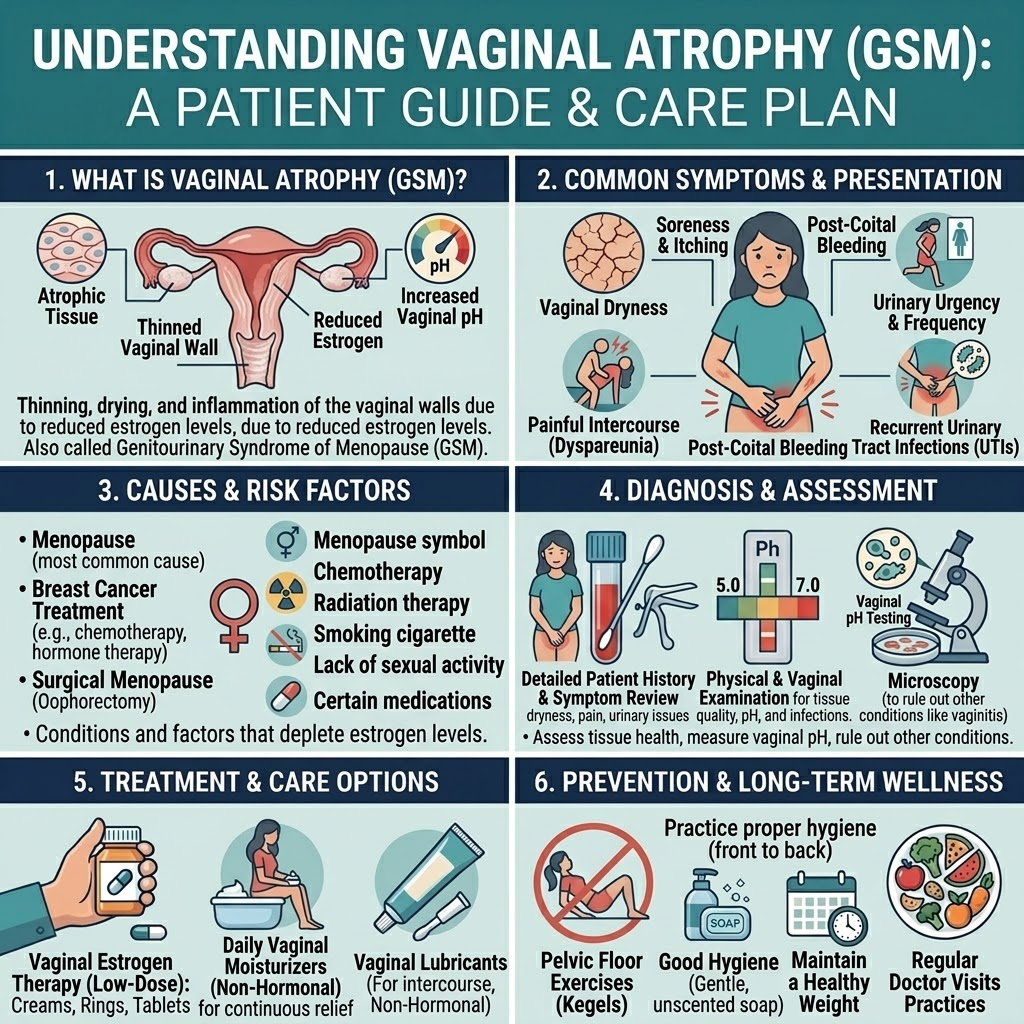
Genitourinary Syndrome of Menopause (GSM) is a common condition affecting the female genitals and lower urinary tract, often occurring after menopause. Previously known as vaginal atrophy or atrophic vaginitis, GSM happens when the body has less estrogen, a crucial hormone. This reduction makes vaginal and urinary tract tissues thinner, drier, less elastic, and more fragile. These changes lead to uncomfortable symptoms like painful sex, urinary problems, and general discomfort. Fortunately, effective treatments are available to provide relief and enhance your quality of life.
Understanding the Condition
Genitourinary Syndrome of Menopause (GSM): Understanding and Managing Symptoms
Understanding the Condition
Genitourinary Syndrome of Menopause (GSM) is a common condition affecting the female genitals and lower urinary tract, often occurring after menopause. Previously known as vaginal atrophy or atrophic vaginitis, GSM happens when the body has less estrogen, a crucial hormone. This reduction makes vaginal and urinary tract tissues thinner, drier, less elastic, and more fragile. These changes lead to uncomfortable symptoms like painful sex, urinary problems, and general discomfort. Fortunately, effective treatments are available to provide relief and enhance your quality of life.
Common Symptoms
Vaginal Dryness: A persistent feeling of dryness or lack of natural moisture in the vagina.
Vaginal Burning: A sensation of heat or stinging in the vaginal area.
You should consult with a gynecologist, who specializes in women's reproductive health, or your primary care provider. For more complex urinary symptoms, a urogynecologist, specializing in both urinary and reproductive health, may be beneficial. It's crucial to openly discuss your symptoms with your healthcare professional.
Preparations Before Your Visit
Before your appointment, it's helpful to:- Make a list of all your symptoms, noting when they started, how often they occur, and how severe they are. Also, consider anything that seems to make them better or worse.- List all medications, vitamins, and supplements you currently take.- Be prepared to discuss your medical history, including any past surgeries or conditions.- For 1-2 days before your visit, avoid using any vaginal creams, gels, or douches, and refrain from sexual activity, as these can interfere with examination results.
Book a doctor visit near me
Oral Estrogen Therapy: For individuals with more widespread menopausal symptoms, including severe GSM, systemic estrogen therapy (pills, patches, gels) might be prescribed. This type of therapy affects the whole body. (Duration: As prescribed by your doctor, typically long-term with periodic re-evaluation.)
Regular Medical Check-ups: Maintain open communication with your doctor about any symptoms or concerns, ensuring your treatment plan remains effective and can be adjusted.
Maintain Sexual Activity: Regular sexual activity, with or without a partner, helps promote blood flow to the vaginal tissues, improving their elasticity and natural moisture.
Adequate Hydration: Drinking enough water supports overall body health, including the health of mucous membranes throughout the body.
Avoid Irritants: Steer clear of harsh soaps, perfumed products, bubble baths, and douches, which can further irritate sensitive vaginal tissues and disrupt natural balance.
Pelvic Floor Exercises (Kegels): Strengthening your pelvic floor muscles can improve blood flow to the area and potentially enhance sexual sensation and urinary control.
Smoking Cessation: Smoking can reduce blood flow to tissues and may contribute to lower estrogen levels, potentially worsening GSM symptoms. Quitting can improve overall health.
Consultation Guide
Vaginal Itching: An irritating and uncomfortable sensation that causes an urge to scratch.
Painful Intercourse (Dyspareunia): Discomfort, soreness, or pain during or after sexual activity due to dryness and thinning of vaginal tissues.
Bleeding After Sex: Light bleeding from the vagina following sexual intercourse.
Decreased Vaginal Lubrication: Difficulty or inability to become naturally lubricated during sexual arousal.
Vaginal Narrowing and Shortening: The vaginal canal may become tighter, shorter, and less flexible over time.
Pain with Urination (Dysuria): A burning or stinging sensation when urinating.
Urinary Urgency: A sudden, strong need to urinate that is difficult to postpone.
Urinary Frequency: Needing to urinate more often than usual, sometimes including waking up at night.
Recurrent Urinary Tract Infections (UTIs): Frequent bladder or kidney infections, which can be a sign of changes in the urinary tract lining.
Consultation Guide
Which Specialist to Meet
Diagnostic Procedures
A routine check of your reproductive organs (vulva, vagina, cervix, uterus, ovaries, rectum) to find changes like thinning vaginal tissues or tenderness.
What to Expect
You'll lie on your back on an exam table with your feet placed in stirrups. The doctor will first visually inspect your external genital area. Then, a speculum is gently inserted into your vagina to hold the vaginal walls open; you might feel some pressure. After removal, the doctor uses gloved fingers in your vagina while pressing on your abdomen to feel your uterus and ovaries. A rectal exam might follow. The entire exam usually takes only a few minutes.
Screens for cervical cancer or precancerous cells by collecting cells from your cervix (the narrow opening at the bottom of your uterus). Early detection helps prevent cancer.
What to Expect
A Pap test is typically performed during a pelvic exam. With the speculum in place, your doctor will use a small brush or device to gently collect cells from the surface of your cervix. You may feel a slight pressure, scraping sensation, or mild cramping for a few seconds. These cells are then sent to a lab for microscopic examination.
Examines a sample of your urine to detect conditions like urinary tract infections, kidney issues, or diabetes, by checking urine appearance, concentration, and content.
What to Expect
You will be asked to provide a "midstream" urine sample. After cleaning your genital area, you start urinating into the toilet, collect the middle portion of your urine flow into a sterile cup, then finish urinating into the toilet. This method helps prevent contamination. The sample is then sent to a laboratory for analysis.
Treatment Options
Medications (Prescription)
Local Estrogen Therapy: Low-dose estrogen applied directly to the vagina via creams, tablets, or a flexible ring, restoring tissue health with minimal systemic absorption. (Duration: Often starts with daily use for 1-2 weeks, then reduces to 2-3 times per week long-term.)
Other Non-Estrogen Medications: Includes oral medications (e.g., selective estrogen receptor modulators) that act like estrogen on vaginal tissues, or vaginal ovules of a steroid hormone (DHEA) that converts to estrogen locally. (Duration: Daily, long-term, as prescribed.)
Vaginal Laser Therapy: Uses a specialized laser to stimulate the body's natural healing process, promoting collagen production and restoring tissue elasticity and moisture. (Duration: Typically involves 3 initial treatments spaced 4-6 weeks apart, with annual maintenance sessions possibly recommended.)
Platelet-Rich Plasma (PRP) Injections: (Investigational) Involves injecting concentrated platelets from your own blood into vaginal tissues, aiming to stimulate tissue regeneration and improve lubrication. (Duration: Varies; multiple sessions may be needed, and efficacy is still being researched.)
Prevention & Long-Term Wellbeing
Home Remedies & Lifestyle Modifications
Vaginal Moisturizers: Non-hormonal gels or creams applied regularly (every few days) inside the vagina for lasting relief from dryness, itching, and burning. (Duration: Ongoing, usually 2-3 times per week.)
Vaginal Lubricants: Water-based or silicone-based lubricants used just before or during sexual activity to reduce friction and discomfort. (Duration: As needed during sexual activity.)
Regular Sexual Activity: Engaging in sexual activity, with or without a partner, helps maintain vaginal elasticity and blood flow, keeping tissues healthier. (Duration: Ongoing, as desired.)
Tags & Topics
Notice an error or need an update?
Help us keep medical information accurate. Report incorrect info or suggest an edit.


