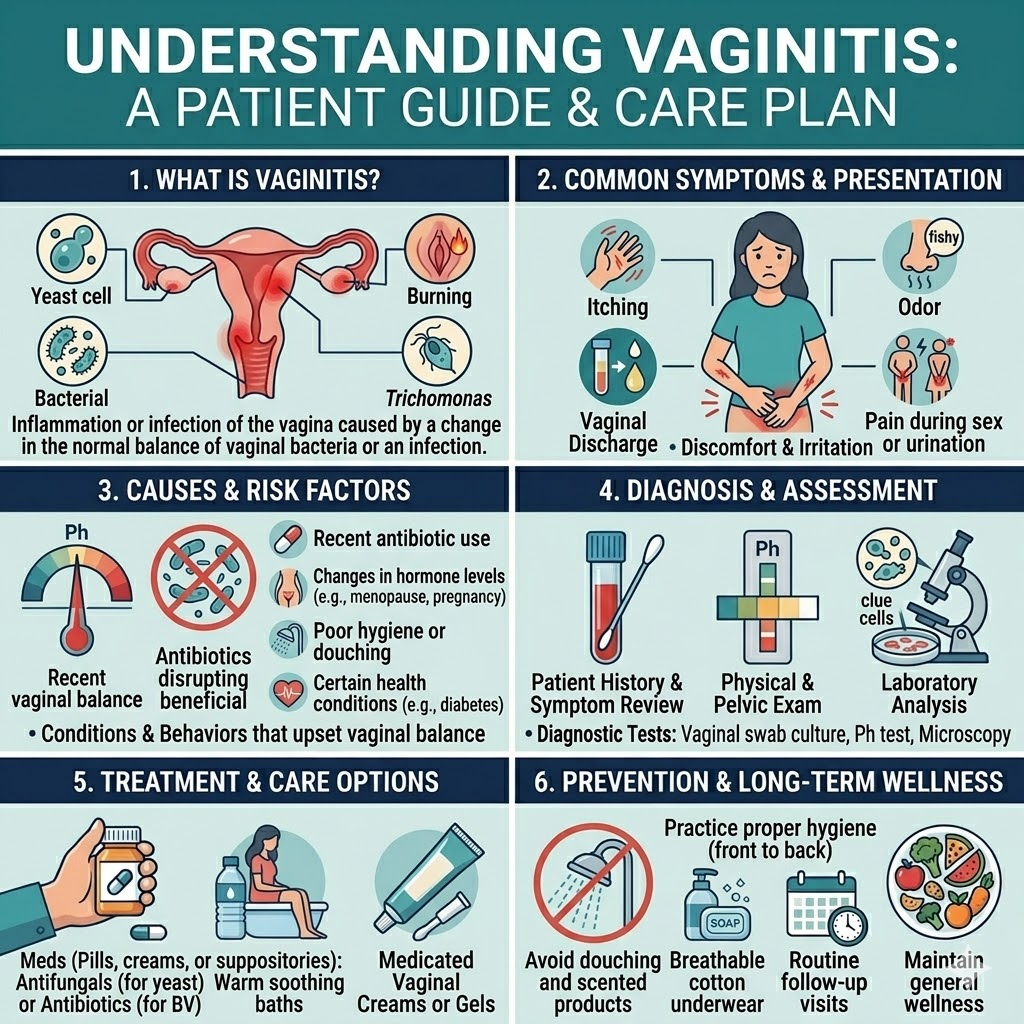
Vaginitis is an inflammation of the vagina that often leads to symptoms like discharge, itching, and pain. It commonly occurs due to a change in the natural balance of vaginal bacteria or from an infection. Other contributing factors can include decreased estrogen levels, especially after menopause, and certain skin conditions. The most frequent types of vaginitis are bacterial vaginosis, yeast infections, and trichomoniasis. Treatment for vaginitis varies depending on its specific cause.
Understanding the Condition
Vaginitis: Understanding Vaginal Inflammation
Understanding the Condition
Vaginitis is an inflammation of the vagina that often leads to symptoms like discharge, itching, and pain. It commonly occurs due to a change in the natural balance of vaginal bacteria or from an infection. Other contributing factors can include decreased estrogen levels, especially after menopause, and certain skin conditions. The most frequent types of vaginitis are bacterial vaginosis, yeast infections, and trichomoniasis. Treatment for vaginitis varies depending on its specific cause.
Common Symptoms
Vaginal Itching or Irritation: A persistent feeling of itchiness or discomfort in and around the vaginal area.
Pain During Urination: A burning or stinging sensation when urinating.
Pain During Sexual Intercourse: Discomfort or sharp pain experienced during sexual activity.
Vaginal Spotting or Light Bleeding: Unusual light bleeding or spotting from the vagina.
Changes in Vaginal Discharge: Noticeable changes in the amount, color, or odor of vaginal discharge. Specific characteristics can indicate the type of vaginitis:- Bacterial Vaginosis: Thin, gray or white discharge with a strong, fish-like odor, often more noticeable after sex.- Yeast Infection: Thick, white, lumpy discharge that resembles cottage cheese, usually with no strong odor.- Trichomoniasis: Greenish-yellow, frothy discharge with a strong, unpleasant odor.
Consultation Guide
Which Specialist to Meet
Before your appointment, avoid douching, using vaginal deodorants, or having sexual intercourse for at least 24-48 hours. Be prepared to discuss your symptoms in detail, including when they started, their severity, and any changes in vaginal discharge. Also, mention any recent antibiotic use, home remedies you've tried, and your sexual activity history. It's helpful to write down any questions you have for the doctor.
Book a doctor visit near me
Regular Check-ups: Continue with routine gynecological exams as recommended by your healthcare provider, even if you don't have symptoms.
Understand Your Body: Pay attention to any changes in vaginal discharge, odor, or discomfort, and seek medical advice if new symptoms arise.
Complete Full Course of Treatment: Always finish the entire course of prescribed medication, even if your symptoms improve sooner, to ensure the infection is fully cleared and prevent recurrence.
Considerations for Sex During Infection: Avoid sexual intercourse or use condoms during an active infection to prevent worsening symptoms or spreading infection (especially for STIs). Be aware that some vaginal creams can weaken latex condoms and diaphragms.
Consultation Guide
You will lie on an examination table with your feet in stirrups. The doctor will first visually inspect your external genital area. Then, a speculum – a medical instrument – will be gently inserted into your vagina to hold the vaginal walls open, allowing the doctor to view your vagina and cervix. During this time, the doctor may collect samples of vaginal discharge. After removing the speculum, the doctor will insert one or two gloved fingers into your vagina while gently pressing on your abdomen with the other hand to feel your internal organs. This process typically lasts a few minutes and may cause some pressure or discomfort, but it should not be painful. A Pap test, a screening for cervical cancer, might also be performed during this exam.
Vaginal Discharge Sample Analysis
A laboratory test performed on a small sample of vaginal discharge collected during the pelvic exam. This helps identify the specific cause of vaginitis by looking for bacteria, yeast, or other microorganisms, and by measuring the vaginal pH.
During the pelvic exam, the doctor will gently use a cotton swab to collect a small amount of vaginal discharge from your vagina or cervix. This is a quick process and usually causes minimal discomfort, feeling like a light touch or mild scrape. The sample is then sent to a lab for microscopic examination and pH testing.
Vaginal Estrogen Products: Estrogen creams, rings, or tablets inserted into the vagina to help restore vaginal tissue health and alleviate dryness and discomfort caused by low estrogen levels. (Duration: Long-term, ongoing as prescribed)
Diagnostic Procedures
You should see a general practitioner, family doctor, or gynecologist for diagnosis and treatment. For recurrent or complex cases, a gynecologist is often recommended.
Preparations Before Your Visit
A physical examination of your reproductive organs to check for signs of infection or inflammation. It involves inspecting the external genitals, vagina, and cervix, and manually examining internal organs like the uterus and ovaries.
What to Expect
What to Expect
Partner Treatment for STIs: If diagnosed with a sexually transmitted infection, ensure your sexual partner(s) also receive treatment to prevent reinfection and further spread.
Treatment Options
Medications for Bacterial Vaginosis
Antibiotics (Oral or Vaginal): Medications that target and reduce the growth of problematic bacteria in the vagina, available as pills to swallow or gels/creams to apply vaginally. (Duration: Typically 5-7 days)
Medications for Yeast Infections
Antifungal Creams, Ointments, or Suppositories (Vaginal): Over-the-counter or prescription medications applied directly into the vagina to kill the yeast responsible for the infection. During pregnancy, these topical treatments are generally preferred. (Duration: 1, 3, or 7 days, depending on the product)
Oral Antifungal Medication: A pill taken by mouth to treat yeast infections. While effective, oral medications are generally avoided during pregnancy due to potential risks, and vaginal treatments are recommended instead. (Duration: Usually a single dose, or up to 14 days for recurrent cases)
Medications for Trichomoniasis
Oral Antibiotics: Medications taken by mouth to eliminate the parasite causing trichomoniasis. It is crucial for sexual partners to also be treated to prevent reinfection. (Duration: Single dose or 7 days)
Medications for Vaginal Atrophy (Due to Reduced Estrogen)
Pregnancy-Specific Care: During pregnancy, it's safe to treat yeast infections with antifungal vaginal creams or suppositories. Always consult your doctor before starting any medication, as oral antifungal medicines are generally not recommended during pregnancy.
Prevention & Long-Term Wellbeing
Home Remedies and Lifestyle Adjustments
Sitz Baths: Soaking in warm water to help soothe irritation and relieve discomfort. (Duration: As needed for relief)
Breathable Underwear and Loose Clothing: Wearing cotton underwear and avoiding tight-fitting clothing to promote airflow and reduce moisture. (Duration: Ongoing)
Avoiding Irritants: Steering clear of scented soaps, douches, feminine hygiene sprays, and bubble baths that can upset vaginal balance. (Duration: Ongoing)
Prevention Strategies
Practice Good Hygiene: Always wipe from front to back after using the toilet to prevent bacteria from the rectum from entering the vagina.
Avoid Irritants: Refrain from using scented tampons, pads, soaps, bubble baths, and douches, which can disrupt the natural vaginal balance.
Wear Breathable Underwear: Choose cotton underwear and avoid overly tight clothing to allow proper airflow and reduce moisture buildup.
Change Wet Clothing Promptly: Switch out of wet swimsuits or sweaty workout clothes as soon as possible to prevent a moist environment conducive to infection.
Practice Safe Sex: Use condoms, especially with new or multiple partners, to reduce the risk of sexually transmitted infections like trichomoniasis.
Manage Underlying Conditions: For conditions like diabetes, maintaining good blood sugar control can help prevent recurrent yeast infections.
Long-Term Monitoring and General Health
Tags & Topics
Notice an error or need an update?
Help us keep medical information accurate. Report incorrect info or suggest an edit.


