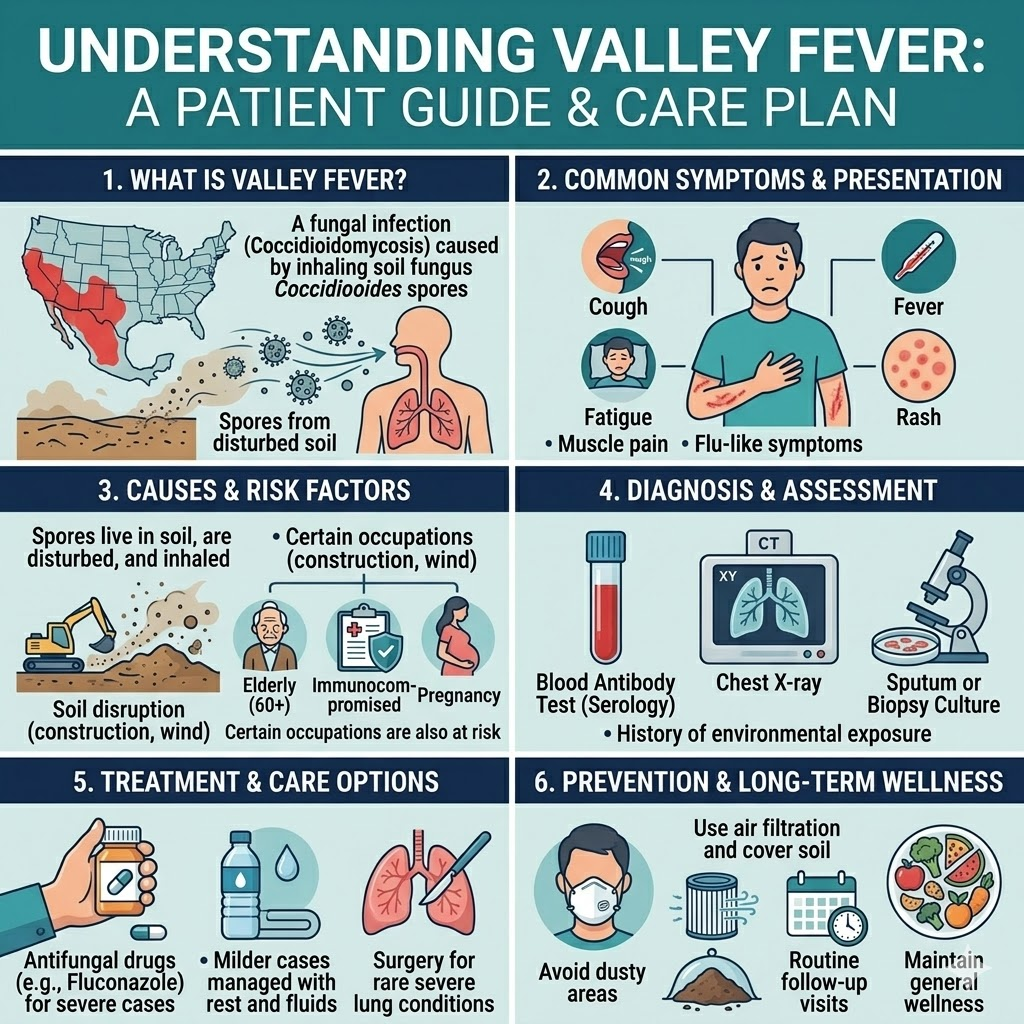
Valley fever, also known as coccidioidomycosis, is a fungal infection caused by specific types of fungi (Coccidioides) commonly found in the soil of certain regions, particularly in the southwestern United States and parts of Central and South America. When soil is disturbed by activities like farming, construction, or even wind, the tiny fungal spores can become airborne. Breathing in these spores can lead to an infection in the lungs. While many cases are mild and resolve on their own, some individuals develop more serious, long-lasting, or widespread illness requiring medical treatment.
Understanding the Condition
Valley Fever: Understanding and Managing a Fungal Infection
Understanding the Condition
Common Symptoms
Initial (Acute) Valley Fever: Often has no symptoms, or symptoms resembling the flu, appearing 1 to 3 weeks after exposure. Recovery can take months, with lingering tiredness and joint aches. Symptoms can range from minor to severe, and may include:* Fever: High body temperature.* Cough: Often persistent.* Tiredness (Fatigue): Persistent lack of energy.* Headache: Pain or discomfort in the head.* Muscle Aches: Pain or soreness in the muscles.* Joint Pain: Aching or stiffness in the joints.* Night Sweats: Excessive sweating during sleep.* Skin Rash: Often red, tender bumps or other skin eruptions.
Persistent (Chronic) Valley Fever: If the initial infection doesn't clear up, it can lead to an ongoing form of pneumonia, often seen in individuals with weakened immune systems. Symptoms may include persistent cough, chest pain, and weight loss.
Widespread (Disseminated) Valley Fever: This serious and uncommon form occurs when the infection spreads from the lungs to other body parts. It can affect the skin, bones, liver, brain, heart, and the protective membranes around the brain and spinal cord (meninges). Symptoms vary based on the affected area and can be severe.
Consultation Guide
Which Specialist to Meet
You should first consult your primary care doctor, who may refer you to a specialist such as an infectious disease physician (an expert in infections) or a pulmonologist (a lung specialist), especially if your symptoms are severe or persistent.
Preparations Before Your Visit
Before your visit, prepare a detailed list of your symptoms, including when they started and how they have changed. Be ready to discuss your recent travel history, especially if you have visited areas where Valley Fever is common. Make a list of all medications, supplements, and vitamins you take. Also, write down any questions you have for the doctor.
Book a doctor visit near me
Pain and Fever Management: Over-the-counter pain relievers can help reduce fever, headaches, and muscle/joint aches. (Duration: As needed for symptom relief.)
Regular Follow-up Visits: Attend scheduled doctor appointments to monitor your condition, assess treatment effectiveness, and manage any ongoing symptoms or side effects.
Recognize Recurrence Symptoms: Be aware of returning or worsening symptoms of Valley Fever and seek medical attention promptly if they occur after treatment.
Manage Lingering Symptoms: Persistent fatigue and joint pain can be managed with rest, balanced activity, or, if needed, guidance from a physical therapist or pain specialist.
Consultation Guide
Valley fever, also known as coccidioidomycosis, is a fungal infection caused by specific types of fungi (Coccidioides) commonly found in the soil of certain regions, particularly in the southwestern United States and parts of Central and South America. When soil is disturbed by activities like farming, construction, or even wind, the tiny fungal spores can become airborne. Breathing in these spores can lead to an infection in the lungs. While many cases are mild and resolve on their own, some individuals develop more serious, long-lasting, or widespread illness requiring medical treatment.
Diagnostic Procedures
Blood Tests (Antibody and Antigen)
These tests identify specific antibodies (proteins your immune system makes to fight the fungus) or antigens (parts of the fungus itself) in your blood, helping to confirm exposure or active infection.
What to Expect
A healthcare professional will draw a small sample of blood, usually from a vein in your arm, using a needle. You might feel a brief pinch or sting. The blood is then sent to a lab for analysis.
This test cultures samples (sputum from a cough, or tissue from a biopsy) in a lab to grow the fungus. If the fungus grows, it confirms the diagnosis.
What to Expect
If a sputum sample is needed, you will be asked to cough deeply and spit into a sterile container. If a tissue sample is required, it will be obtained through a biopsy procedure.
Chest X-ray or CT Scan
A chest X-ray or CT scan provides images of your lungs, revealing signs of pneumonia or other abnormalities often associated with Valley Fever. A CT scan offers more detailed views.
What to Expect
For an X-ray, you'll stand or sit in front of an X-ray machine. For a CT scan, you'll lie on a table that slides into a large, donut-shaped machine. You'll need to stay still, and might be asked to hold your breath briefly. Both are generally painless and quick.
In some cases, if other tests are inconclusive or if the infection is suspected in other organs, a small tissue sample (biopsy) might be taken from the affected area (e.g., lung, skin, bone) for microscopic examination or fungal culture.
What to Expect
This procedure varies by location. It typically involves numbing the area with local anesthetic and removing a small piece of tissue with a needle or small incision. You might feel pressure or mild discomfort. More invasive biopsies might require sedation or general anesthesia.
Lumbar Puncture (Spinal Tap)
If the infection is suspected to have spread to the brain or spinal cord (meningitis), a sample of cerebrospinal fluid (CSF) will be collected. This fluid, which surrounds your brain and spinal cord, is tested for the fungus.
What to Expect
You will typically lie on your side with your knees pulled up to your chest, or sit and lean forward. The doctor will clean and numb your lower back. A thin needle is then carefully inserted to collect a small amount of CSF. You might feel some pressure.
Treatment Options
Home Remedies and Supportive Care
Antifungal Medications
Oral Antifungal Therapy: For moderate to severe or persistent cases, specific oral medications are prescribed to target the fungus, controlling the infection and preventing its spread. (Duration: Typically 3 to 6 months for acute illness, but can extend to years, or even a lifetime, for chronic or disseminated forms.)
Intravenous Antifungal Therapy: For very severe or widespread cases, antifungal medications may be administered directly into a vein for rapid absorption and higher concentrations in the body. (Duration: Usually initiated in hospital settings for initial stabilization, then transitioned to oral therapy; duration varies based on severity.)
Surgical Procedures
Drainage or Removal of Infected Tissue: In rare, severe cases, especially with disseminated disease affecting bones, joints, or skin, surgery may be needed to drain abscesses or remove damaged tissue. This is typically combined with antifungal medication. (Duration: A one-time procedure, with recovery time varying based on the extent of surgery.)
Adhere to Treatment Plan: Strictly follow your prescribed antifungal treatment; completing the full course is vital to prevent recurrence or worsening of the infection.
Prevention & Long-Term Wellbeing
Rest: Crucial for allowing your body to conserve energy and focus on fighting the infection, especially during the acute phase. (Duration: As needed, often for several weeks to months during recovery.)
Hydration: Staying well-hydrated by drinking plenty of fluids helps manage fever and supports overall well-being. (Duration: Ongoing throughout illness and recovery.)
Prevention
Avoid Disturbed Soil: Try to avoid dusty areas, like construction sites or agricultural fields, particularly in regions where Valley Fever is common.
Use Protective Measures: Wear a high-quality face mask (e.g., an N95 respirator) in dusty environments to help filter out fungal spores.
Wet Down Soil: If working in dusty conditions, consider wetting down soil before disturbing it to minimize airborne dust.
Stay Indoors During Dust Storms: Limit outdoor activities during high winds or dust storms in endemic areas.
Long-Term Management and Monitoring
Support for Weakened Immune Systems: Those with weakened immune systems need heightened vigilance for prevention and early detection due to their higher risk for severe or chronic forms of the disease.
Tags & Topics
Notice an error or need an update?
Help us keep medical information accurate. Report incorrect info or suggest an edit.


