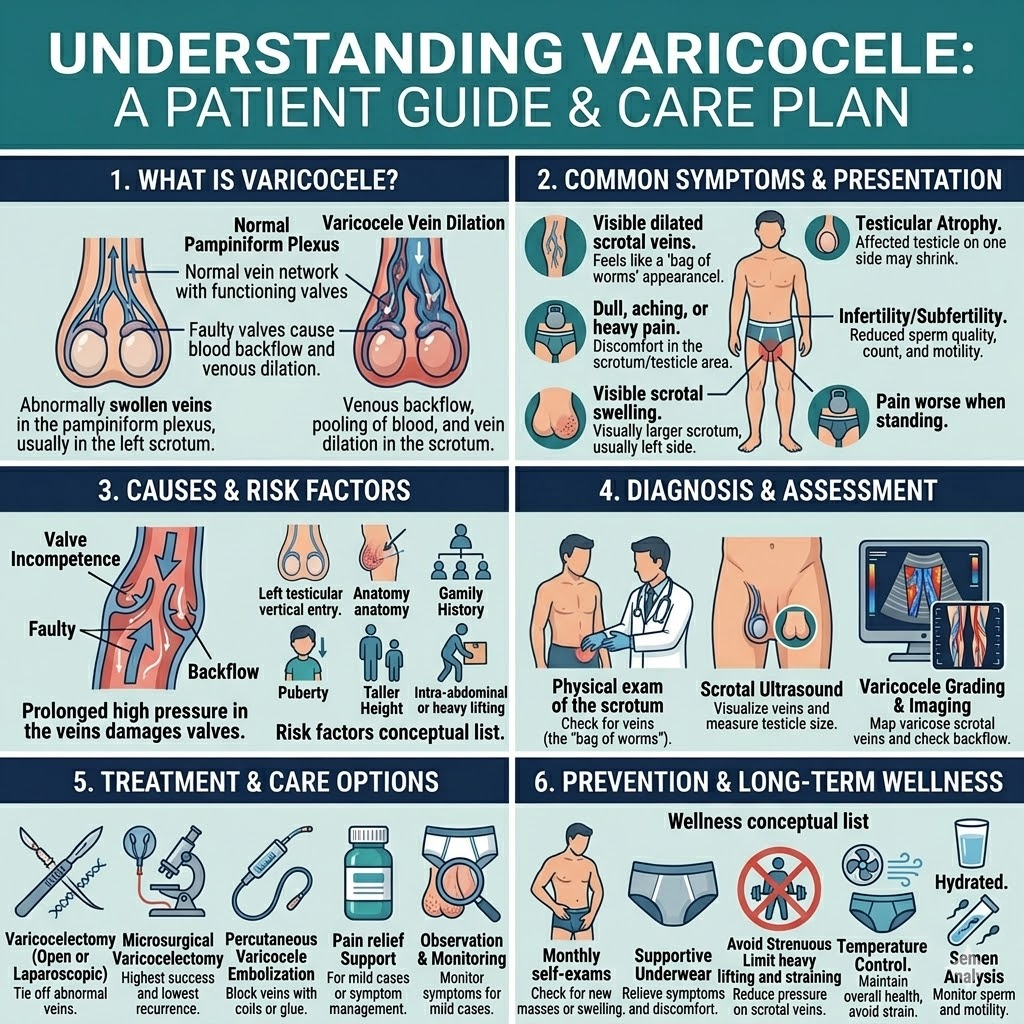
A varicocele (pronounced VAR-ih-koe-seel) is an enlargement of the veins within the loose pouch of skin holding the testicles (scrotum). These veins normally carry oxygen-poor blood away. A varicocele forms when blood pools instead of flowing efficiently, causing veins to widen. Often developing during puberty, they may cause discomfort or no symptoms. Varicoceles can affect testicle development, sperm production, or lead to infertility, sometimes requiring treatment.
Understanding the Condition
Understanding Varicocele: A Guide for Non-Medical Persons
Understanding the Condition
A varicocele (pronounced VAR-ih-koe-seel) is an enlargement of the veins within the loose pouch of skin holding the testicles (scrotum). These veins normally carry oxygen-poor blood away. A varicocele forms when blood pools instead of flowing efficiently, causing veins to widen. Often developing during puberty, they may cause discomfort or no symptoms. Varicoceles can affect testicle development, sperm production, or lead to infertility, sometimes requiring treatment.
Common Symptoms
Pain: A dull, aching pain or discomfort in the scrotum, often more noticeable when standing for long periods or later in the day. Lying down typically helps ease the pain.
Before your visit, be prepared to discuss any symptoms you've experienced, including when they started, their severity, and what makes them better or worse. Your doctor will likely perform a physical examination. You may also want to note any questions you have about the condition or its potential impact.
Book a doctor visit near me
Observation and Monitoring: If a varicocele causes no symptoms, discomfort, or fertility problems, your doctor may recommend a 'wait-and-see' approach. Regular check-ups are important to monitor for any changes or new symptoms. (Duration: Ongoing, with periodic follow-up appointments, often annually or as advised by your doctor.)
Pain Management: For mild discomfort, conservative measures can help. This includes wearing supportive underwear (like briefs or athletic supporters) to reduce pressure, and using over-the-counter pain relievers to manage any aches. (Duration: As needed, to alleviate discomfort.)
Self-Monitoring and Symptom Awareness: Be aware of any changes in your scrotum, such as new pain, a visible lump, or differences in testicle size. If you notice any of these symptoms, or experience difficulty conceiving, consult a healthcare provider promptly for an accurate diagnosis.
Supportive Underwear: For individuals experiencing mild discomfort or aching from a varicocele, wearing supportive underwear (like briefs or an athletic supporter) can help provide relief by gently compressing the scrotum and reducing gravitational pull on the veins.
Diagnostic Procedures
Scrotal Mass: For larger varicoceles, a visible lump that feels like a 'bag of worms' might be felt or seen above the testicle. Smaller ones might only be detectable by touch.
Testicle Size Difference: The testicle on the affected side might appear noticeably smaller than the other testicle.
Infertility: A varicocele can sometimes make it difficult to father a child, though not all varicoceles lead to infertility.
Consultation Guide
Which Specialist to Meet
Start with your general practitioner, who can refer you to a urologist—a specialist in male reproductive health. A urologist is the key specialist for diagnosing and managing varicoceles.
Preparations Before Your Visit
A hands-on check-up by your doctor, usually performed while you are standing, as varicoceles are often easier to detect in this position. The doctor will examine your scrotum for any lumps, swelling, or differences in testicle size. You might be asked to stand, take a deep breath, and hold it while bearing down (a maneuver called Valsalva), which can make enlarged veins more prominent.
What to Expect
You will be asked to remove your clothing from the waist down. The doctor will gently feel your scrotum, looking for any unusual findings. This exam is usually quick and not painful, though you might feel some pressure.
Ultrasound (Scrotal Ultrasound)
This is a safe and common imaging test that uses high-frequency sound waves to create live pictures of the structures inside your body, including the testicles and the veins within the scrotum. It helps doctors visualize blood flow and identify enlarged veins or other abnormalities that might not be obvious during a physical exam.
What to Expect
You will typically lie on your back. A clear, warm gel will be applied to your scrotum. The sonographer (a trained technician) will then gently move a small, handheld device called a transducer over the gel-covered area. This device sends and receives sound waves, which are converted into images on a screen. You might feel a slight pressure from the transducer, but the procedure is generally painless. The entire process usually takes about 15-30 minutes. You don't typically need to do any special preparation, though it's a good idea to wear loose-fitting clothing and remove any jewelry beforehand.
Annual Wellness Visits: For boys and adolescents, regular annual check-ups are crucial. These visits allow healthcare providers to monitor the development and health of the testicles, which can help detect varicoceles early, especially if they are affecting testicular growth.
Post-Treatment Follow-up: After any treatment for varicocele, especially surgery or embolization, regular follow-up appointments with your urologist are important. These visits help monitor recovery, assess the success of the treatment, and address any ongoing concerns regarding testicular health and fertility.
Treatment Options
Conservative Management
Surgical Repair (Varicocelectomy): This involves surgically tying off or removing the enlarged veins to restore proper blood flow. There are several surgical approaches: Open Surgery (performed through a small incision, usually in the groin); Microsurgical Varicocelectomy (a type of open surgery using a microscope for precise vein identification); Laparoscopic Surgery (involves small incisions in the abdomen, using a camera and instruments to clip or tie off veins). (Duration: Surgical procedures typically take 1-3 hours. Recovery usually involves a few days of rest, with most individuals returning to light activities within a week and full recovery within 2-4 weeks. The full effects on sperm production or fertility may take several months to a year to become apparent.)
Prevention & Long-Term Wellbeing
Embolization: This is a minimally invasive procedure performed by an interventional radiologist. A small tube (catheter) is inserted into a vein, usually in the groin or neck, and guided to the affected veins in the scrotum. Coils or a special liquid are then injected to block the blood flow in these enlarged veins, redirecting it to healthier pathways. (Duration: The procedure itself takes about 1-2 hours. Recovery is typically quick, with most individuals resuming normal activities within 1-2 days, and full recovery within 1-2 weeks.)
Early Detection & Monitoring
Tags & Topics
Notice an error or need an update?
Help us keep medical information accurate. Report incorrect info or suggest an edit.


