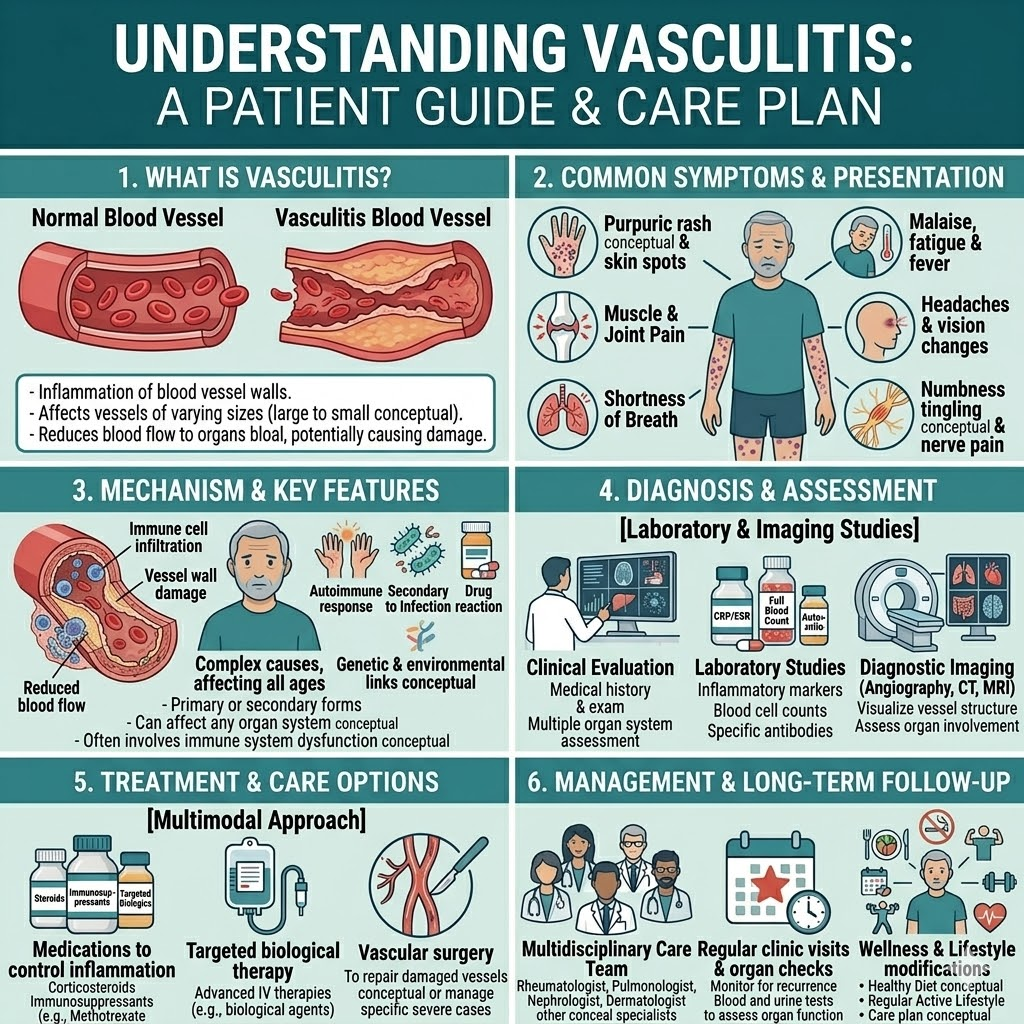
Vasculitis is a general term for a group of rare diseases that cause inflammation, swelling, and irritation of the blood vessels. This inflammation causes the walls of your blood vessels to thicken, which narrows the pathway for blood to flow. If blood flow is restricted or blocked, the surrounding organs and tissues do not get enough oxygen and nutrients, which can lead to serious damage. Vasculitis can affect just one organ or several at once, and it can be a brief, temporary condition or a long-term, chronic health issue. While it can affect anyone, early diagnosis and treatment are essential to control inflammation and prevent flare-ups.
Understanding the Condition
Understanding Vasculitis: Causes, Symptoms, and Treatments
Understanding the Condition
Common Symptoms
General Symptoms: Many people with vasculitis experience general signs of illness, including unintended weight loss, chronic fatigue, fever, and generalized body aches and pains.
Before your appointment, write down all your symptoms, even if they seem unrelated, and note when they started. Prepare a complete list of your medical history, including any family history of autoimmune diseases. Bring a full list of all medications, vitamins, and supplements you take. If you are going for diagnostic imaging, wear comfortable, loose-fitting clothing that is easy to remove, and leave jewelry at home.
Book a doctor visit near me
Consultation Guide
Vasculitis is a general term for a group of rare diseases that cause inflammation, swelling, and irritation of the blood vessels. This inflammation causes the walls of your blood vessels to thicken, which narrows the pathway for blood to flow. If blood flow is restricted or blocked, the surrounding organs and tissues do not get enough oxygen and nutrients, which can lead to serious damage. Vasculitis can affect just one organ or several at once, and it can be a brief, temporary condition or a long-term, chronic health issue. While it can affect anyone, early diagnosis and treatment are essential to control inflammation and prevent flare-ups.
Digestive System Issues: If vasculitis affects the stomach or intestines, you may experience severe pain after eating. In serious cases, it can cause ulcers or tears (perforations) in the digestive tract, leading to blood in your stool.
Ear and Hearing Problems: Inflammation in the vessels supplying the ears can cause dizziness, a ringing sound in the ears (tinnitus), or sudden, unexpected hearing loss.
Eye Changes: Your eyes may appear red, itchy, or irritated. Certain types of vasculitis, such as giant cell arteritis, can cause double vision or even temporary or permanent blindness in one or both eyes, which is often the very first sign of the disease.
Numbness in Hands or Feet: Damage to nerves supplied by affected blood vessels can lead to a loss of feeling, tingling, or weakness in a hand or foot. The skin on the palms of your hands or the soles of your feet might also swell or become unusually hard.
Respiratory Troubles: Vasculitis in the lungs can cause persistent shortness of breath, chest discomfort, or coughing up blood.
Skin Reactions: Bleeding under the skin can show up as small red or purple spots. It can also cause painful lumps, open sores, or a net-like, purple skin pattern called livedo reticularis, which usually appears on the legs.
Consultation Guide
Which Specialist to Meet
Because vasculitis affects multiple organs, you will likely need to see a specialist known as a rheumatologist, who specializes in autoimmune and inflammatory diseases. Depending on which organs are affected, you may also see a cardiologist (heart specialist), pulmonologist (lung specialist), nephrologist (kidney specialist), or dermatologist (skin specialist).
Preparations Before Your Visit
Aneurysm Repair: If vasculitis causes a blood vessel wall to weaken and balloon out (forming an aneurysm), surgery may be needed to place a graft or stent to reinforce the vessel wall and prevent it from bursting. (Duration: This is a one-time surgical procedure, requiring several weeks of recovery.)
Infection Prevention: Because treatments often suppress your immune system, you are at a higher risk for infections. Stay up to date on vaccines, wash your hands regularly, and avoid close contact with sick individuals.
Diagnostic Procedures
CT Scan (Computerized Tomography)
A CT scan uses advanced X-ray technology and computers to create highly detailed, 3D cross-sectional images of your bones, organs, and blood vessels. This helps doctors see exactly which blood vessels are inflamed or narrowed.
What to Expect
You will lie flat on a motorized table that slides slowly into a large, doughnut-shaped scanner. You must remain very still during the scan so the images are clear. You might be asked to hold your breath for a few seconds. In some cases, a special contrast dye is injected through an IV to make your blood vessels show up more clearly.
An ultrasound uses painless, high-frequency sound waves to capture real-time images of the structures inside your body, including blood flow through your vessels, without using radiation.
What to Expect
A healthcare provider will apply a warm gel to your skin over the area being examined. They will then press a small, handheld device called a transducer against your skin and slide it around. You will feel mild pressure but no pain. The test is highly safe and typically takes under 30 minutes.
A urinalysis is a laboratory evaluation of your urine. It is used to check for signs of kidney inflammation or damage, which is a common complication of certain types of vasculitis.
What to Expect
You will be given a sterile cup and instructions to collect a clean-catch midstream urine sample in the restroom. The laboratory will then test the sample for the presence of blood, protein, or abnormal cells that indicate kidney problems.
An X-ray is a fast, painless imaging test that captures pictures of the inside of your body, particularly your bones and dense tissues, using a very low dose of radiation. It is commonly used to examine the lungs.
What to Expect
You will stand or lie down next to a flat plate containing digital recording sensors. A technician will position the X-ray machine and ask you to stay still and hold your breath for a second while the image is captured. It takes only a few minutes.
Keep Regular Appointments: Vasculitis can flare up unexpectedly. Regular checkups and blood tests help your doctor monitor your condition and catch any organ damage early.
Treatment Options
Medications
Anti-inflammatory Steroids: These powerful medications are used as the first line of defense to quickly reduce inflammation in your blood vessels. (Duration: Usually prescribed for several weeks to months, with the dose gradually lowered (tapered) over time to avoid side effects.)
Immune System Suppressants: If steroids are not enough, these medications help by calming down your overactive immune system so it stops attacking your own blood vessels. (Duration: Often used as a long-term maintenance treatment, lasting from several months to years.)
Surgical Procedures
Eat a Nutrient-Rich Diet: Eating a balanced diet helps prevent complications associated with vasculitis medications, such as high blood pressure, bone thinning, and high blood sugar.
Prevention & Long-Term Wellbeing
Bypass Grafting: If a critical blood vessel becomes completely blocked by inflammation, a surgeon can reroute blood flow around the blockage using a healthy blood vessel taken from another part of your body. (Duration: This is a major surgical procedure, requiring a hospital stay and a recovery period of several weeks to months.)
Lifestyle and Prevention
Avoid Tobacco Use: Smoking greatly increases your risk of developing specific vascular conditions like Buerger disease. Quitting smoking is essential to keep your blood vessels healthy.
Avoid Illicit Drugs: Using recreational drugs, especially cocaine, can trigger severe blood vessel inflammation and damage. Staying drug-free protects your vascular system.
Tags & Topics
Notice an error or need an update?
Help us keep medical information accurate. Report incorrect info or suggest an edit.


