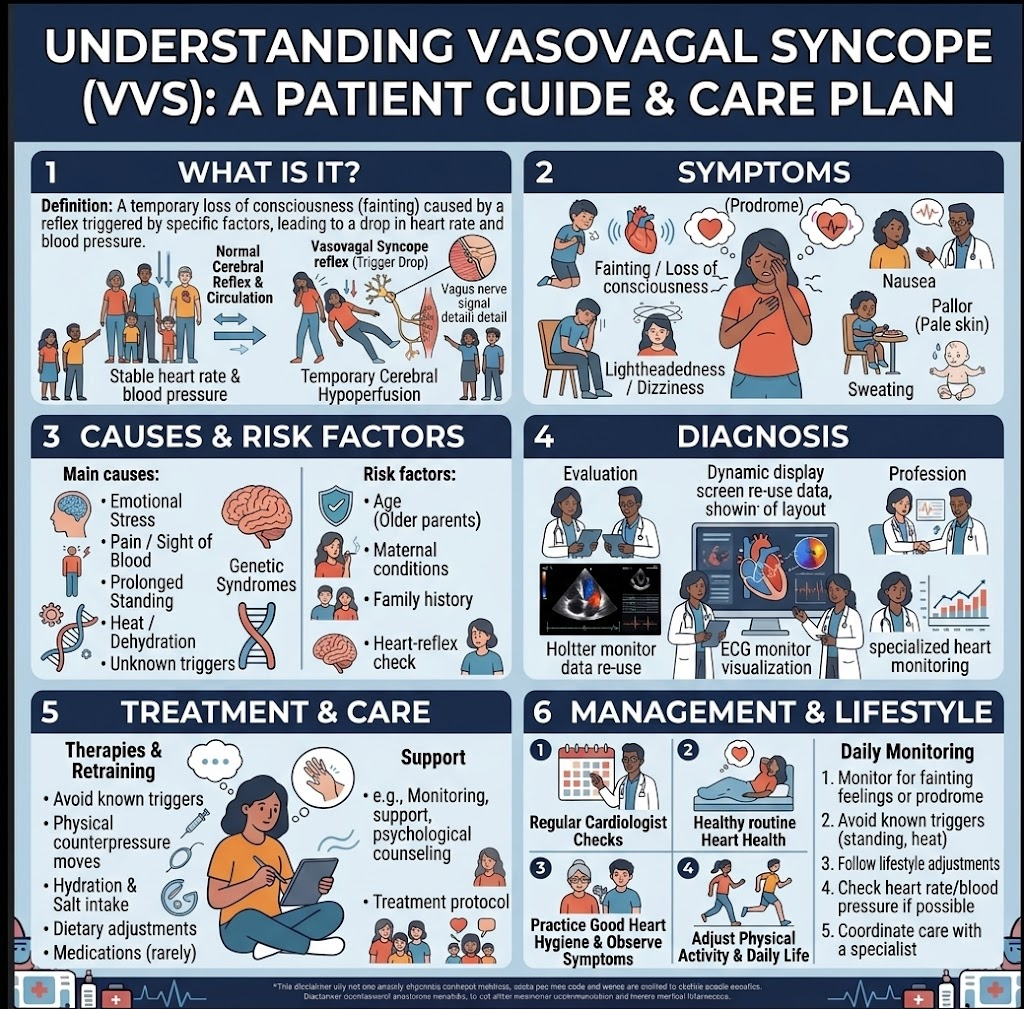
Vasovagal syncope (pronounced vay-zoh-VAY-gul SING-kuh-pee) is a common type of fainting that happens when your body overreacts to certain triggers. These can include seeing blood, intense emotional distress, prolonged standing, or exposure to heat. When triggered, your heart rate and blood pressure suddenly drop, leading to reduced blood flow to your brain. This temporary lack of blood flow causes you to briefly lose consciousness. While usually harmless and often requiring no specific treatment, there is a risk of injury from falling. A doctor may recommend tests to rule out more serious causes of fainting, such as underlying heart conditions. Micturition syncope, fainting during or immediately after urination, is a related form, often due to a sudden blood pressure drop and more common in older men.
Understanding the Condition
Vasovagal Syncope: Understanding Fainting Spells
Understanding the Condition
Common Symptoms
Skin Color Change: Your skin might look pale.
Lightheadedness: Feeling dizzy or as if you might pass out.
Tunnel Vision: Your field of vision narrows, making you see only what's directly in front.
Upset Stomach: Feeling nauseous.
Feeling Warm: A sudden sensation of heat throughout your body.
Cold, Clammy Sweat: Sweating despite feeling warm, with cold, damp skin.
Blurred Vision: Vision becoming unclear.
Jerky Movements: Involuntary muscle twitches or jerks.
Slow, Weak Pulse: Your heartbeat becomes noticeably slower and less forceful.
Dilated Pupils: The black centers of your eyes appear larger.
Consultation Guide
Which Specialist to Meet
Before your appointment, keep a detailed record of any fainting episodes. Note when and where they occurred, what you were doing beforehand, any symptoms you felt, and how long the episode lasted. Bring a list of all current medications, your full medical history, and any relevant family medical history. Prepare a list of questions for your doctor.
Book a doctor visit near me
This exam assesses the function of your brain, spinal cord, nerves, and muscles to identify potential nervous system issues contributing to symptoms like fainting.
The exam may include tests of your mental status, coordination, reflexes, sensation, balance, and muscle strength. Your doctor will also review your medical history. The length varies depending on your symptoms.
Lying Down with Elevated Legs: If you feel warning signs of fainting (like lightheadedness), immediately lie down and elevate your legs above your heart to restore blood flow to your brain. (Duration: As needed during pre-fainting symptoms.)
Sitting with Head Between Knees: If lying down is not possible, sit down and place your head between your knees. (Duration: As needed during pre-fainting symptoms.)
Physical Counter-Pressure Maneuvers: Techniques like crossing your legs and tensing thigh muscles, clenching fists, or squeezing a rubber ball can help raise blood pressure temporarily. (Duration: As needed during pre-fainting symptoms.)
Prescription Medications: A doctor may prescribe medications to increase blood volume (e.g., mineralocorticoids) or narrow blood vessels (e.g., vasoconstrictors) to help raise blood pressure. In some cases, heart rate regulating medications may be considered. (Duration: Prescribed by your doctor, often for several months or longer, depending on symptom control and individual response.)
Cardiac Device Implantation (rare)
Recognize Warning Signs: Learn to identify early symptoms like lightheadedness or nausea and act immediately to prevent a full fainting episode.
Avoid Prolonged Standing and Heat: Shift your weight or move your legs if you must stand for long periods. Be mindful of hot environments, which can worsen symptoms.
Wear Compression Stockings (If Advised): Discuss with your doctor if medical-grade compression stockings could help prevent blood from pooling in your legs, supporting blood pressure.
Long-Term Monitoring and Management
Maintain a Symptom Diary: Continue to record details of any fainting or near-fainting episodes, including potential triggers, symptoms, and duration. This information is valuable for your doctor.
Regular Medical Follow-ups: Attend scheduled appointments with your healthcare provider to discuss your condition, review any changes in symptoms, and ensure your management plan remains effective.
Consultation Guide
Vasovagal syncope (pronounced vay-zoh-VAY-gul SING-kuh-pee) is a common type of fainting that happens when your body overreacts to certain triggers. These can include seeing blood, intense emotional distress, prolonged standing, or exposure to heat. When triggered, your heart rate and blood pressure suddenly drop, leading to reduced blood flow to your brain. This temporary lack of blood flow causes you to briefly lose consciousness. While usually harmless and often requiring no specific treatment, there is a risk of injury from falling. A doctor may recommend tests to rule out more serious causes of fainting, such as underlying heart conditions. Micturition syncope, fainting during or immediately after urination, is a related form, often due to a sudden blood pressure drop and more common in older men.
You should first consult with your primary care physician. Depending on the suspected cause, they may refer you to a cardiologist (a heart specialist) or a neurologist (a brain and nervous system specialist). In some cases, an electrophysiologist (a heart rhythm specialist) may be involved.
Preparations Before Your Visit
This test investigates how your heart and nervous system react to changes in body position, specifically from lying down to standing. It's used to determine the cause of unexplained fainting.
Pacemaker Implantation: In very rare and severe cases, especially if episodes are frequent, unpredictable, and cause significant slowing of the heart rate not responsive to other treatments, a pacemaker may be considered to help regulate heart rhythm. (Duration: The device typically lasts 5-10 years or more, requiring periodic checks and battery replacement.)
Identify and Avoid Triggers: Consciously avoid situations, sights, or feelings known to cause your fainting episodes.
Diagnostic Procedures
This test uses sound waves to create moving pictures of your heart, showing its structure, how valves work, and blood flow. It helps diagnose various heart conditions.
What to Expect
You lie down, gel is applied to your chest, and a handheld device (transducer) is moved over it. Sensors on chest/legs monitor heart rhythm. The procedure is generally painless and takes about 30-60 minutes.
Electrocardiogram (ECG or EKG)
A quick, painless test recording your heart's electrical signals. It shows heart rate and rhythm, helping diagnose irregular heartbeats (arrhythmias) or signs of a heart attack.
What to Expect
Sticky patches (electrodes) are placed on your chest, arms, and legs, connected to a machine. The test takes only a few minutes.
Implantable Loop Recorder
This is a small device placed just under your chest skin to continuously monitor and record heart activity for up to three years. It's useful for detecting infrequent or brief heart rhythm changes.
What to Expect
What to Expect
This test shows how your heart functions under physical strain (exercise or medication). It measures blood flow changes in the heart when it's pumping harder and faster.
What to Expect
You'll walk on a treadmill or ride a stationary bike while your heart rate, blood pressure, and breathing are closely monitored. If unable to exercise, medication may be given. The test takes about an hour.
What to Expect
You lie strapped to a motorized table with continuous monitoring of your heart rate and blood pressure. The table then slowly tilts upright. You might feel lightheaded or even faint (which helps diagnosis). The test can last 30 minutes to over an hour.
Treatment Options
The device is implanted during a minor outpatient surgery, usually under local anesthetic. You typically go home the same day and can live normally while it records your heart's rhythm.
Neurological Examinations
Medications (for recurrent, severe cases)
Prevention & Long-Term Wellbeing
Lifestyle Adjustments and Home Remedies
Recognizing and Avoiding Triggers: Identifying and actively avoiding situations, sights, or feelings that typically lead to fainting spells. (Duration: Ongoing, as long as episodes are a concern.)
Hydration and Electrolyte Balance: Ensuring adequate fluid intake and sometimes increasing salt intake (only as advised by your doctor) to help maintain blood pressure. (Duration: Ongoing, as long as episodes are a concern.)
Immediate Actions to Prevent Fainting
Prevention Strategies
Stay Hydrated and Consider Salt Intake: Drink plenty of fluids throughout the day. If advised by your doctor, increasing dietary salt intake can help maintain blood pressure.
Tags & Topics
Notice an error or need an update?
Help us keep medical information accurate. Report incorrect info or suggest an edit.


