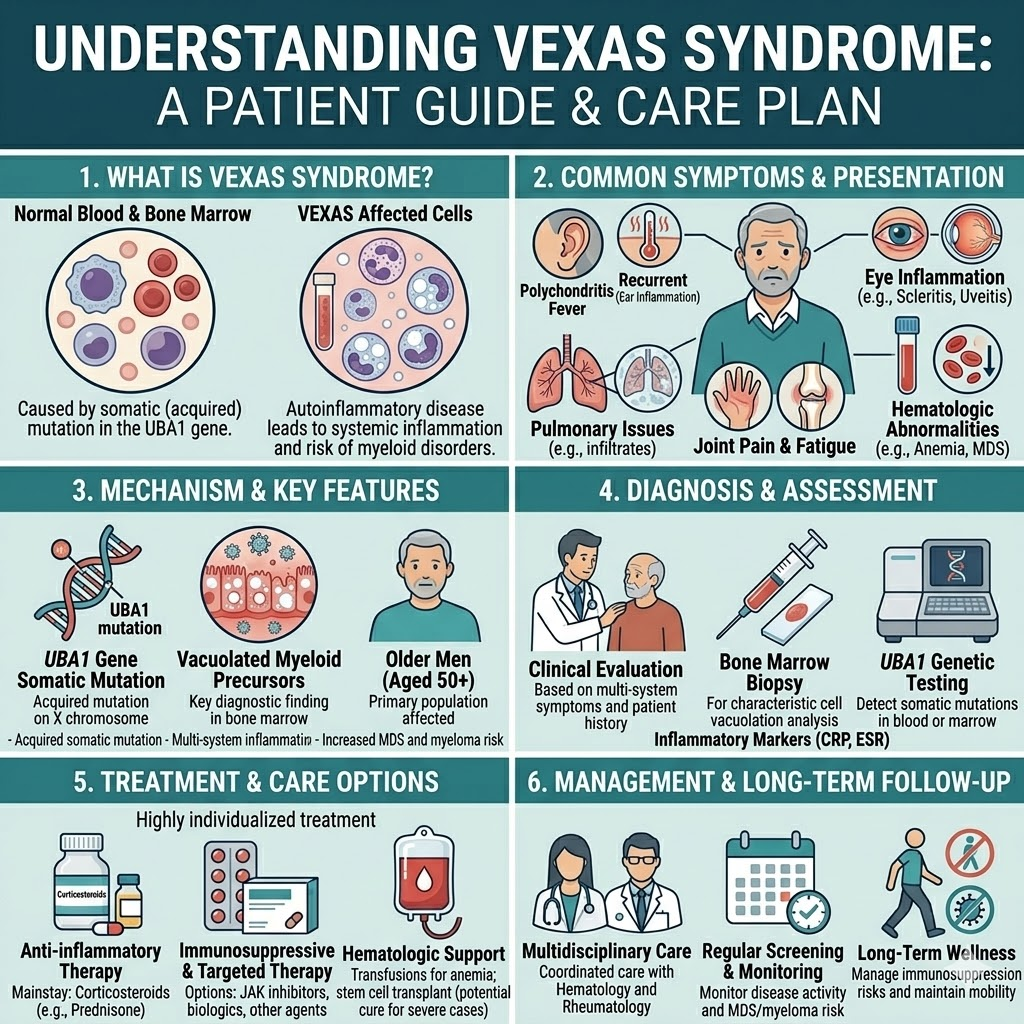
VEXAS syndrome is a rare medical condition where the body's immune system mistakenly attacks its own healthy tissues, causing widespread inflammation (swelling and irritation). This type of condition is known as an autoinflammatory disease. VEXAS syndrome is not inherited from parents; instead, it results from a genetic change that occurs in a person's body after birth. Diagnosis typically involves specialized genetic testing to identify this specific gene change. The name VEXAS is an acronym describing its key features: Vacuoles (empty spaces in specific bone marrow cells), E1 enzyme (a protein that doesn't work correctly), X-linked (the gene change is on the X chromosome), Autoinflammation (the immune system attacks the body), and Somatic (the gene change happens after birth and is not passed down in families). Treatment often includes medications to control inflammation and the immune system, and in some cases, more intensive therapies like chemotherapy or a bone marrow transplant may be necessary. Without proper treatment, VEXAS syndrome can lead to severe health problems and can be life-threatening.
Understanding the Condition
Understanding VEXAS Syndrome: A Guide for Non-Medical Persons
Understanding the Condition
Common Symptoms
Recurrent Fever: Fevers that come and go, often without an apparent infection.
Painful Skin Rashes: Various skin rashes that can be tender or painful.
Eye Redness and Irritation: Persistent redness, discomfort, or inflammation in one or both eyes.
Joint Pain and Swelling: Aching and swelling in multiple joints throughout the body.
Cough and Shortness of Breath: Respiratory symptoms that may indicate lung involvement.
Blood Clots: Formation of clots within blood vessels, which can be dangerous if they travel to vital organs.
Consultation Guide
Which Specialist to Meet
If you experience symptoms that concern you, start by consulting your primary care doctor. They can evaluate your symptoms and refer you to specialists such as a rheumatologist (doctors specializing in inflammatory diseases), a hematologist (doctors specializing in blood disorders), or a geneticist (doctors specializing in genetic conditions) for further diagnosis and management.
Preparations Before Your Visit
Before your appointment, prepare a detailed list of all your symptoms, including when they started, how often they occur, and what makes them better or worse. Gather your complete medical history, including any other health conditions, past surgeries, and all medications you are currently taking (prescription, over-the-counter, and supplements). It's also helpful to write down any questions you have for the doctor.
Book a doctor visit near me
Anti-inflammatory and Immune-Suppressing Medications: These medications are used to reduce the widespread inflammation and calm the overactive immune system, thereby alleviating symptoms and preventing organ damage. They are often the first line of treatment. (Duration: Typically ongoing and may be lifelong, with dosages adjusted based on symptom control and side effects. Regular monitoring is essential.)
Blood Clot Management: Be aware of symptoms that could indicate a blood clot (e.g., pain, swelling, warmth in a leg or arm, sudden shortness of breath, chest pain). Your doctor may prescribe medications to prevent clots if you are at high risk.
Symptom Management: Work closely with your healthcare providers to effectively manage symptoms such as pain, fatigue, and skin issues. This may involve specific therapies, physical therapy, or supportive care to maintain your quality of life.
Consultation Guide
Genetic testing is a crucial diagnostic tool for VEXAS syndrome. It involves examining your DNA to identify the specific UBA1 gene change (mutation) that causes the condition. This test confirms the diagnosis of VEXAS syndrome.
Diagnostic Procedures
VEXAS syndrome is a rare medical condition where the body's immune system mistakenly attacks its own healthy tissues, causing widespread inflammation (swelling and irritation). This type of condition is known as an autoinflammatory disease. VEXAS syndrome is not inherited from parents; instead, it results from a genetic change that occurs in a person's body after birth. Diagnosis typically involves specialized genetic testing to identify this specific gene change. The name VEXAS is an acronym describing its key features: Vacuoles (empty spaces in specific bone marrow cells), E1 enzyme (a protein that doesn't work correctly), X-linked (the gene change is on the X chromosome), Autoinflammation (the immune system attacks the body), and Somatic (the gene change happens after birth and is not passed down in families). Treatment often includes medications to control inflammation and the immune system, and in some cases, more intensive therapies like chemotherapy or a bone marrow transplant may be necessary. Without proper treatment, VEXAS syndrome can lead to severe health problems and can be life-threatening.
Testicle Inflammation (Orchitis): Swelling and irritation of one or both testicles.
Cartilage Inflammation (Chondritis): Swelling and irritation of the cartilage, commonly affecting the nose and ears.
What to Expect
The procedure is generally straightforward with minimal risk. You will typically provide a blood sample, usually from a vein in your arm, or sometimes a swab from the inside of your cheek. This sample will then be sent to a specialized laboratory for analysis. Results may take several weeks to process and be returned to your doctor, who will then discuss the findings with you.
Treatment Options
Medications
Chemotherapy: While often associated with cancer, certain chemotherapy drugs can be used in VEXAS syndrome. These powerful medications help to suppress the abnormal cells in the bone marrow that contribute to the disease, or they may be used as preparation for a bone marrow transplant. (Duration: Administered in cycles, typically over several weeks to months, depending on the specific drug regimen and individual response.)
Bone Marrow Transplant (Stem Cell Transplant): This is a complex procedure that replaces unhealthy bone marrow with healthy blood-forming stem cells. These new, healthy cells can come from the patient's own body (after treatment) or from a compatible donor. It aims to replace the problematic cells that carry the gene change. (Duration: A significant undertaking involving an intensive preparation phase (often with chemotherapy), the transplant procedure itself, and a long recovery period that can span several months to over a year, requiring close medical monitoring.)
Regular Medical Monitoring: Consistent follow-up appointments with your healthcare team are essential to monitor disease activity, treatment effectiveness, and to screen for potential complications like infections, blood clots, or blood disorders.
Infection Prevention: VEXAS syndrome and its treatments can weaken the immune system, increasing susceptibility to infections. Adhere to vaccination schedules (e.g., flu, pneumonia), practice good hygiene (handwashing), and promptly report any signs of infection to your doctor.
Prevention & Long-Term Wellbeing
Long-Term Management and Prevention
Healthy Lifestyle Practices: Maintain a balanced diet, engage in regular physical activity as tolerated, and ensure adequate rest. These habits support overall health and well-being, which can be particularly important when managing a chronic condition.
Emotional and Psychological Support: Living with a chronic illness can be challenging. Seeking support from family, friends, support groups, or mental health professionals can help you cope with the emotional and psychological aspects of VEXAS syndrome.
Tags & Topics
Notice an error or need an update?
Help us keep medical information accurate. Report incorrect info or suggest an edit.


