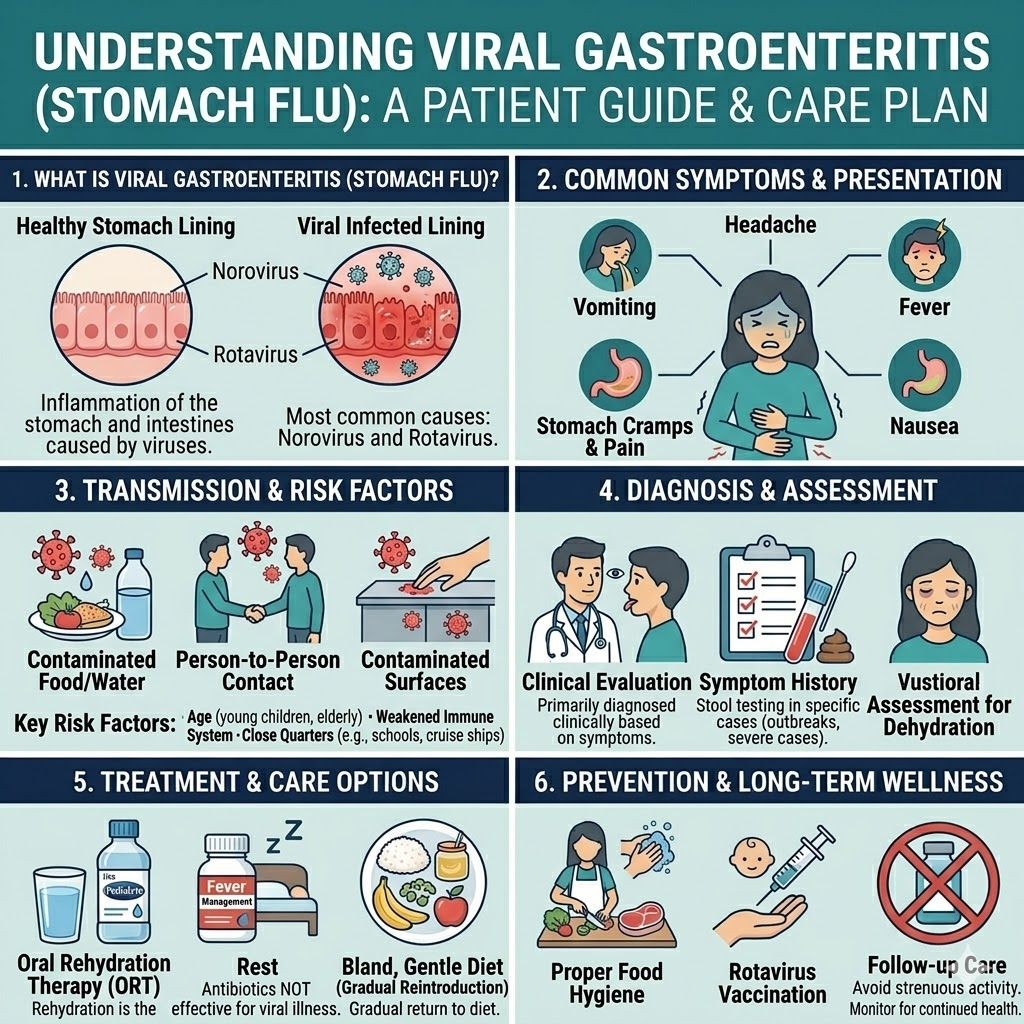
Viral gastroenteritis, often called the 'stomach flu,' is a common intestinal infection causing symptoms like watery diarrhea, stomach cramps, nausea, vomiting, and sometimes fever. It spreads through contact with an infected person or by consuming contaminated food or water. While most healthy individuals recover without complications, it can be life-threatening for infants, older adults, and people with weakened immune systems. Prevention is crucial as there isn't a specific cure. It's important to note that this condition is different from the respiratory flu (influenza).
Understanding the Condition
Viral Gastroenteritis: Understanding the Stomach Flu
Understanding the Condition
Viral gastroenteritis, often called the 'stomach flu,' is a common intestinal infection causing symptoms like watery diarrhea, stomach cramps, nausea, vomiting, and sometimes fever. It spreads through contact with an infected person or by consuming contaminated food or water. While most healthy individuals recover without complications, it can be life-threatening for infants, older adults, and people with weakened immune systems. Prevention is crucial as there isn't a specific cure. It's important to note that this condition is different from the respiratory flu (influenza).
Common Symptoms
Watery Diarrhea: Frequent, loose, watery bowel movements, often the most prominent symptom.
Stomach Cramps: Painful spasms or aches in the abdomen.
Nausea and Vomiting: Feeling sick to your stomach and throwing up, which can sometimes be severe.
Fever: An elevated body temperature, which may be mild or moderate.
Headaches and Muscle Aches: General body aches and discomfort, similar to a common cold.
Consultation Guide
Which Specialist to Meet
You should consult a general practitioner or family doctor. For children, a pediatrician is the appropriate specialist. If symptoms are severe, such as signs of significant dehydration or persistent high fever, seek emergency medical care.
Preparations Before Your Visit
Before your appointment, prepare by noting down your symptoms, when they started, their severity, and any potential exposures (e.g., sick contacts, recent travel, unusual foods). List all current medications and any existing health conditions. Be ready to discuss your medical history and ask any questions you have.
Book a doctor visit near me
The doctor will ask about your symptoms and medical history, then perform a physical check, which may involve gently pressing on your stomach and looking at your eyes, skin, and mouth.
Stool Sample Analysis
If your symptoms are severe, prolonged, or if there's concern about a bacterial, parasitic, or specific viral infection (like rotavirus or norovirus), a stool sample might be collected. This test helps identify the exact cause of the illness, which is crucial for determining appropriate treatment, especially if it's not viral.
Hydration: Drink plenty of clear fluids like water, broths, and oral rehydration solutions to replace fluids and electrolytes lost through vomiting and diarrhea. Avoid sugary drinks, caffeine, and alcohol. (Duration: Continue until symptoms resolve and normal fluid balance is restored, typically 1-2 days, but possibly longer if symptoms persist.)
Rest: Allow your body adequate rest to recover. Avoid strenuous activities. (Duration: Rest as needed until energy levels return to normal, usually for the duration of acute symptoms (1-3 days).)
Recognize Dehydration Signs: Be vigilant for signs of dehydration, especially in infants, young children, and older adults. Symptoms include decreased urination, lack of tears, dry mouth, excessive thirst, and lethargy. Seek medical attention if these signs appear.
Monitor Symptom Resolution: While most cases resolve quickly, monitor for persistent or worsening symptoms like high fever, severe abdominal pain, bloody stools, or inability to keep fluids down, as these warrant medical evaluation.
Consultation Guide
Vaccination: Vaccines are available for infants to protect against rotavirus, a common cause of severe viral gastroenteritis in young children. Discuss the recommended vaccination schedule with your pediatrician.
Diagnostic Procedures
A doctor will assess your overall health, checking for signs of dehydration like dry mouth or reduced skin elasticity, and examining your abdomen for tenderness or other abnormalities.
What to Expect
What to Expect
You will be given a sterile container and instructions to collect a small sample of your stool at home. This sample is then sent to a laboratory for analysis to look for bacteria, parasites, or specific viruses.
Blood tests may be ordered in severe cases to check for signs of infection, assess electrolyte levels (important salts and minerals in your body), and monitor for dehydration, which can be a serious complication of persistent vomiting and diarrhea.
What to Expect
A healthcare professional will draw a small amount of blood, usually from a vein in your arm, using a needle. This process is quick and generally well-tolerated, causing only a brief pinch.
Treatment Options
Supportive Care and Home Remedies
Medications
Fever Reducers/Pain Relievers: Over-the-counter medications can help manage fever and body aches. Always follow dosage instructions carefully. (Duration: Take as needed for fever or pain, typically for 1-2 days.)
Anti-Diarrheal Medications: Certain over-the-counter medications can help reduce diarrhea in adults, but they should be used cautiously, especially in children, and only after consulting a healthcare provider, as they can sometimes prolong the illness if used incorrectly. (Duration: Use sparingly and only as directed by a healthcare professional, generally for a day or two.)
Anti-Nausea Medications: If vomiting is severe and persistent, a healthcare provider might prescribe medication to help reduce nausea and prevent further fluid loss. (Duration: As prescribed by a doctor, typically for a few doses until vomiting subsides.)
Intravenous (IV) Fluids: For severe dehydration, particularly in vulnerable individuals, fluids and electrolytes may need to be administered directly into a vein. (Duration: Administered in a medical setting until adequate hydration is achieved, usually over a few hours to a day.)
Prevention & Long-Term Wellbeing
Bland Diet: Gradually reintroduce bland, easy-to-digest foods such as bananas, rice, applesauce, and toast (often called the BRAT diet). Avoid fatty, spicy, or sugary foods that can irritate the digestive system. (Duration: Begin once vomiting has stopped and continue for 2-3 days, gradually returning to a normal diet as tolerated.)
Prevention
Thorough Hand Washing: Wash hands frequently and thoroughly with soap and water for at least 20 seconds, especially after using the restroom, changing diapers, and before preparing or eating food. Hand sanitizer can be used if soap and water are unavailable.
Safe Food and Water Practices: Ensure food is cooked thoroughly, avoid raw or undercooked meats, and wash fruits and vegetables before eating. When traveling, drink bottled water and avoid ice or unpeeled produce in areas with questionable water quality.
Disinfect Surfaces: Regularly clean and disinfect frequently touched surfaces, especially if someone in the household is sick. Use a bleach-based cleaner or a disinfectant approved for germ killing.
Avoid Close Contact: If you are sick, avoid close contact with others. If someone else is sick, try to limit direct contact to prevent the spread of the virus. Children should stay home from school or daycare until at least 48 hours after their last episode of vomiting or diarrhea.
Tags & Topics
Notice an error or need an update?
Help us keep medical information accurate. Report incorrect info or suggest an edit.


