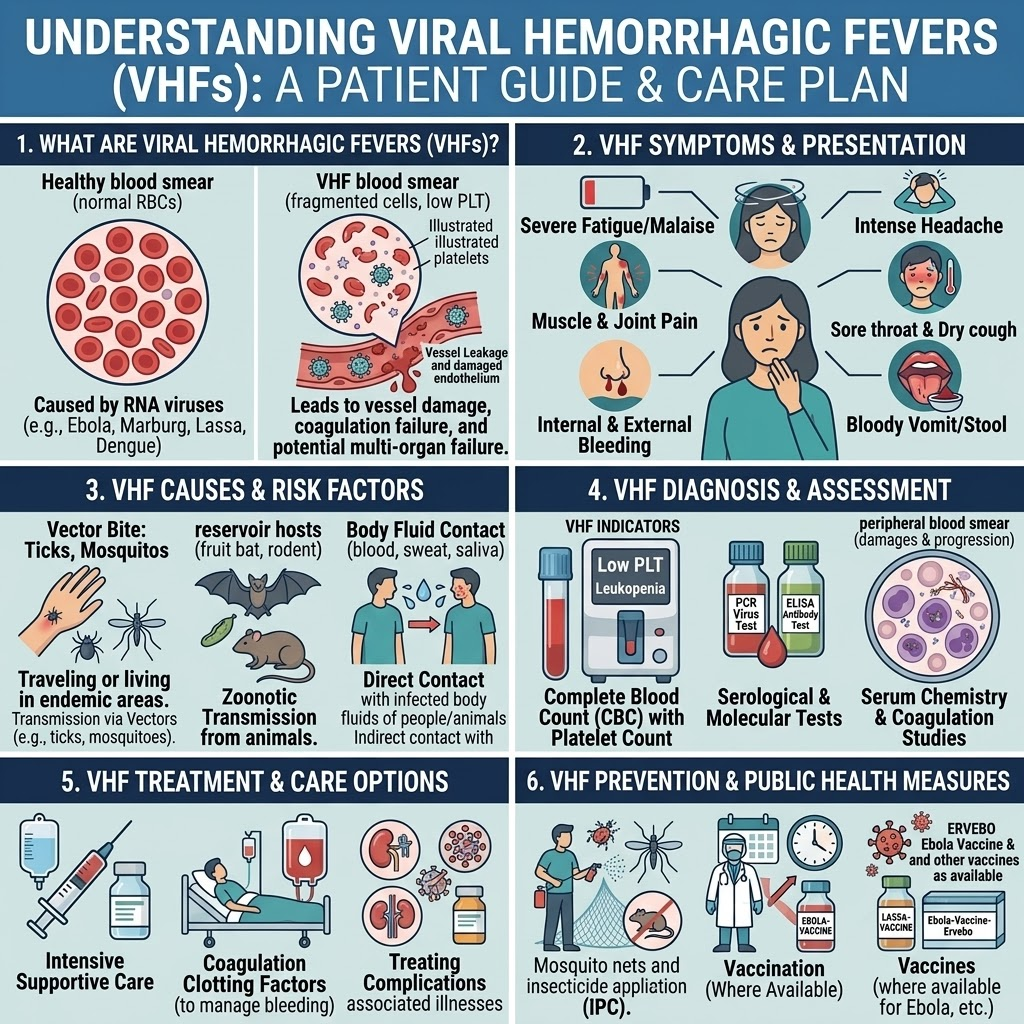
Viral hemorrhagic fevers (VHFs) are a group of severe, sometimes deadly, infectious diseases caused by various viruses. These conditions damage tiny blood vessel walls, causing them to leak, and impair the blood's ability to clot, leading to internal or external bleeding. Examples include Crimean-Congo hemorrhagic fever, Hantavirus, and Yellow fever. VHFs are most common in tropical regions, with most cases in non-endemic areas linked to travel. While vaccines and specific treatments exist for a few types, many VHFs rely on supportive care.
Understanding the Condition
Viral Hemorrhagic Fevers (VHFs)
Understanding the Condition
Common Symptoms
Early Symptoms (can appear 2-21 days after exposure): General tiredness, weakness, or a feeling of being unwell, muscle aches, bone pain, joint discomfort, nausea, and vomiting.
Worse Symptoms (indicating severe disease progression): Bleeding under the skin, internally within the body, or from orifices like the mouth, eyes, or ears. Neurological issues, including confusion and disorientation (delirium). Organ damage, specifically kidney failure, liver failure, and severe breathing difficulties (respiratory failure).
Consultation Guide
Which Specialist to Meet
If you suspect exposure to a viral hemorrhagic fever, seek immediate medical attention. You may initially see an emergency physician, who will then coordinate care with an infectious disease specialist, and potentially critical care specialists if severe symptoms develop.
Preparations Before Your Visit
Before your visit, be prepared to discuss: your recent travel history, especially to tropical or high-risk areas; any potential exposure to infected animals (like mosquitoes, ticks, rodents, or bats) or sick individuals; a detailed list of all your symptoms, including when they started and how they have progressed; all current medications, allergies, and your complete medical history. Also, prepare any questions you have for the medical team.
Book a doctor visit near me
Pain and Symptom Management: Pain relievers and medications to reduce fever, nausea, and vomiting are given to improve comfort and manage specific symptoms. (Duration: As needed throughout the illness.)
Bleeding Management: Blood transfusions (red blood cells, platelets) or plasma infusions may be necessary to replace lost blood and improve clotting. (Duration: As needed, often in repeated doses during active bleeding.)
Consultation Guide
Viral hemorrhagic fevers (VHFs) are a group of severe, sometimes deadly, infectious diseases caused by various viruses. These conditions damage tiny blood vessel walls, causing them to leak, and impair the blood's ability to clot, leading to internal or external bleeding. Examples include Crimean-Congo hemorrhagic fever, Hantavirus, and Yellow fever. VHFs are most common in tropical regions, with most cases in non-endemic areas linked to travel. While vaccines and specific treatments exist for a few types, many VHFs rely on supportive care.
Similar to viral detection tests, a blood sample will be drawn from a vein in your arm. This quick procedure usually causes minimal discomfort. The sample is then processed in a lab, with results typically available within a few days.
A CBC measures blood components to indicate infection severity and potential blood clotting issues. Liver and kidney function tests assess organ damage caused by VHFs.
Diagnostic Procedures
Blood Tests – Viral Detection
Molecular tests (e.g., Polymerase Chain Reaction or PCR) detect the virus's genetic material (RNA) to confirm active infection. Antigen tests can identify viral proteins.
What to Expect
A healthcare professional will draw a blood sample, typically from a vein in your arm, causing only a brief pinch. The sample is sent to a specialized laboratory for analysis. Results typically take several hours to a few days.
Blood Tests – Antibody Detection
Antibody tests (e.g., ELISA) identify antibodies (IgM for recent infection, IgG for past infection or immunity) produced by your immune system in response to the virus.
What to Expect
Complete Blood Count (CBC) and Organ Function Tests
What to Expect
Post-Recovery Monitoring: After recovery from severe VHF, regular follow-up with healthcare providers is crucial to monitor organ function, assess for long-term complications, and support full recovery, potentially involving ongoing tests.
Rehabilitation Support: Depending on illness severity, rehabilitation therapies (physical, occupational, speech) may be recommended to regain strength, function, and address persistent physical or neurological challenges.
Psychological Support: Surviving a life-threatening illness impacts mental health. Counseling or support groups can help manage anxiety, depression, or post-traumatic stress related to the experience.
Treatment Options
A standard blood draw from your arm provides routine information on infection impact, blood cell counts, and organ function, aiding immediate treatment decisions. Results are often available within hours to a day.
Fluid and Electrolyte Management: Intravenous (IV) fluids are administered to maintain hydration and balance essential body salts, critical for organ function and to counter fluid loss. (Duration: Continuous throughout the acute phase of illness, typically days to weeks, until stable.)
Blood Pressure Support: Medications or additional IV fluids may be used to maintain stable blood pressure, especially if the patient develops shock. (Duration: As needed, often continuous during critical illness.)
Oxygen Therapy: Supplemental oxygen is provided to ensure adequate oxygen levels, especially if breathing difficulties or respiratory failure develop. (Duration: Intermittent or continuous, depending on respiratory status, typically days to weeks.)
Specific Antiviral Treatment (for select VHFs)
Antiviral Medications: For certain types of viral hemorrhagic fevers, specific antiviral medications may be available to inhibit viral replication and reduce disease severity. (Duration: Typically administered for a course of 7-10 days, or as directed by a healthcare professional, based on the specific virus and patient response.)
Prevention & Long-Term Wellbeing
Organ Support: In severe cases, life support measures such as dialysis for kidney failure or mechanical ventilation for respiratory failure may be required. (Duration: Variable, from days to several weeks, depending on organ recovery.)
Nutritional Support: Patients unable to eat may receive nutrition intravenously or via a feeding tube to maintain strength and aid recovery. (Duration: As needed, throughout the illness and recovery phase.)
Prevention in High-Risk Areas
Travel Awareness and Vaccinations: Before traveling to high-risk areas, consult health authorities for outbreak information and recommended vaccines (e.g., Yellow Fever, Ebola). These may be required for entry into some countries.
Insect Bite Protection: Wear light-colored, long-sleeved shirts and pants, preferably treated with permethrin (not directly on skin). Use repellents with 20%-25% DEET on exposed skin and clothing. Avoid peak mosquito hours (dusk/dawn) and use bed nets.
Rodent Control: Rodent-proof homes by sealing entry points, storing food/trash in sealed containers, and regular garbage disposal. Clear outdoor brush/woodpiles and maintain mowed lawns around your home.
Safe Contact with Animals: Avoid contact with wild animals (rodents, bats, nonhuman primates) and do not consume bushmeat. Exercise caution in outdoor or rodent-infested environments.
Personal Protective Equipment (PPE): Healthcare workers and caregivers should use appropriate PPE (gloves, gowns, eye masks, face shields) to prevent transmission via body fluids. Handle lab specimens and waste with extreme care.
Safe Practices: Avoid unprotected sexual contact with infected individuals and be cautious around potentially contaminated body fluids in outbreak areas.
Long-Term Wellbeing and Recovery
Tags & Topics
Notice an error or need an update?
Help us keep medical information accurate. Report incorrect info or suggest an edit.


