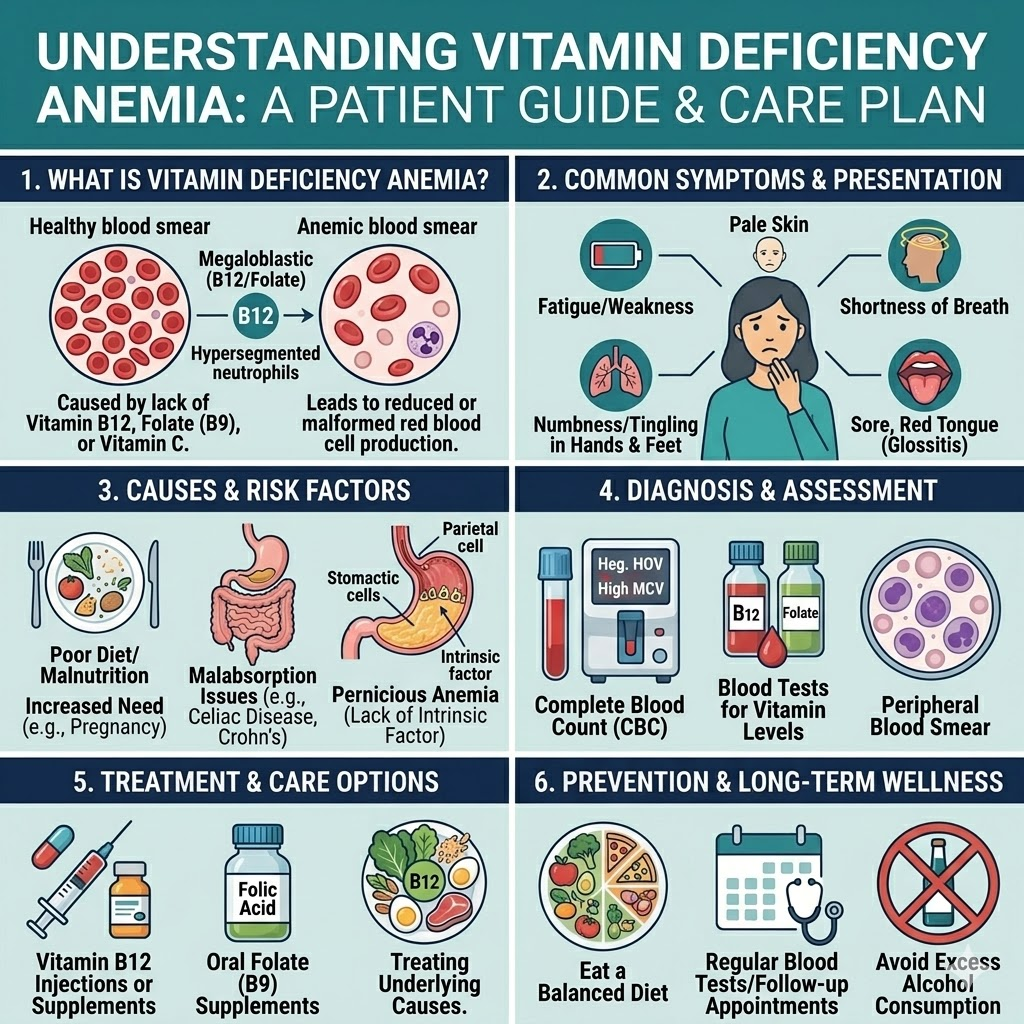
Vitamin deficiency anemia occurs when your body lacks enough healthy red blood cells. This commonly happens due to insufficient levels of certain B vitamins, primarily vitamin B-12 and folate (also known as vitamin B-9). These vitamins are essential for producing red blood cells that are healthy and correctly sized. Without them, the body makes red blood cells that are too large and less effective at carrying oxygen throughout your body, leading to various symptoms.
Understanding the Condition
Vitamin Deficiency Anemia: Understanding and Managing the Condition
Understanding the Condition
Vitamin deficiency anemia occurs when your body lacks enough healthy red blood cells. This commonly happens due to insufficient levels of certain B vitamins, primarily vitamin B-12 and folate (also known as vitamin B-9). These vitamins are essential for producing red blood cells that are healthy and correctly sized. Without them, the body makes red blood cells that are too large and less effective at carrying oxygen throughout your body, leading to various symptoms.
Common Symptoms
Tiredness or Fatigue: Feeling unusually weary or lacking energy, even after resting, is a common early sign.
Shortness of Breath: Experiencing difficulty breathing, especially during physical activity, as your body struggles to get enough oxygen.
Dizziness or Lightheadedness: Feeling faint, unsteady, or having a sense of spinning, which can indicate reduced oxygen supply to the brain.
Pale Skin: Your skin, gums, or nail beds may appear paler than usual due to the decreased number of red blood cells.
Weakness: A general feeling of bodily weakness or lack of strength.
Trouble Concentrating: Difficulty focusing, memory problems, or a general feeling of 'brain fog,' especially with vitamin B-12 deficiency.
Numbness or Tingling: A 'pins and needles' sensation or numbness in the hands and feet, particularly in cases of vitamin B-12 deficiency affecting the nervous system.
Sore or Swollen Tongue: Your tongue might feel tender, look smooth, or appear swollen (a condition called glossitis).
Loss of Appetite or Weight Loss: A decreased desire to eat or unintentional weight loss, more commonly associated with folate deficiency.
Consultation Guide
Which Specialist to Meet
Before your appointment, make a list of all your symptoms, including when they started and how they affect your daily life. Also, list all medications, vitamins, and supplements you are currently taking. Note any major stresses or recent life changes, and be prepared to discuss your typical diet and any relevant family medical history. Consider writing down any questions you have for your doctor.
Book a doctor visit near me
Blood Transfusion: In cases of severe anemia that cause life-threatening symptoms, a blood transfusion may be necessary. This involves receiving healthy red blood cells from a donor intravenously. (Duration: A single procedure for immediate relief of severe symptoms, not a long-term cure for the underlying vitamin deficiency.)
Consultation Guide
A healthcare professional will draw a small sample of blood, typically from a vein in your arm, using a sterile needle. This process usually takes only a few minutes and may cause a brief pinch or slight discomfort. You generally do not need to fast or prepare in any special way.
Oral Vitamin Supplements: Taking vitamin B-12 or folate in pill or liquid form to replenish your body's levels. This is often effective for deficiencies caused solely by inadequate dietary intake. (Duration: Typically several weeks to months to correct the deficiency, then often long-term for maintenance, especially for B-12 deficiency.)
Regular Health Check-ups: Schedule routine medical check-ups, especially if you have risk factors for vitamin deficiencies, to monitor your vitamin levels and overall blood health.
Diagnostic Procedures
You should initially consult your primary care doctor, who can diagnose and often manage vitamin deficiency anemia. For more complex cases, or if an underlying absorption issue is suspected, they may refer you to a hematologist (a blood disorder specialist) or a gastroenterologist (a specialist in digestive diseases). A registered dietitian can also provide valuable guidance on dietary changes.
Preparations Before Your Visit
Complete Blood Count (CBC)
This common blood test provides a detailed overview of your blood cells, including red blood cells, white blood cells, and platelets. It measures the amount of hemoglobin (the oxygen-carrying protein in red blood cells) and hematocrit (the percentage of red blood cells in your blood). Crucially, it also evaluates the size and shape of your red blood cells, which can appear unusually large in vitamin deficiency anemia (a condition called macrocytosis).
What to Expect
Vitamin B-12 and Folate Level Tests
These specific blood tests measure the precise amounts of vitamin B-12 and folate circulating in your bloodstream. Low levels directly indicate a deficiency, helping to confirm the diagnosis and identify which specific vitamin is lacking.
What to Expect
Similar to a CBC, a blood sample will be taken from a vein in your arm. Your doctor may advise you on specific preparations, such as fasting for a certain period before the test, to ensure accurate results.
Intrinsic Factor Antibody Test
If vitamin B-12 deficiency is detected, this blood test may be performed to check for the presence of antibodies that attack intrinsic factor. Intrinsic factor is a protein produced in the stomach necessary for vitamin B-12 absorption. The presence of these antibodies suggests pernicious anemia, an autoimmune condition where the body cannot absorb vitamin B-12.
What to Expect
This test involves a standard blood draw from a vein, similar to other blood tests. No special preparation is typically needed.
Bone Marrow Aspiration and Biopsy
In rare cases, if other blood tests are inconclusive or if there's suspicion of other underlying blood disorders, a bone marrow sample may be taken. This procedure involves collecting a small amount of the spongy tissue inside your bones to examine how blood cells are being produced and maturing.
What to Expect
This procedure is usually performed in a hospital or clinic setting. You will lie down, and a local anesthetic will be applied to numb the skin and bone surface, typically on your hip. A specialized needle is then inserted into the bone to extract liquid marrow (aspiration) and a small piece of solid marrow tissue (biopsy). You may feel pressure or a brief, sharp pain. Afterward, you might experience some soreness or bruising at the site for a few days.
Monitoring and Follow-up: Attend all scheduled follow-up appointments and undergo recommended blood tests to ensure treatment effectiveness and to monitor your vitamin levels long-term.
Managing Underlying Conditions: Work with your healthcare team to effectively manage any chronic conditions, such as Crohn's disease, celiac disease, or autoimmune disorders, that can impair vitamin absorption.
Treatment Options
Injectable Vitamin Supplements: For individuals who cannot absorb vitamin B-12 from their digestive tract (e.g., due to pernicious anemia, stomach surgery, or certain diseases), regular injections are necessary. These shots deliver the vitamin directly into the bloodstream. (Duration: An initial intensive phase of weekly or monthly injections, followed by maintenance injections, usually monthly or every few months, often lifelong.)
Adherence to Treatment Plan: Consistently follow your doctor's prescribed treatment, whether it involves oral supplements, regular injections, or dietary changes, to maintain healthy vitamin levels.
Prevention & Long-Term Wellbeing
Dietary Changes
Nutritional Guidance: Adjusting your diet to include foods rich in the deficient vitamins. For vitamin B-12, this includes meat, fish, poultry, eggs, dairy products, and fortified cereals. For folate, focus on dark leafy green vegetables, beans, peas, lentils, citrus fruits, and fortified grain products. A dietitian can help create a personalized meal plan. (Duration: Ongoing for lifelong prevention and management.)
Prevention
Balanced Diet: Regularly consume a varied diet rich in vitamin B-12 (found in meat, fish, dairy, eggs, fortified plant-based foods) and folate (found in dark leafy greens, legumes, nuts, seeds, and fortified grains) to prevent deficiencies.
Targeted Supplementation: If you follow a vegetarian or vegan diet, are pregnant, elderly, or have a medical condition affecting nutrient absorption, discuss with your doctor whether you need routine vitamin supplements.
Lifestyle Adjustments: Limit alcohol consumption, as excessive alcohol can interfere with nutrient absorption and worsen anemia. Adopt a generally healthy lifestyle to support overall well-being.
Tags & Topics
Notice an error or need an update?
Help us keep medical information accurate. Report incorrect info or suggest an edit.


