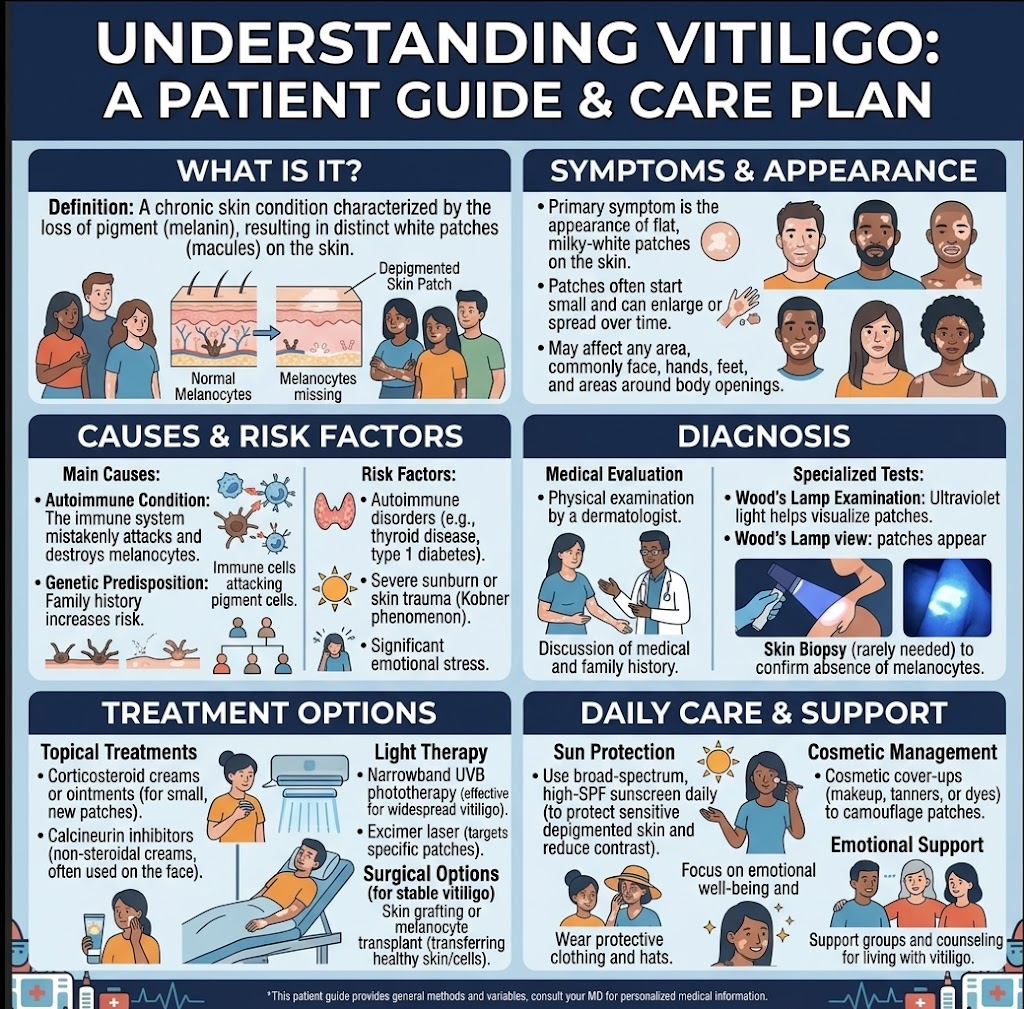
Vitiligo (vit-ih-LIE-go) is a condition that causes the skin to lose its natural color, leading to white patches. These patches can appear anywhere on the body, affecting skin, hair, and the inside of the mouth. This happens when the cells producing melanin—the pigment responsible for skin and hair color—die or stop working. While vitiligo affects all skin types, it may be more noticeable on darker skin. It is not life-threatening or contagious, but can be emotionally challenging. Treatment can help restore some color, but doesn't always prevent new patches or a return of the condition. It often begins before age 30.
Understanding the Condition
Understanding Vitiligo: A Guide to Skin Color Loss
Understanding the Condition
Common Symptoms
Skin Patches: Areas of skin that lose their natural color, appearing lighter or white. These patches often enlarge over time and can occur anywhere on the body.
Hair Discoloration: Hair on the scalp, eyelashes, eyebrows, or beard may turn prematurely gray or white.
Mucous Membrane Changes: Loss of color in the tissues lining the inside of the mouth and nose.
Consultation Guide
Which Specialist to Meet
Before your visit, list all your symptoms (when they started, how they've changed), any medications or supplements you take, and your medical history, including family history of autoimmune conditions. Prepare any questions you have.
Book a doctor visit near me
Consultation Guide
Vitiligo (vit-ih-LIE-go) is a condition that causes the skin to lose its natural color, leading to white patches. These patches can appear anywhere on the body, affecting skin, hair, and the inside of the mouth. This happens when the cells producing melanin—the pigment responsible for skin and hair color—die or stop working. While vitiligo affects all skin types, it may be more noticeable on darker skin. It is not life-threatening or contagious, but can be emotionally challenging. Treatment can help restore some color, but doesn't always prevent new patches or a return of the condition. It often begins before age 30.
Diagnostic Procedures
Initially, consult your general practitioner (GP) or family doctor. For diagnosis and management, a dermatologist (skin specialist) is recommended.
Preparations Before Your Visit
Antinuclear Antibody (ANA) Test
This blood test checks for antinuclear antibodies, which are autoantibodies that can mistakenly attack the body's own tissues. A positive result suggests an autoimmune condition, which can sometimes be linked to vitiligo or rule out other autoimmune diseases.
What to Expect
A healthcare professional will draw a small blood sample from a vein in your arm. You might feel a brief pinch. No special preparation like fasting is usually needed unless other tests are ordered. Inform your doctor about current medications, as they can affect results. You can resume normal activities immediately.
Complete Blood Count (CBC)
A common blood test that measures red blood cells, white blood cells, and platelets. It provides a general health check and can help identify conditions like anemia or infections, which may be associated with or rule out other conditions relevant to vitiligo.
What to Expect
A blood sample will be taken from a vein in your arm. The process is quick. Generally, no special preparation is required unless advised for other concurrent tests. You can return to your regular activities right after.
A procedure to remove a small skin sample for microscopic examination. This confirms vitiligo by showing the absence of pigment-producing cells and helps rule out other skin conditions. Different methods include shave, punch, or excisional biopsies.
What to Expect
The skin area will be cleaned and numbed with a local anesthetic. You will feel pressure, not pain. Depending on the biopsy type (shave, punch, or excisional), a small sample is scraped, cored, or cut out. Stitches may or may not be needed. The wound will be bandaged, and you'll receive care instructions. Mild soreness or bleeding is possible. You can usually go home immediately.
Treatment Options
Home Remedies & Self-Care
Sun Protection: Protecting lighter skin areas from sun exposure is vital to prevent sunburn and minimize the contrast between affected and normal skin. Use high-SPF sunscreen, protective clothing, and seek shade. (Duration: Ongoing)
Cosmetic Camouflage: Using specialized makeup, dyes, or self-tanning products can help cover white patches and blend them with surrounding skin. (Duration: As needed)
Medications
Topical Creams/Ointments: Creams applied directly to the skin can help restore pigment, often by modulating the immune response or stimulating pigment cell production. (Duration: Several months to over a year)
Oral Medications: For extensive vitiligo, oral medicines may be prescribed to reduce the immune system's attack on pigment cells, typically for shorter periods due to potential side effects. (Duration: Weeks to a few months)
Phototherapy (UV Light): Controlled exposure to specific types of ultraviolet (UV) light, often in a clinic, aims to stimulate pigment-producing cells to reactivate. (Duration: 2-3 sessions per week for several months to over a year)
Surgical Procedures
Skin Grafting: Small sections of normally pigmented skin are transferred to white patches. Suitable for stable, smaller areas. (Duration: One-time procedure; healing and pigment spread over weeks to months)
Blister Grafting: Blisters are created on pigmented skin, and the cell-rich tops are transplanted to depigmented areas. (Duration: One-time procedure; healing and re-pigmentation over weeks to months)
Cellular Suspension Transplant: Pigment cells from a small skin area are processed into a liquid and applied to white patches. (Duration: One-time procedure; re-pigmentation over several months)
Depigmentation: For extensive vitiligo, remaining pigmented skin can be lightened using strong topical agents to achieve a uniform skin tone. This is usually a permanent change. (Duration: Several months to achieve full effect)
Regular Medical Check-ups: Maintain regular dermatologist appointments to monitor the condition's progression, discuss treatment effectiveness, and address any new concerns, including potential associated autoimmune conditions.
Prevention & Long-Term Wellbeing
Emotional Support & Stress Management
Seek Support: Connect with support groups, family, friends, or a mental health professional to manage emotional challenges and stress related to vitiligo's impact on self-esteem.
Manage Stress: Incorporate stress-reduction techniques like mindfulness, meditation, or engaging in hobbies to positively impact overall health and potentially influence skin condition progression.
Skin Care & Monitoring
Consistent Sun Protection: Regularly apply high-SPF sunscreen to all exposed skin and use protective clothing to prevent sunburn and minimize skin damage, especially on lighter patches.
Avoid Skin Injury: Be gentle with your skin, as new vitiligo patches can sometimes appear in areas of trauma (Koebner phenomenon).
Balanced Lifestyle: Adopting a healthy diet, ensuring adequate sleep, and engaging in regular, moderate exercise contribute to overall well-being, which can be beneficial for managing any chronic condition.
Tags & Topics
Notice an error or need an update?
Help us keep medical information accurate. Report incorrect info or suggest an edit.


