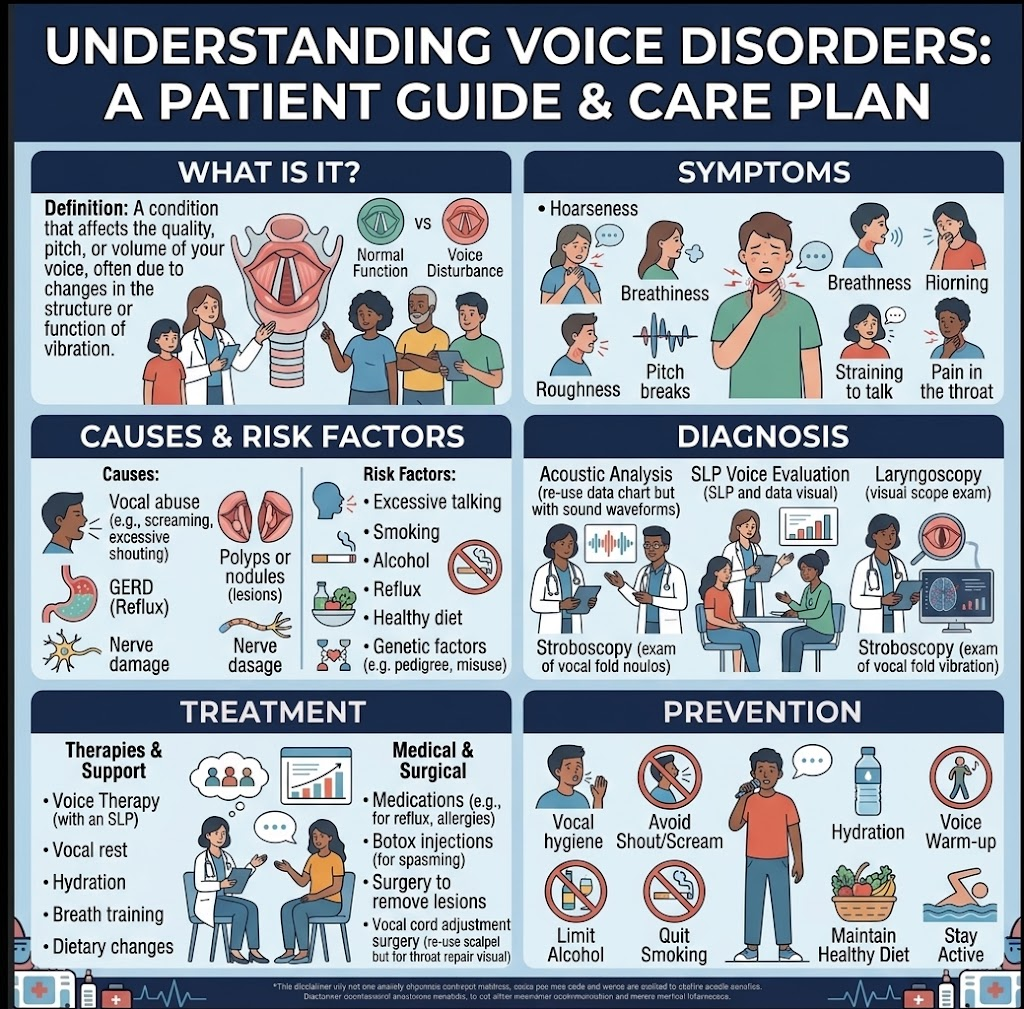
A voice disorder means there's a change in the way your voice sounds, feels, or works. This can happen for many reasons, from simple infections to more complex issues with your vocal cords or the surrounding structures. Specialists trained in ear, nose, and throat conditions, along with speech-language pathologists, work together to identify the cause and create a treatment plan. Treatment approaches vary widely depending on what's causing the problem, and can involve voice exercises, medications, specific procedures, or surgery.
Understanding the Condition
Voice Disorders: Understanding Changes in Your Voice
Understanding the Condition
Common Symptoms
Hoarseness or Roughness: Your voice sounds raspy, gravelly, or harsh.
Breathiness: Voice sounds airy, as if too much air is escaping, making it weak.
Strained or Tense Voice: Voice feels tight, forced, or speaking requires significant effort.
Pitch Changes: Voice becomes noticeably higher or lower, or you struggle to maintain a consistent pitch.
Volume Changes: Difficulty speaking loudly, or voice becomes unusually soft.
Voice Fatigue and Discomfort: Voice tires easily; pain or discomfort in the throat while speaking.
Intermittent Voice Loss: Voice cuts out or disappears temporarily.
Complete Loss of Voice (Aphonia): Inability to produce any sound with your voice.
Consultation Guide
Which Specialist to Meet
An Ear, Nose, and Throat (ENT) specialist, also known as an Otolaryngologist, is the primary doctor for voice issues. They often collaborate with a Speech-Language Pathologist, a therapist specializing in voice and communication, who can provide voice therapy.
Preparations Before Your Visit
Before your visit, list your symptoms (when they started, how they've changed), medical history (conditions, surgeries), all medications, and lifestyle habits (smoking, alcohol, voice use). Prepare questions for your doctor.
Book a doctor visit near me
Monitor for New Symptoms: Be vigilant for any return of voice changes or discomfort, and report them promptly to your doctor.
Consultation Guide
A voice disorder means there's a change in the way your voice sounds, feels, or works. This can happen for many reasons, from simple infections to more complex issues with your vocal cords or the surrounding structures. Specialists trained in ear, nose, and throat conditions, along with speech-language pathologists, work together to identify the cause and create a treatment plan. Treatment approaches vary widely depending on what's causing the problem, and can involve voice exercises, medications, specific procedures, or surgery.
Diagnostic Procedures
Laryngoscopy (Vocal Cord Examination)
A thin, lighted scope with a camera is used to directly examine your vocal cords and voice box (larynx).
What to Expect
A flexible scope goes through your nose, or a rigid scope through your mouth. Your throat may be numbed. You'll be asked to make sounds so the doctor can observe vocal cord movement and appearance.
Videostroboscopy (Detailed Vocal Cord Movement)
Uses a flashing light and camera to create a slow-motion video of vocal cord vibrations, revealing subtle movement issues not visible with standard examination.
What to Expect
Similar to laryngoscopy, a scope is used. You'll make sustained sounds (e.g., 'eee') at different pitches, allowing the doctor to analyze detailed vocal cord vibration.
Acoustic Voice Analysis (Voice Measurement)
Non-invasive computer software objectively measures voice characteristics like pitch, loudness, and breathiness, providing data to track changes.
What to Expect
You'll speak into a microphone (sustaining vowels, reading, or speaking freely) in a quiet room, and the software analyzes your voice signals.
Laryngeal Electromyography (Nerve and Muscle Function)
Assesses electrical activity of voice box muscles, indicating nerve function, often used when vocal cord paralysis or weakness is suspected.
What to Expect
A thin needle electrode is gently inserted into neck muscles. You'll make sounds or swallow while electrical activity is recorded, helping identify nerve damage.
Treatment Options
Voice Rest: Avoiding speaking, whispering, or yelling to allow inflamed or injured vocal cords to heal. (Duration: Typically a few days to a week, or as advised by your doctor.)
Hydration: Drinking plenty of water throughout the day to keep vocal cords moist, which helps them vibrate more efficiently. (Duration: Ongoing, as a daily habit for vocal health.)
Medications
Medications for Underlying Conditions: Drugs to reduce stomach acid (for reflux), control allergies, reduce inflammation, or treat bacterial/viral infections that affect the voice box. (Duration: Varies; short-term (days-weeks) to long-term for chronic conditions.)
Therapies
Voice Therapy (Speech Therapy): Guided exercises and techniques taught by a Speech-Language Pathologist to improve vocal technique, reduce strain, strengthen vocal cords, and promote healthy voice use. (Duration: Weekly sessions over several weeks to months, with daily home practice.)
Vocal Cord Injections: Injections into the vocal cords to either temporarily relax muscles (e.g., for spasmodic dysphonia) or to plump up a paralyzed or weakened vocal cord for better voice production. (Duration: Effects can last for 3-6 months, often requiring repeat injections.)
Surgical Procedures
Microlaryngoscopy with Vocal Cord Surgery: A precise surgical procedure performed under general anesthesia to remove non-cancerous growths (like polyps, nodules, or cysts), or precancerous/cancerous lesions from the vocal cords. (Duration: One-time procedure, followed by a period of voice rest (days to weeks) and often voice therapy for recovery.)
Throat Cancer Surgery: For cancerous growths, surgery may involve removing the tumor and surrounding affected tissues, with the extent depending on the stage and location of the cancer. (Duration: One-time procedure, often followed by radiation or chemotherapy depending on the cancer type and stage.)
Regular Follow-ups: Attend scheduled appointments with your ENT specialist, especially after treatment for vocal cord lesions, paralysis, or cancer, to monitor healing and prevent recurrence.
Adhere to Voice Therapy: Continue practicing voice exercises and techniques learned in therapy to maintain vocal health and prevent future issues, especially for chronic voice users.
Prevention & Long-Term Wellbeing
Avoiding Irritants: Limiting exposure to smoke, excessive alcohol, and certain foods that can irritate the throat and vocal cords. (Duration: Ongoing, especially during recovery and for long-term prevention.)
Vocal Cord Medialization (for Paralysis): Surgical techniques aimed at moving a paralyzed vocal cord closer to the midline, allowing it to better meet the healthy vocal cord for improved voice quality and swallowing. (Duration: One-time procedure, followed by recovery and sometimes voice therapy.)
Prevention
Practice Vocal Hygiene & Avoid Irritants: Learn healthy voice habits (warm-ups, speaking at a comfortable pitch/volume) and limit smoking, excessive alcohol, and environmental irritants that damage vocal cords.
Stay Hydrated: Drink plenty of water throughout the day to keep your vocal cords lubricated, which is essential for their proper function.
Manage Health Conditions & Rest When Sick: Effectively treat GERD, allergies, and respiratory infections. Give your voice adequate rest during illness to prevent injury.
Long-Term Monitoring
Tags & Topics
Notice an error or need an update?
Help us keep medical information accurate. Report incorrect info or suggest an edit.


