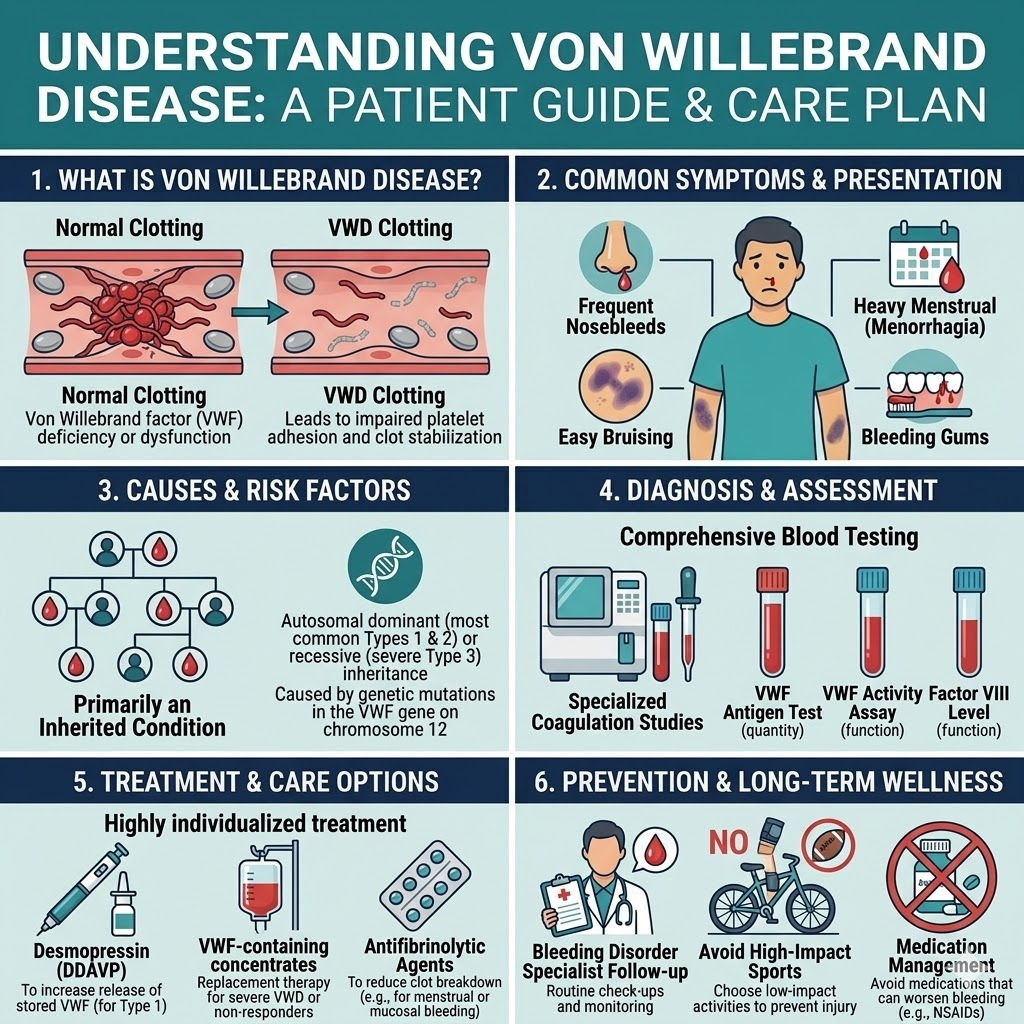
Von Willebrand disease (VWD) is an inherited bleeding disorder where blood doesn't clot properly. This happens because the body has low levels of a crucial protein called von Willebrand factor, or the protein doesn't work effectively. This factor helps platelets, tiny blood cells, stick together to form clots. As a lifelong condition, VWD can cause increased or prolonged bleeding, but it is manageable with treatments and self-care, enabling many to lead active lives. Severity varies widely among individuals.
Understanding the Condition
Von Willebrand Disease: An Easy-to-Understand Guide to a Common Bleeding Disorder
Understanding the Condition
Common Symptoms
Easy Bruising: Frequent, large, or raised bruises that appear with little to no obvious injury.
Frequent or Prolonged Nosebleeds: Nosebleeds that occur often or are difficult to stop.
Rare Symptoms Requiring Urgent Care: Visible blood in urine or stool, or bleeding into joints and muscles causing pain, swelling, or warmth.
Heavy Menstrual Periods: Periods that are unusually heavy, soaking through pads or tampons hourly, requiring double protection, waking you at night to change products, or lasting longer than seven days.
Large Blood Clots During Periods: Passing blood clots larger than a quarter during menstruation.
Regular Medical Follow-ups: Schedule routine appointments with your hematologist to monitor your condition, adjust treatments as needed, and address any new symptoms or concerns.
Consider Genetic Counseling: If you plan to have children, consider genetic counseling to understand the risks of passing the condition to your offspring.
Consultation Guide
Von Willebrand disease (VWD) is an inherited bleeding disorder where blood doesn't clot properly. This happens because the body has low levels of a crucial protein called von Willebrand factor, or the protein doesn't work effectively. This factor helps platelets, tiny blood cells, stick together to form clots. As a lifelong condition, VWD can cause increased or prolonged bleeding, but it is manageable with treatments and self-care, enabling many to lead active lives. Severity varies widely among individuals.
Signs of Anemia: Feeling tired, weak, dizzy, or short of breath due to low iron levels caused by blood loss from heavy periods.
Consultation Guide
Which Specialist to Meet
Diagnostic Procedures
For diagnosis and management of Von Willebrand disease, you will typically see a **Hematologist**, a doctor specializing in blood disorders. Your primary care physician coordinates overall care. A **Genetic Counselor** may also be helpful to discuss inherited aspects and family implications.
Preparations Before Your Visit
Von Willebrand Factor Antigen Test
This blood test measures the actual amount of von Willebrand factor protein present in your blood.
What to Expect
A healthcare professional will draw a small blood sample, usually from a vein in your arm, using a needle. You might feel a brief pinch. The sample is then sent to a lab for analysis.
Von Willebrand Factor Activity Test
This test assesses how well your von Willebrand factor protein functions in helping platelets clump together to form a clot.
What to Expect
Similar to the antigen test, a blood sample will be drawn from your arm and analyzed in a lab to determine the effectiveness of the VWF protein.
Factor VIII Activity Test
This test measures the activity level of Factor VIII, another important clotting protein that is often protected by von Willebrand factor.
What to Expect
A standard blood draw from a vein in your arm will be performed. This helps evaluate the broader impact of VWD on your overall clotting system.
Platelet Function Screening Test
This test evaluates how well your platelets, the tiny cells crucial for stopping bleeding, are working to initiate a primary clot. Platelet function is often affected in VWD.
What to Expect
A blood sample from your arm is collected. The sample is then placed in a specialized machine that measures the time it takes for platelets to form a plug.
Genetic Testing (if necessary)
In some cases, especially to confirm the specific type of VWD or for family planning, genetic testing may be performed to identify the exact gene change responsible for the condition.
What to Expect
A blood sample or a cheek swab might be collected. The sample is then sent to a specialized lab to analyze your DNA for specific genetic mutations linked to Von Willebrand disease.
Treatment Options
Extended Bleeding from Minor Injuries: Bleeding for a significantly longer time than expected after small cuts, dental work, or surgery.
Unusual Bleeding After Procedures: Significant or prolonged bleeding following childbirth, medical, or dental procedures.
Before your visit:* Track bleeding episodes: note dates, duration, severity, and how you managed them.* List all medications, supplements, and over-the-counter drugs you currently take.* Gather your family medical history, focusing on any relatives with bleeding issues.* Prepare a list of questions you have for your doctor.
Book a doctor visit near me
Medications
Hormonal Contraceptives: Oral or other hormonal therapies can increase von Willebrand factor and Factor VIII levels, significantly reducing menstrual bleeding in women and people who menstruate. (Duration: Ongoing, typically daily or cyclical.)
Von Willebrand Factor Concentrates: These are medications given by injection directly into a vein, containing concentrated amounts of von Willebrand factor and Factor VIII. They are used for treating bleeding episodes or preventing bleeding before surgery or dental procedures. (Duration: As needed for bleeding episodes; short-term before procedures.)
Desmopressin: This is a synthetic hormone, administered as an injection or a nasal spray, that prompts your body to release its stored von Willebrand factor and Factor VIII from the lining of your blood vessels. (Duration: As needed for bleeding; short-term before procedures.)
Clot-Stabilizing Medications: Oral or injectable medications that help stabilize blood clots once they've formed, preventing them from breaking down too quickly. They are often used for mouth bleeds or heavy menstrual bleeding. (Duration: As needed for bleeding; short-term before procedures.)
Home Remedies & Self-Care
Prompt First Aid: Applying direct pressure to cuts, using ice packs to reduce swelling and bruising, and elevating affected limbs can help manage minor bleeds. (Duration: As needed.)
Medication Awareness: Avoid over-the-counter pain relievers that can thin blood, such as aspirin or ibuprofen, unless specifically approved by your doctor. (Duration: Ongoing.)
Discuss All Medications: Always inform your doctor about all medications, including over-the-counter drugs, vitamins, and herbal supplements, as some can worsen bleeding.
Pre-Procedure Communication: Always inform your dentist or any surgeon about your VWD well in advance of any procedures so they can take necessary precautions and coordinate with your hematologist.
Safe Exercise Choices: Engage in regular, moderate exercise but choose activities with a lower risk of injury. Discuss suitable sports and activities with your doctor.
Proactive Menstrual Management: Work closely with your doctor to effectively manage heavy periods, which may involve specific medications or hormonal therapies, to prevent anemia and discomfort.
Prevention & Long-Term Wellbeing
Medical Alert Identification: Wear a medical alert bracelet or carry a card that clearly states you have Von Willebrand disease. This is crucial in emergencies to inform healthcare providers.
Tags & Topics
Notice an error or need an update?
Help us keep medical information accurate. Report incorrect info or suggest an edit.


