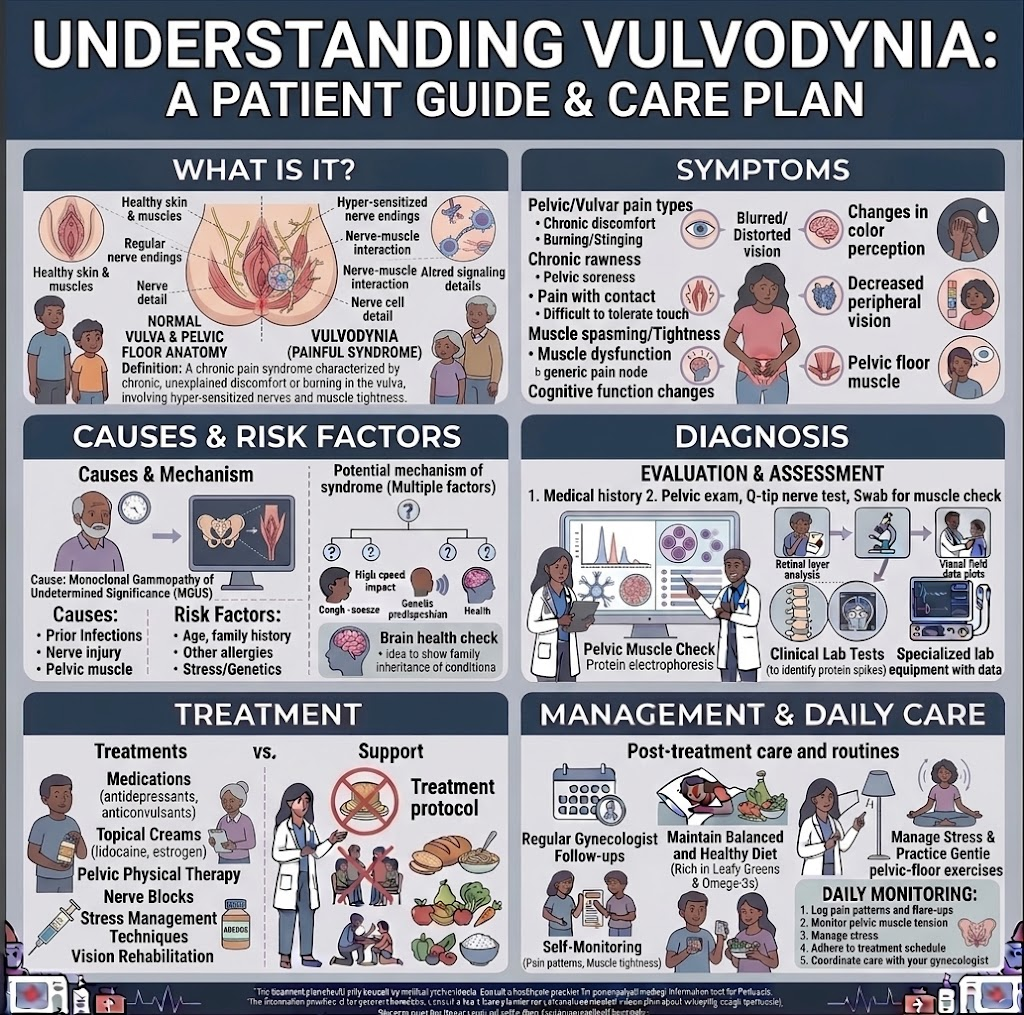
Vulvodynia (vul-voe-DIN-e-uh) is a condition characterized by long-term pain, burning, or discomfort in the vulva, which is the outer part of the female genitals. This pain lasts for at least three months and has no clear identifiable cause. It can be so intense that it makes everyday activities, such as sitting or sexual intimacy, very difficult or impossible. The condition can persist for months to several years, significantly impacting quality of life.
Understanding the Condition
Understanding Vulvodynia: Chronic Pelvic Pain in Women
Understanding the Condition
Common Symptoms
Main Symptom: Vulvar Pain: The primary symptom of vulvodynia is pain in the vulva, which includes the opening of the vagina. This pain is often described as: burning, stinging, irritation, rawness, sharp or knife-like sensation, aching, throbbing, or swelling. The severity and location of the pain vary among individuals. It can be constant, come and go, or only flare up when the vulva is touched. Pain might be felt throughout the entire vulva (generalized vulvodynia) or concentrated in a specific area, such as the tissue surrounding the vaginal opening (localized vulvodynia), which is more common.
Appearance of the Vulva: Despite intense pain, the vulva often looks normal. Sometimes, there might be slight inflammation or swelling, but typically, there are no visible signs to explain the discomfort.
Consultation Guide
Which Specialist to Meet
If you experience symptoms of vulvodynia, it's important to speak with a healthcare professional. You should consult a gynecologist, a women's health specialist, or a pain management specialist. They can help diagnose your condition, rule out other causes, and guide you towards appropriate treatments.
Preparations Before Your Visit
Before your appointment, prepare by: 1. Keeping a symptom diary: Note when your pain occurs, what triggers it, what makes it better or worse, and how it impacts your daily life. 2. Listing all medications, supplements, and vitamins you take. 3. Writing down any questions you have. 4. Avoiding douching, vaginal creams, or sexual activity for 24-48 hours before a pelvic exam, if one is anticipated. Be ready to openly discuss the impact of your pain on your physical and emotional well-being.
Book a doctor visit near me
Since vulvodynia has no clear cause, diagnosis involves ruling out other conditions that could be causing similar symptoms. These tests help ensure your pain isn't due to an infection or other treatable issues.
Comfort Measures: Applying cool gel packs (wrapped in cloth) or taking sitz baths (sitting in warm water) can help soothe the area. Using a donut cushion for sitting may also reduce pressure. (Duration: As needed for symptom relief)
Regular Medical Follow-ups: Continue to work closely with your healthcare team to monitor your symptoms, adjust treatments as needed, and address any new concerns. Consistency in care is key for long-term management.
Consultation Guide
Vulvodynia (vul-voe-DIN-e-uh) is a condition characterized by long-term pain, burning, or discomfort in the vulva, which is the outer part of the female genitals. This pain lasts for at least three months and has no clear identifiable cause. It can be so intense that it makes everyday activities, such as sitting or sexual intimacy, very difficult or impossible. The condition can persist for months to several years, significantly impacting quality of life.
Diagnostic Tests to Rule Out Other Causes
**Infection Screening:** During the pelvic exam, swabs from the vaginal area may be taken to test for common causes of discomfort, such as yeast infections, bacterial infections, or sexually transmitted infections (like herpes). This usually involves a quick, painless swabbing of the area. 2. **Q-Tip Test (Cotton Swab Test):** The doctor may gently touch specific areas of your vulva with a cotton swab to pinpoint exactly where you feel pain and to assess its intensity. This helps map out the areas of tenderness. 3. **Skin Biopsy:** In some cases, if there are suspicious lesions or if inflammatory skin conditions are suspected, a small tissue sample (biopsy) might be taken from the vulva for microscopic examination. This is usually done under local anesthetic to minimize discomfort.
Topical Anesthetics: Creams or gels can be applied directly to the vulva to temporarily numb the painful area before activities that might cause pain. (Duration: As needed, for short-term relief)
Diagnostic Procedures
A pelvic exam is performed to check the health of your reproductive organs (vulva, vagina, cervix, uterus, and ovaries) and to rule out other conditions that might be causing your pain. It's a key part of identifying the source of your discomfort.
What to Expect
You will lie on an exam table with your feet supported in stirrups. The doctor will first visually inspect your outer genitals (vulva) for any visible abnormalities. Then, a speculum (a medical instrument) will be gently inserted into your vagina to allow the doctor to view your cervix. During this time, the doctor might take swabs for various tests. Finally, the doctor will insert gloved fingers into your vagina while gently pressing on your abdomen to feel your uterus and ovaries. The exam typically lasts only a few minutes. You might feel some pressure or mild discomfort, but it should not be intensely painful. It's important to communicate any pain you experience during the exam to your doctor.
What to Expect
Treatment Options
Medications
Oral Medications for Nerve Pain: Low-dose medications, such as certain antidepressants or anticonvulsants, can help calm overactive nerve signals involved in chronic pain. (Duration: Long-term, typically several months to years)
Topical Hormones: For some women, particularly those with hormonal changes (e.g., after menopause), topical estrogen creams may help improve vulvar tissue health and reduce pain. (Duration: Long-term, typically several months)
Therapies
Pelvic Floor Physical Therapy: A specialized physical therapist can teach you exercises and techniques to relax tense pelvic floor muscles, improve muscle strength and coordination, and reduce nerve irritation. This may involve manual therapy, biofeedback, and stretching. (Duration: Several weeks to months)
Biofeedback: This technique helps you learn to control certain body responses, such as muscle tension. Through electronic sensors, you receive real-time information about your body's functions, helping you learn to relax pelvic floor muscles and manage pain. (Duration: Several weeks to months)
Cognitive Behavioral Therapy (CBT): A type of talk therapy that helps you develop coping strategies for chronic pain. CBT can change how you perceive pain, reduce stress, and improve your overall emotional well-being. (Duration: Several weeks to months)
Nerve Blocks: Injections of local anesthetic or other medications directly into specific nerves can temporarily block pain signals, providing relief for some individuals. (Duration: Temporary relief, can be repeated as needed)
Surgical Procedures
Vestibulectomy: For severe localized vulvodynia that has not responded to other treatments, a surgical procedure to remove the painful tissue around the vaginal opening may be considered. This is usually a last resort. (Duration: One-time procedure, with recovery taking several weeks to months)
Prevention & Long-Term Wellbeing
Lifestyle & Home Remedies
Avoiding Irritants: Use mild, unscented soaps or just water for washing the vulva. Avoid douches, scented pads/tampons, harsh laundry detergents, and tight-fitting clothing. Wear loose, cotton underwear to allow air circulation. (Duration: Ongoing)
Mental and Emotional Support
Counseling and Therapy: Seek support for anxiety, depression, or emotional distress that often accompanies chronic pain. A therapist can provide strategies for coping and improving mood.
Support Groups: Connecting with others who have vulvodynia can provide a sense of community, reduce isolation, and offer valuable insights and shared coping strategies.
Managing Relationships and Intimacy
Open Communication: Talk honestly with your partner about your pain and how it affects intimacy. Open dialogue can help maintain closeness and reduce feelings of guilt or misunderstanding.
Alternative Intimacy: Explore non-penetrative ways to maintain physical closeness and sexual satisfaction. Focus on comfort, communication, and mutual pleasure.
Stress and Lifestyle Management
Stress Reduction Techniques: Incorporate mindfulness, meditation, deep breathing exercises, or yoga into your daily routine to help manage stress, which can exacerbate pain.
Prioritize Sleep: Establish a consistent sleep schedule and create a comfortable sleep environment. Quality sleep is crucial for overall health and pain management.
Gentle Exercise: Engage in low-impact activities like walking, swimming, or gentle stretching. These can improve overall well-being without aggravating vulvar pain.
Long-Term Monitoring
Tags & Topics
Notice an error or need an update?
Help us keep medical information accurate. Report incorrect info or suggest an edit.


