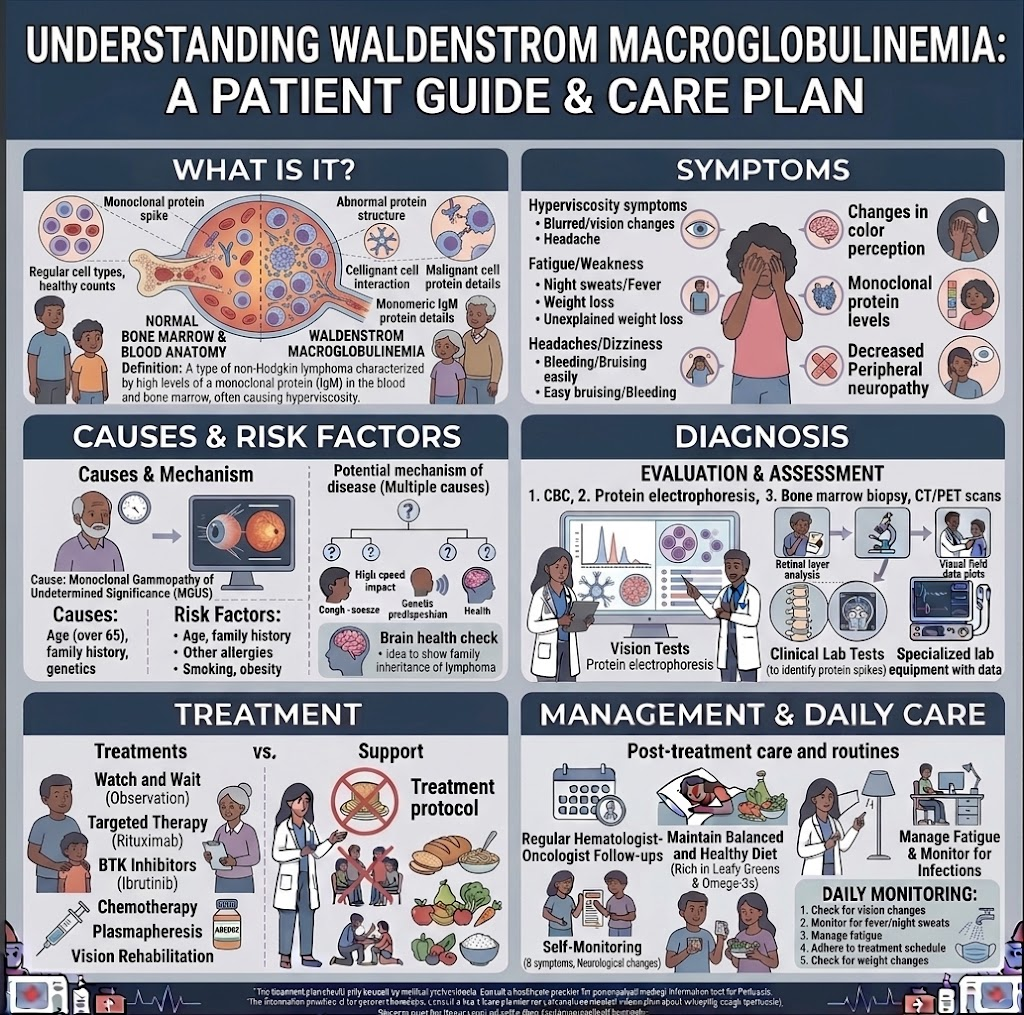
Waldenstrom Macroglobulinemia (mak-roe-glob-yoo-lih-NEE-me-uh) is a rare, slow-growing cancer of white blood cells, classified as a non-Hodgkin lymphoma. It begins in the bone marrow, where abnormal cells produce a large amount of an unusual protein called immunoglobulin M (IgM). This excess IgM thickens the blood, potentially slowing circulation and damaging organs. While not curable, treatments manage symptoms, reduce IgM levels, and prevent organ damage, helping patients maintain quality of life.
Understanding the Condition
Waldenstrom Macroglobulinemia: Understanding This Rare Blood Cancer
Understanding the Condition
Waldenstrom Macroglobulinemia (mak-roe-glob-yoo-lih-NEE-me-uh) is a rare, slow-growing cancer of white blood cells, classified as a non-Hodgkin lymphoma. It begins in the bone marrow, where abnormal cells produce a large amount of an unusual protein called immunoglobulin M (IgM). This excess IgM thickens the blood, potentially slowing circulation and damaging organs. While not curable, treatments manage symptoms, reduce IgM levels, and prevent organ damage, helping patients maintain quality of life.
Common Symptoms
Night Sweats: Profuse sweating during sleep.
Unexplained Weight Loss: Losing weight without trying.
Numbness or Weakness: Tingling, numbness, or weakness in arms or legs.
Swollen Lymph Nodes: Lumps felt under the skin, often in the neck, armpits, or groin.
Left Side Pain or Fullness: Discomfort under the left ribs, possibly from an enlarged spleen.
Easy Bruising: Bruising without significant injury.
Hyperviscosity Syndrome (thickened blood): Caused by too much IgM, leading to slowed blood flow. Symptoms include:* **Vision Changes:** Blurry or double vision, or vision loss.* **Ringing in Ears (Tinnitus):** Hearing buzzing or ringing.* **Sudden Hearing Loss:** Abrupt decrease in hearing.* **Bleeding Issues:** Nosebleeds or bleeding gums.* **Shortness of Breath:** Difficulty breathing.* **Memory Problems:** Issues with memory or concentration.
Consultation Guide
Which Specialist to Meet
Before your appointment, gather your complete medical history, including any past illnesses, surgeries, and family medical history. Make a list of all medications, vitamins, and supplements you are currently taking. Write down any symptoms you've experienced and any questions you have for the doctor. Bringing a family member or friend can also be helpful for support and to help remember important information.
Book a doctor visit near me
Observation: For asymptomatic or very slow-growing disease, regular monitoring without immediate treatment is chosen to avoid side effects until necessary. (Duration: Ongoing, with regular check-ups (e.g., every 3-6 months) until symptoms worsen.)
Plasma Exchange (Plasmapheresis): Rapidly removes excess IgM protein from the blood to reduce blood thickness and relieve hyperviscosity symptoms. (Duration: Short-term, 1-3 sessions over days, as needed for high IgM levels.)
Symptom Vigilance: Promptly report any new or worsening symptoms, especially those of hyperviscosity or Bing-Neel syndrome, for timely intervention.
Consultation Guide
Performed from the hip bone after local numbing. Expect pressure; aspiration may cause a brief pulling, biopsy a twisting sensation. Takes 15-30 minutes, with post-procedure soreness.
CT Scan (Computerized Tomography)
Uses X-rays and computer processing for detailed cross-sectional images of internal body structures, helping to locate areas of cancer cell accumulation.
Diagnostic Procedures
You should consult with a **hematologist-oncologist**, a medical doctor who specializes in diagnosing and treating blood disorders and cancers. They will coordinate your care and discuss the best treatment plan for your specific condition.
Preparations Before Your Visit
Complete Blood Count (CBC)
A blood test measuring red and white blood cells and platelets to assess general health and detect blood conditions.
What to Expect
A small blood sample is drawn from an arm vein, causing a brief pinch.
Bone Marrow Aspiration and Biopsy
Collects liquid and solid tissue samples from bone marrow to diagnose Waldenstrom Macroglobulinemia, identify cancer cells, and evaluate blood cell production.
What to Expect
What to Expect
You lie on a table that moves through a scanner. Remain still. A contrast dye may be used, possibly causing a warm sensation.
PET Scan (Positron Emission Tomography)
An imaging test that uses a radioactive tracer to highlight metabolically active areas, often indicative of cancer. Frequently combined with CT (PET-CT).
What to Expect
After tracer injection, wait about an hour. Then, lie still on a table inside the scanner for 30-45 minutes.
Lumbar Puncture (Spinal Tap)
Collects cerebrospinal fluid (CSF) from around the brain and spinal cord to check for cancer spread (Bing-Neel syndrome) or other neurological issues.
What to Expect
While lying on your side with knees to chest, your lower back is numbed. A thin needle collects CSF. Expect pressure. The procedure takes 30-45 minutes; lying flat afterwards can help prevent headaches.
Regular Medical Follow-ups: Crucial for monitoring disease progression, treatment effectiveness, and early detection of complications through blood tests and physical exams.
Treatment Options
Watch and Wait Approach
Medication-Based Therapies
Targeted Therapy: Medications that specifically block pathways enabling cancer cell growth and survival, aiming for precise action with fewer side effects. (Duration: Varies by agent and response; often continuous for months or years.)
Chemotherapy: Uses powerful drugs (oral or IV) to kill fast-growing cancer cells, reducing disease burden. (Duration: Typically in cycles (e.g., every 3-4 weeks) over several months.)
Immunotherapy: Boosts or helps the body's immune system recognize and attack cancer cells. (Duration: Administered in cycles, often for several months or longer.)
Prevention & Long-Term Wellbeing
Bone Marrow Transplant (Stem Cell Transplant): Replaces diseased bone marrow with healthy blood-forming stem cells after high-dose chemotherapy. Considered for younger patients with aggressive or relapsed disease. (Duration: A single intensive procedure, with several weeks to months of hospital and home recovery.)
Monitoring and Self-Care
Healthy Lifestyle: Maintain good hydration and a balanced diet to support overall health and manage blood thickness. Engage in appropriate physical activity and ensure adequate rest.
Infection Prevention: With a weakened immune system, practice strict hand hygiene, avoid crowds, and discuss vaccinations with your doctor.
Emotional Support: Seek support from groups, therapists, or loved ones to help manage the emotional challenges of living with cancer.
Bone Health and Fatigue Management: Discuss strategies with your doctor to maintain bone health. Manage cancer-related fatigue by prioritizing rest and planning activities during peak energy.
Tags & Topics
Notice an error or need an update?
Help us keep medical information accurate. Report incorrect info or suggest an edit.


