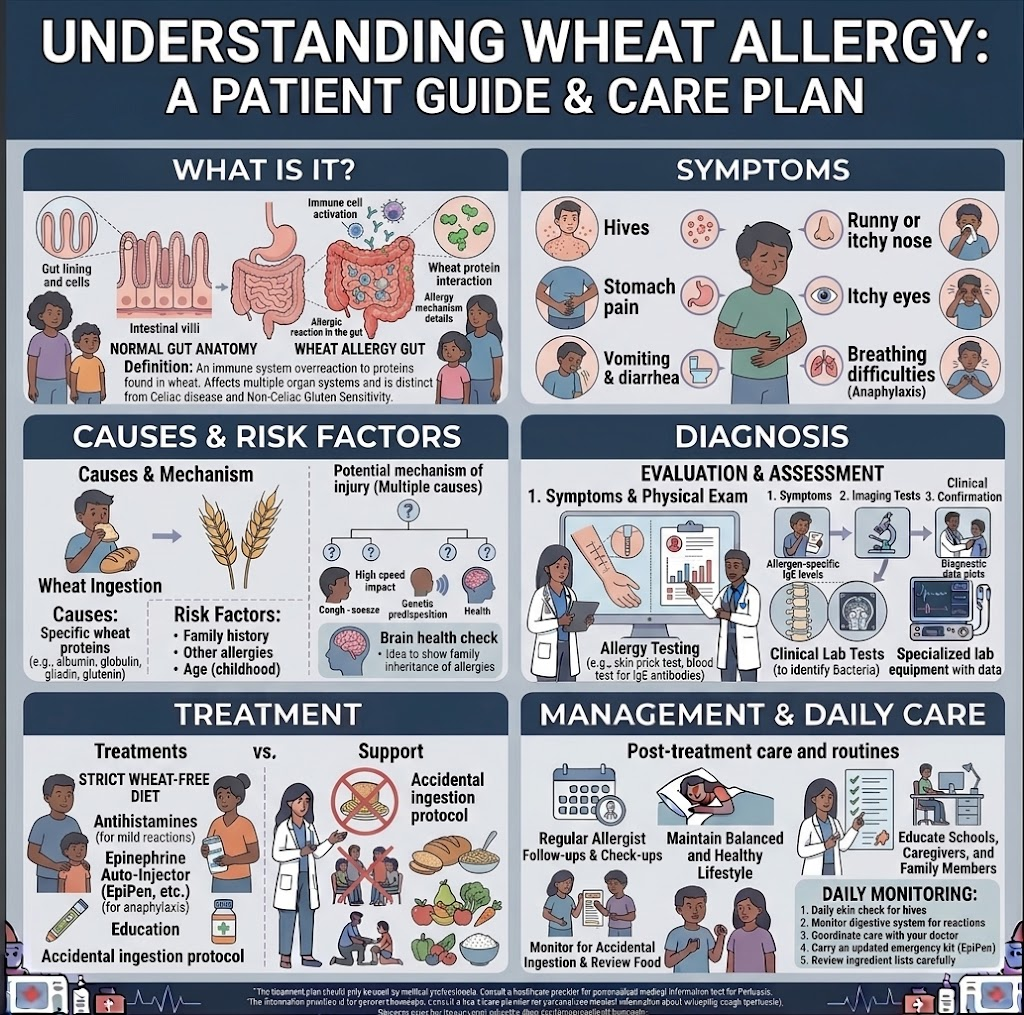
Wheat allergy is an immune system reaction to proteins found in wheat. It is distinct from celiac disease, which is a different immune response to gluten (a specific wheat protein). While both involve wheat, their underlying mechanisms and treatments differ. Wheat allergy is more prevalent in children than adults, and symptoms can appear rapidly after exposure to wheat through eating, inhaling flour, or skin contact. Managing wheat allergy primarily involves strictly avoiding wheat-containing foods and products, and being prepared to treat accidental reactions.
Understanding the Condition
Wheat Allergy: Understanding and Managing Reactions
Understanding the Condition
Wheat allergy is an immune system reaction to proteins found in wheat. It is distinct from celiac disease, which is a different immune response to gluten (a specific wheat protein). While both involve wheat, their underlying mechanisms and treatments differ. Wheat allergy is more prevalent in children than adults, and symptoms can appear rapidly after exposure to wheat through eating, inhaling flour, or skin contact. Managing wheat allergy primarily involves strictly avoiding wheat-containing foods and products, and being prepared to treat accidental reactions.
Common Symptoms
Common Allergy Symptoms: These reactions can occur within minutes to hours after exposure to wheat. They include skin rashes and hives (itchy red bumps), nausea, vomiting, diarrhea, stomach pain, stuffy or runny nose, sneezing, headaches, and asthma-like symptoms such as wheezing or difficulty breathing.
Anaphylaxis (Severe Allergic Reaction): For some individuals, wheat allergy can trigger a severe, life-threatening reaction called anaphylaxis. This medical emergency requires immediate attention. Symptoms include swelling of the throat or mouth, difficulty breathing, a sudden drop in blood pressure (leading to shock), a rapid heartbeat, dizziness, and fainting. If these signs occur, call emergency services immediately.
Consultation Guide
Which Specialist to Meet
Before your appointment, keep a detailed diary of symptoms, including what you ate, when symptoms appeared, and how long they lasted. Note any other relevant information, such as medications taken or activities performed. Prepare a list of questions for the doctor, and be ready to discuss your family's medical history.
Book a doctor visit near me
This diagnostic approach involves temporarily removing wheat and wheat-containing products from your diet for a period, typically one to two weeks, to see if symptoms improve. If symptoms clear up, wheat is then reintroduced to see if they return.
Under the guidance of your doctor or a dietitian, you will carefully eliminate all sources of wheat from your diet. This requires meticulous label reading. If symptoms improve, wheat is then slowly reintroduced. If symptoms reappear, it strengthens the suspicion of a wheat allergy. This process helps identify potential triggers.
Antihistamines: These medications can help relieve mild symptoms such as itching, hives, or a runny nose if you've had accidental, minor wheat exposure. (Duration: As needed, to manage immediate mild symptoms.)
Consultation Guide
A healthcare professional will draw a small amount of blood, typically from a vein in your arm. This is a standard blood draw and may cause a brief pinch or minor discomfort. The sample is then sent to a lab for analysis, and results usually take a few days.
Diagnostic Procedures
If you suspect you or your child has a wheat allergy, consult an allergist or immunologist. These specialists are trained to diagnose and manage allergies.
Preparations Before Your Visit
This test involves placing a tiny amount of liquid containing wheat protein extracts on your skin, usually on the forearm or back. The skin is then lightly pricked, allowing the substance to enter just below the surface.
What to Expect
The test is usually not painful, but you might feel a mild, brief pinch. You'll wait about 15-20 minutes to see if a small, red, itchy bump (wheal) develops at the test site, similar to a mosquito bite. This reaction indicates a potential allergy.
Blood Test (Specific IgE Antibodies)
A blood sample is taken to measure the amount of specific antibodies (immunoglobulin E, or IgE) your body produces in response to wheat proteins. Higher levels of wheat-specific IgE antibodies can indicate an allergy.
What to Expect
Considered the most definitive test, an oral food challenge involves eating small, increasing amounts of wheat under strict medical supervision. This is done only if other tests are inconclusive or if the allergy is thought to have been outgrown.
What to Expect
This test is conducted in a medical setting, usually a doctor's office or clinic, where emergency equipment is available. You will be given carefully measured, gradually increasing doses of wheat. Medical staff will closely monitor you for any allergic reactions. If a reaction occurs, the challenge is stopped, and treatment is provided. If no reaction occurs, wheat allergy may be ruled out.
What to Expect
Treatment Options
Strict Wheat Avoidance: The primary treatment involves completely removing wheat and all wheat-containing products from your diet. This includes obvious sources like bread and pasta, as well as hidden sources in processed foods, condiments, and even non-food items. (Duration: Lifelong, unless the allergy is outgrown (more common in children, which should be re-evaluated periodically by an allergist).)
Medications for Allergic Reactions
Epinephrine Auto-Injector: For individuals at risk of anaphylaxis, carrying a prescribed epinephrine auto-injector is crucial. This device delivers a dose of medication that can quickly reverse severe allergic reactions. (Duration: Always carry two auto-injectors. Used immediately in case of severe reaction. Seek emergency medical care after use.)
Prepare for Accidental Exposure: Always carry your prescribed emergency medications, such as an epinephrine auto-injector, if you are at risk for severe reactions. Understand how and when to use them, and ensure those close to you also know how to administer them.
Identify Cross-Reactivity: Some individuals with wheat allergy may also react to other grains like barley, rye, and oats. Discuss potential cross-reactivity with your allergist to determine if you need to avoid these grains as well.
Regular Follow-ups and Re-evaluation: Schedule regular appointments with your allergist, especially for children. Allergy re-evaluation can determine if the allergy has been outgrown, which might allow for reintroduction of wheat under medical supervision.
Prevention & Long-Term Wellbeing
Dietary Management
Prevention and Long-Term Management
Become a Label-Reading Expert: Always read food labels carefully. Wheat can be listed under various names (e.g., farina, graham flour, semolina, spelt, durum, triticale, modified food starch, vegetable gum). Be aware of hidden wheat in unexpected products like soy sauce, ice cream, hot dogs, candies, and even some cosmetics or bath products.
Educate Others and Communicate Your Allergy: Inform family, friends, caregivers, school staff, and restaurant servers about your wheat allergy. When dining out, ask detailed questions about ingredients and preparation methods. Consider carrying an allergy chef card.
Tags & Topics
Notice an error or need an update?
Help us keep medical information accurate. Report incorrect info or suggest an edit.


