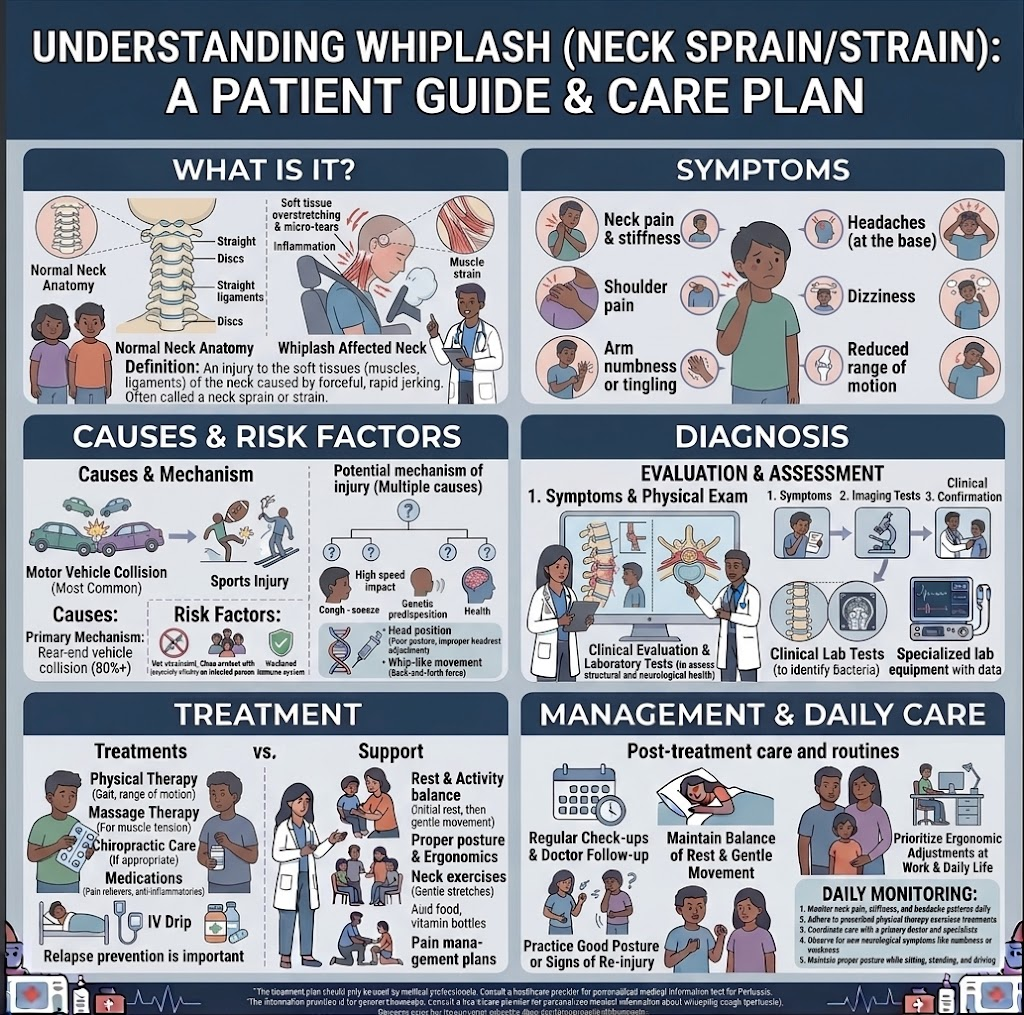
Whiplash is a neck injury caused by a sudden, forceful back-and-forth motion of the head, similar to the cracking of a whip. This rapid movement strains neck muscles and ligaments. While often associated with rear-end car accidents, it can also result from sports injuries, physical abuse, or falls. Though sometimes called a neck sprain or strain, these terms cover broader neck injuries. Most individuals recover within a few weeks with pain management and gentle exercises, but some experience long-lasting pain and complications.
Understanding the Condition
Whiplash: Understanding and Managing Neck Injuries
Understanding the Condition
Common Symptoms
Neck Pain and Stiffness: Aching and rigid feeling in the neck.
Pain Worsened by Movement: Discomfort increasing with neck movement.
Limited Neck Movement: Difficulty turning or bending the neck.
Headaches: Pain, often starting at the skull's base.
Shoulder, Upper Back, or Arm Pain: Soreness or aching in these areas.
Tingling or Numbness in Arms: Pins and needles sensation or loss of feeling.
Blurred Vision: Unclear sight.
Ringing in the Ears (Tinnitus): Hearing ringing/buzzing without external sound.
Trouble Sleeping: Difficulty falling or staying asleep.
Irritability: Increased crankiness or mood changes.
Difficulty Focusing: Trouble concentrating.
Memory Problems: Difficulty recalling information.
Depression: Persistent sadness or loss of interest.
Consultation Guide
Which Specialist to Meet
Initially, consult your primary care doctor. They may refer you to specialists like an orthopedic doctor (bone and joint), neurologist (nerve), physical therapist, pain management specialist, or chiropractor. Depending on your symptoms and recovery, more specialized care may be recommended.
Preparations Before Your Visit
Before your visit, list your symptoms (onset, severity, what helps/worsens them), discuss recent injuries, bring medical history, current medications, and questions.
Book a doctor visit near me
Ice and Heat Application: Apply ice packs for 15-20 minutes during the first 24-48 hours to reduce swelling. Then, use warm compresses or heat pads to relax muscles and improve blood flow. (Duration: As needed for symptom relief, typically for several weeks.)
Gentle Movement and Stretches: Once acute pain lessens, gently move your neck through its range of motion. Perform light stretches as advised to prevent stiffness and improve flexibility. (Duration: Ongoing, often several weeks to months.)
Rest: Take short periods of rest, avoiding prolonged immobilization which can worsen stiffness. Balance activity with rest. (Duration: Primarily during the initial acute phase (a few days).)
Supportive Pillow: Use a specialized cervical pillow for proper neck alignment while sleeping. (Duration: Long-term, as needed for comfort and support.)
Symptom Monitoring and Follow-up: Report any persistent, worsening, or new symptoms to your healthcare provider for evaluation and treatment adjustment.
Consultation Guide
Whiplash is a neck injury caused by a sudden, forceful back-and-forth motion of the head, similar to the cracking of a whip. This rapid movement strains neck muscles and ligaments. While often associated with rear-end car accidents, it can also result from sports injuries, physical abuse, or falls. Though sometimes called a neck sprain or strain, these terms cover broader neck injuries. Most individuals recover within a few weeks with pain management and gentle exercises, but some experience long-lasting pain and complications.
Diagnostic Procedures
An X-ray is a quick, painless imaging test using radiation to create pictures of internal structures, primarily bones. For whiplash, it helps rule out bone fractures, dislocations, or other significant bone damage in the neck.
What to Expect
You will lie or stand, and the technician positions you. You'll need to stay still for a few seconds during the quick, painless scan.
CT Scan (Computerized Tomography Scan)
A CT scan uses specialized X-ray equipment and computer processing to create detailed cross-sectional images ('slices') of bones, blood vessels, and soft tissues. It offers more detail than standard X-rays, helping identify subtle bone injuries, internal bleeding, or soft tissue damage.
What to Expect
You lie on a motorized table that slides into a large, doughnut-shaped machine. Remain still for 10-30 minutes. You might hear humming. A contrast dye may be given, causing a warm sensation or metallic taste.
Treatment Options
Home Remedies and Self-Care
Medications
Non-Prescription Pain Relievers: Over-the-counter medications to reduce pain/inflammation. (Duration: As needed, typically short-term (days to weeks).)
Prescription Pain Relievers: Stronger medications for severe pain, as prescribed by your doctor. (Duration: Short-term, as prescribed.)
Muscle Relaxants: Ease muscle spasms and tension in the neck. (Duration: Short-term, usually for a few days to a week, as prescribed.)
Certain Antidepressants: Low doses of some antidepressants can help manage nerve pain. (Duration: As prescribed, potentially several weeks or months.)
Therapies and Procedures
Physical Therapy: Guided exercises to improve neck strength, flexibility, range of motion, posture correction, and pain-reducing techniques. (Duration: Typically 6-12 weeks, with regular sessions and home exercises.)
Acupuncture: Thin needles inserted into specific body points to rebalance energy or stimulate nerves and muscles for pain relief. (Duration: Often weekly sessions for several weeks, then tapering.)
Chiropractic Adjustment (Spinal Manipulation): Controlled force applied to spinal joints by a chiropractor to improve motion and reduce pain. (Duration: Varies; often a series of treatments over several weeks.)
Injections: For persistent localized pain, injections like corticosteroids or nerve blocks reduce inflammation and numb pain pathways. (Duration: Temporary relief (weeks to months), may be repeated.)
Adherence to Treatment: Follow all prescribed exercises, medications, and therapy for optimal recovery and prevention.
Ergonomics/Posture: Maintain good posture. Ensure ergonomic setup for workstations, beds, and car seats to support neck and spine, reducing strain.
Stress Management: Incorporate stress-reducing techniques like meditation, deep breathing, or yoga to manage chronic pain and associated stress.
Regular, Gentle Exercise: After doctor's clearance, engage in low-impact exercise (walking, swimming) for overall fitness, supporting neck health.
Prevention & Long-Term Wellbeing
Prevention Strategies
Safe Driving Practices: Always wear your seatbelt. Adjust your car's headrest to neck level and close to your head to reduce whiplash risk in collisions.
Sports Safety: Use proper protective gear and techniques in contact sports to minimize head and neck impact.
Fall Prevention: Maintain a clutter-free home, use handrails, ensure good lighting, and address balance issues to prevent falls.
Awareness of Physical Abuse: Seek help and resources if experiencing physical abuse to ensure safety.
Long-Term Wellbeing and Management
Tags & Topics
Notice an error or need an update?
Help us keep medical information accurate. Report incorrect info or suggest an edit.


