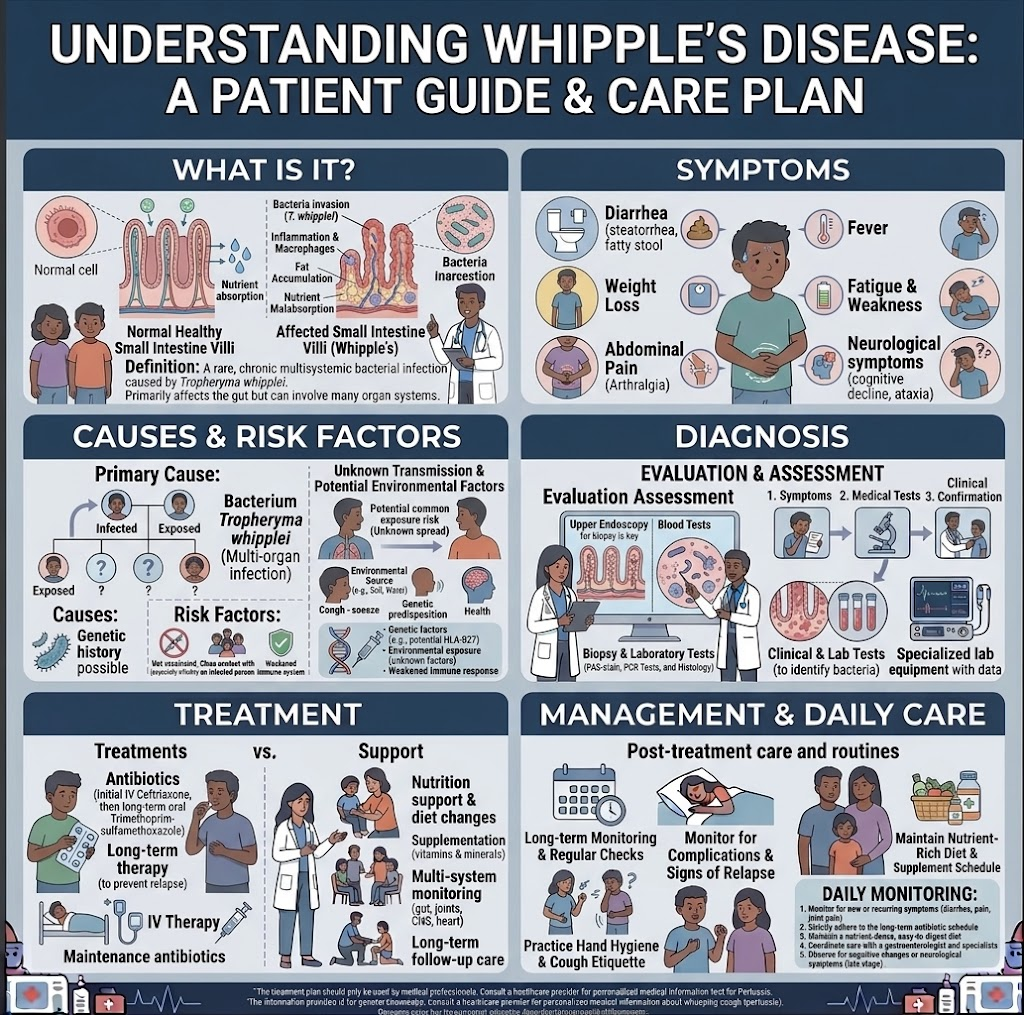
Whipple's disease is a very rare bacterial infection caused by specific germs that most commonly affect your joints and digestive system. This infection makes it difficult for your body to properly break down food and absorb vital nutrients like fats and carbohydrates. The small intestine, which normally has a ridged lining with tiny finger-like projections called villi that aid absorption, is particularly vulnerable. If left untreated, Whipple's disease can become severe or even life-threatening. However, it can be effectively treated with a long course of antibiotics.
Understanding the Condition
Whipple's Disease: Understanding a Rare Bacterial Infection
Understanding the Condition
Common Symptoms
Digestive Symptoms: These are very common and often include persistent diarrhea, unexplained weight loss, abdominal pain and cramping, nausea, vomiting, and feeling extremely tired (fatigue) due to the body not absorbing enough nutrients. Anemia, a condition where your blood lacks healthy red blood cells, is also common.
General and Joint-Related Symptoms: Often, the earliest and most frequent signs are joint pain, which can be migratory (moving from one joint to another), fever, chills, and swollen lymph nodes. Some people may also notice a darkening of their skin.
Less Common Symptoms: In some cases, people might experience vision problems, swelling in the limbs (arms and legs), a cough, or chest pain.
Brain and Nervous System Symptoms: If the infection spreads to the brain and nervous system, symptoms can include memory problems, confusion, seizures, difficulty walking, general weakness, headaches, and changes in vision.
Symptom Progression: Symptoms usually develop slowly over many years. For some individuals, joint pain and weight loss can appear years before any significant digestive symptoms that might prompt a diagnosis.
Consultation Guide
Which Specialist to Meet
If you experience unusual or persistent symptoms such as unexplained weight loss, chronic joint pain, or digestive issues, you should first consult your primary care doctor. They may refer you to a specialist like a gastroenterologist (a doctor specializing in the digestive system), an infectious disease specialist, or a neurologist if neurological symptoms are present.
Preparations Before Your Visit
Before your visit, it's helpful to keep a detailed log of your symptoms, noting when they started, how often they occur, and anything that makes them better or worse. Prepare a list of all medications, vitamins, and supplements you are currently taking. Write down any questions you have for your doctor to ensure all your concerns are addressed during the appointment.
Book a doctor visit near me
If there are signs or symptoms suggesting the infection has spread to the brain or spinal cord, a lumbar puncture may be performed. This involves collecting a small sample of cerebrospinal fluid (fluid surrounding the brain and spinal cord) for analysis.
If neurological symptoms are present, a CT (computed tomography) scan or MRI (magnetic resonance imaging) of the brain may be performed to look for any abnormalities caused by the infection.
Antibiotic Therapy: The cornerstone of treatment involves a prolonged course of antibiotics to eliminate the bacteria. Initially, you might receive intravenous (IV) antibiotics, especially if neurological symptoms are present. This is followed by oral antibiotics for the remainder of the treatment. (Duration: Typically, treatment lasts for 1 to 2 years. It is crucial to complete the entire course of antibiotics, even if symptoms improve, to prevent recurrence.)
Dietary Adjustments: Due to malabsorption, nutritional support is vital. This may involve dietary counseling to help you choose foods that are easier to digest and absorb. You might be advised to eat smaller, more frequent meals and avoid certain foods that worsen symptoms. (Duration: Ongoing throughout treatment and potentially long-term, depending on individual recovery and absorption.)
Regular Medical Follow-ups: Regular visits with your doctor are essential to monitor your progress, ensure the infection is clearing, manage any lingering symptoms, and check for potential side effects of treatment. These appointments often include blood tests and sometimes repeat endoscopies.
Symptom Vigilance: Be aware of any recurring symptoms, especially joint pain, digestive issues, or neurological changes. Report these promptly to your doctor, as early detection of a relapse is key to effective management.
Consultation Guide
Whipple's disease is a very rare bacterial infection caused by specific germs that most commonly affect your joints and digestive system. This infection makes it difficult for your body to properly break down food and absorb vital nutrients like fats and carbohydrates. The small intestine, which normally has a ridged lining with tiny finger-like projections called villi that aid absorption, is particularly vulnerable. If left untreated, Whipple's disease can become severe or even life-threatening. However, it can be effectively treated with a long course of antibiotics.
A PCR test is often performed on the tissue samples collected during the biopsy. This highly sensitive test can detect the genetic material (DNA) of the specific bacteria that causes Whipple's disease, even if only a small amount is present. This helps confirm the diagnosis.
A healthcare professional will draw a small sample of blood, usually from a vein in your arm. This is a quick procedure and generally causes only minor discomfort or a brief sting.
Lumbar Puncture (Spinal Tap)
Diagnostic Procedures
Endoscopy with Small Bowel Biopsy
This is the primary way to diagnose Whipple's disease. An endoscopy involves inserting a thin, flexible tube with a camera (endoscope) down your throat and into your stomach and small intestine. During the procedure, the doctor will take small tissue samples (biopsies) from the lining of your small intestine. These samples are then examined under a microscope for signs of the bacteria and characteristic cellular changes.
What to Expect
Polymerase Chain Reaction (PCR) Test
What to Expect
This test is done in the lab on your biopsy samples, so you will not experience any additional procedures for this specific test.
Blood tests can identify issues often associated with Whipple's disease, such as anemia (low red blood cell count) due to poor nutrient absorption, low levels of certain vitamins and minerals, and markers of inflammation in the body.
What to Expect
What to Expect
You will typically lie on your side with your knees pulled up to your chest, or sit and lean forward. The doctor will clean the area on your lower back and inject a local anesthetic to numb it. A thin needle is then inserted between two vertebrae to collect the fluid. The procedure takes about 30-45 minutes. You may need to lie flat for a period afterward to prevent headaches.
Imaging Scans (CT or MRI)
What to Expect
You will lie on a movable table that slides into a large, tunnel-like machine. You'll need to stay very still during the scan. For an MRI, the machine can be noisy, and you may be given earplugs. In some cases, a contrast dye might be injected into a vein to help certain areas show up more clearly.
Vitamin and Mineral Supplements: Your doctor will likely recommend supplements for essential vitamins and minerals that your body struggles to absorb, such as iron, vitamin D, calcium, and vitamin B12, to correct deficiencies and support recovery. (Duration: Ongoing throughout treatment and as needed based on blood tests and physician's recommendations.)
Nutritional Monitoring: Continue to work with your healthcare team to monitor your nutritional status. This may involve periodic blood tests to check vitamin and mineral levels and adjusting your diet or supplement intake as needed.
Treatment Options
You will be asked not to eat or drink for several hours before the procedure. You'll receive medication to help you relax or sleep through the endoscopy. The procedure typically takes 20-30 minutes. Afterward, you may have a sore throat for a day or two and will need someone to drive you home due to the sedation.
Medications
Adherence to Treatment: Strictly follow your antibiotic regimen for the prescribed duration. Stopping treatment early can lead to a relapse and more severe complications. Do not adjust your dosage or stop medications without consulting your doctor.
Prevention & Long-Term Wellbeing
Prevention and Long-Term Monitoring
Healthy Lifestyle: Maintain a balanced diet rich in easily digestible nutrients, stay hydrated, and engage in moderate physical activity as tolerated to support overall health and recovery.
Tags & Topics
Notice an error or need an update?
Help us keep medical information accurate. Report incorrect info or suggest an edit.


