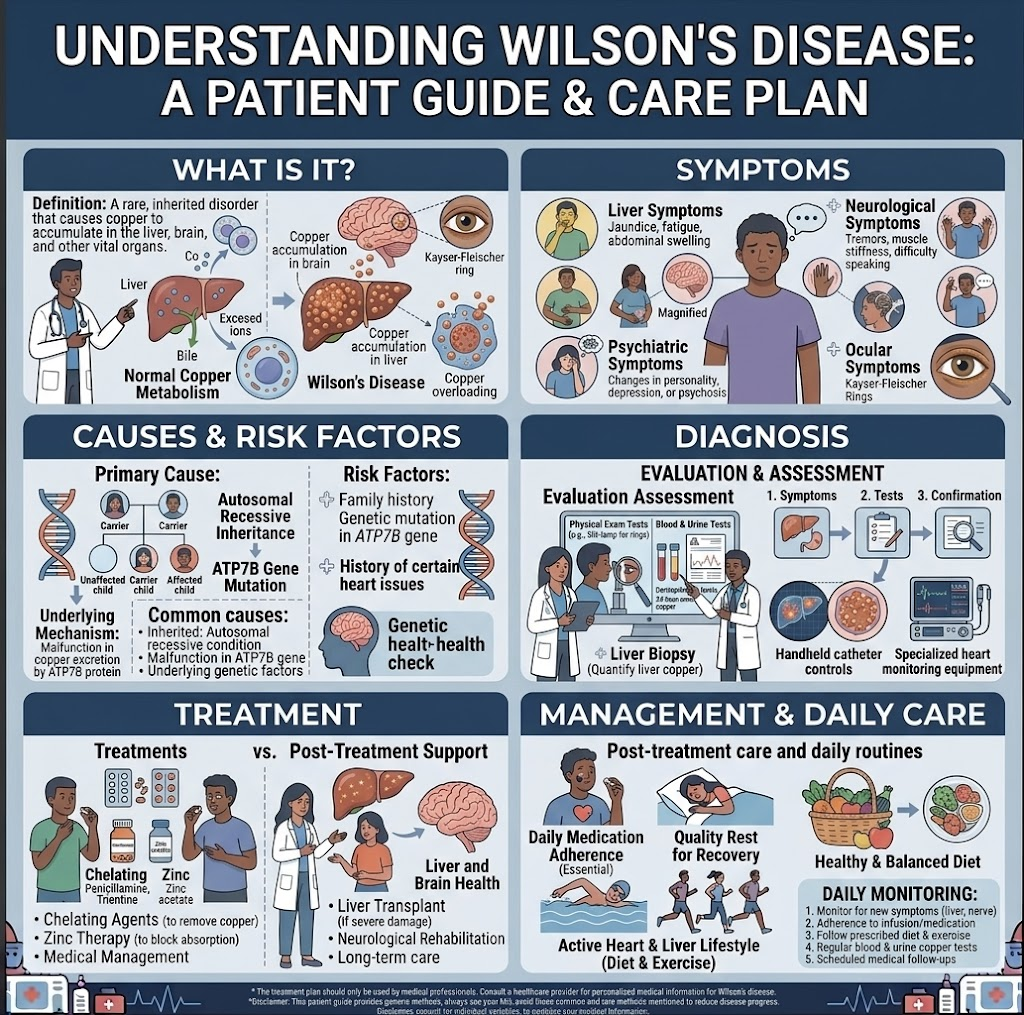
Wilson's disease, also known as hepatolenticular degeneration, is a rare, inherited condition where the body accumulates excessive copper, primarily in the liver, brain, and eyes. Copper is vital for healthy nerves, bones, and skin pigment, and is normally eliminated by the liver through a substance called bile. In Wilson's disease, this elimination process is faulty, leading to copper buildup. If untreated, this buildup can be life-threatening, but early diagnosis and consistent treatment allow most individuals to live full lives. Symptoms typically emerge between ages 3 and 40, though they can appear at any time. This condition affects approximately 1 in 30,000 people globally and is caused by specific changes in the ATP7B gene.
Understanding the Condition
Wilson's Disease: Understanding and Managing Copper Overload
Understanding the Condition
Wilson's disease, also known as hepatolenticular degeneration, is a rare, inherited condition where the body accumulates excessive copper, primarily in the liver, brain, and eyes. Copper is vital for healthy nerves, bones, and skin pigment, and is normally eliminated by the liver through a substance called bile. In Wilson's disease, this elimination process is faulty, leading to copper buildup. If untreated, this buildup can be life-threatening, but early diagnosis and consistent treatment allow most individuals to live full lives. Symptoms typically emerge between ages 3 and 40, though they can appear at any time. This condition affects approximately 1 in 30,000 people globally and is caused by specific changes in the ATP7B gene.
Common Symptoms
Early and General Symptoms: Wilson's disease is present from birth, but symptoms appear later as copper levels rise. Early signs are often subtle and varied, including unusual tiredness, loss of appetite, mood or personality changes, tremors, or difficulty with coordination.
Neurological Symptoms: Copper buildup in the brain can cause tremors (uncontrolled shaking, sometimes a 'wing-beating' motion), difficulties with speech, swallowing, and physical coordination, uncontrolled movements, and stiff muscles.
Mental Health Shifts: Ranging from depression, irritability, and sleep problems to severe changes like psychosis (losing touch with reality) or behaviors resembling schizophrenia.
Imaging Findings: A unique 'Face of the Giant Panda' pattern may be seen on brain MRI scans in some patients with midbrain damage due to copper buildup.
Consultation Guide
Which Specialist to Meet
You should consult with a team of specialists, including a Gastroenterologist or Hepatologist (liver specialists), a Neurologist (brain and nerve specialist), and an Ophthalmologist (eye specialist). A Geneticist or Genetic Counselor is also important for understanding the inherited nature of the condition and for family screening. Your Primary Care Provider can help coordinate these consultations.
Preparations Before Your Visit
Before your visit, gather your complete medical history, including any symptoms you've experienced and when they started. Prepare a detailed family medical history, noting any relatives with Wilson's disease or unexplained liver or neurological problems. List all current medications and supplements. Write down any questions you have for the doctor. Bring copies of any previous lab results, imaging scans, or eye exam reports.
Book a doctor visit near me
Genetic Screening for Family Members: If a family member is diagnosed with Wilson's disease, close relatives (parents, siblings, children) should undergo genetic testing. Early detection before symptoms appear is crucial, as treatment can prevent organ damage.
Routine Eye Exams: Regular slit-lamp exams are necessary to monitor for Kayser-Fleischer rings and cataracts, even if symptoms are stable, as they indicate copper deposition.
Neurological and Mental Health Assessments: Regular evaluations to monitor for any changes in neurological symptoms or mental health are important to address potential complications promptly.
Support Groups and Counseling: Connecting with others who have Wilson's disease or seeking mental health support can help manage the emotional and psychological aspects of living with a chronic condition.
Consultation Guide
Eye Changes: Golden-brown or copper-colored Kayser-Fleischer rings around the iris, and sunflower cataracts on the eye's lens, both caused by copper deposits and visible during a specialized eye exam. Yellowing of the eyes and skin (jaundice) indicates liver damage.
Liver Transplant: If Wilson's disease causes severe, irreversible liver failure that cannot be managed otherwise, a liver transplant may be necessary. This involves replacing the diseased liver with a healthy one from a donor. (Duration: A one-time surgical procedure, followed by lifelong anti-rejection medications and post-transplant care.)
Diagnostic Procedures
Liver Function Tests (Blood Tests)
Blood tests that measure liver enzymes and proteins, indicating how well the liver is functioning and if there's damage.
What to Expect
A small blood sample is drawn from a vein, typically in your arm. You might need to fast for a few hours prior.
24-hour Urine Copper Test
Collects all urine over 24 hours to measure copper excretion, indicating processing issues and excessive copper levels.
What to Expect
You will collect all urine (discarding the first morning sample) for a full day into a special, refrigerated container. It's crucial to collect every sample to ensure accuracy.
A specialized eye exam using a microscope with a bright light (slit lamp) to detect copper deposits in the eyes (Kayser-Fleischer rings, sunflower cataracts).
What to Expect
Your head rests on a support while the ophthalmologist examines your eyes with a light. It's painless, though dilating drops might be used, temporarily blurring vision.
DNA analysis for specific mutations in the ATP7B gene, confirming Wilson's disease and identifying carriers in family members.
What to Expect
A small blood sample or a cheek swab is collected. Both are quick procedures with minimal risk. Results typically take several weeks.
A tiny liver tissue sample is removed for microscopic examination to assess copper levels and liver damage, such as scarring (cirrhosis).
What to Expect
Performed under local anesthetic with ultrasound or CT guidance. A thin needle takes the sample. Requires post-procedure rest and monitoring for a few hours to prevent complications.
Brain MRI (Magnetic Resonance Imaging)
Uses powerful magnets and radio waves to create detailed brain images, revealing damage or specific copper-related patterns (e.g., 'face of the giant panda' sign).
What to Expect
You lie still on a table inside a large, noisy machine for 30-60 minutes. Earplugs or headphones are provided. Sedation may be offered if you are claustrophobic.
Copper Absorption Blockers (Zinc): Zinc supplements prevent the intestines from absorbing copper from food, helping to reduce copper accumulation. They are often used after initial copper removal or for long-term maintenance. (Duration: Lifelong treatment is typically required.)
Treatment Options
Medications
Copper-Removing Agents (Chelating Agents): These medicines bind to excess copper, allowing it to be flushed out of the body primarily through urine. (Duration: Lifelong treatment is typically required.)
Low-Copper Diet: Avoiding foods naturally high in copper, such as organ meats (liver), shellfish, nuts, chocolate, and mushrooms, especially during initial treatment. (Duration: Often recommended lifelong, particularly initially, but may be adjusted over time with medical guidance.)
Surgical Procedures
Regular Medical Check-ups: Consistent follow-up appointments with your specialist team are vital to monitor copper levels, liver function, and overall health to ensure treatment effectiveness.
Adherence to Treatment: Taking prescribed medications consistently and exactly as directed is paramount for managing copper levels and preventing complications or disease progression.
Prevention & Long-Term Wellbeing
Dietary Changes
Prevention
Dietary Management: Ongoing attention to a low-copper diet, adjusted as advised by your healthcare provider, is important to minimize copper intake.
Tags & Topics
Notice an error or need an update?
Help us keep medical information accurate. Report incorrect info or suggest an edit.


