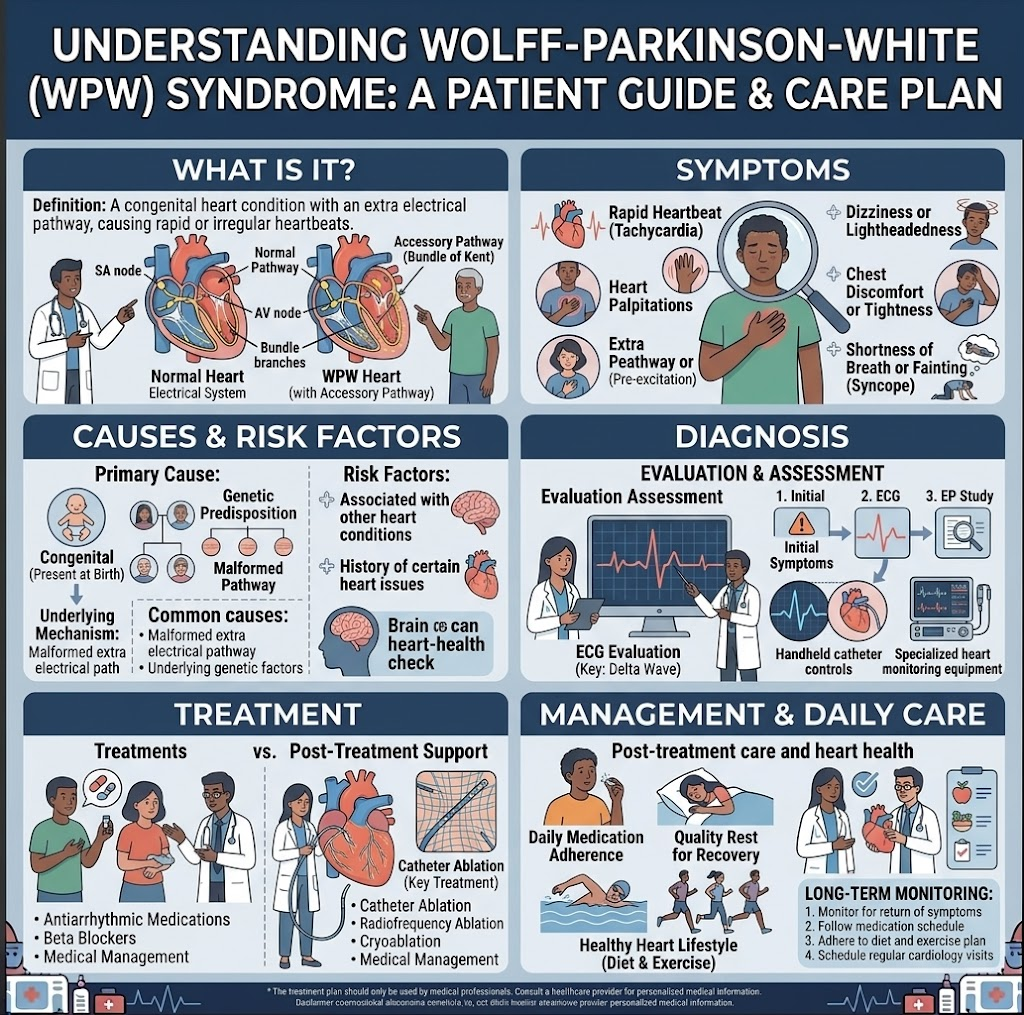
Wolff-Parkinson-White (WPW) syndrome is a rare heart condition present from birth, meaning it's a type of congenital heart defect. In individuals with WPW, an extra electrical pathway exists in the heart, connecting the upper and lower chambers. This additional pathway causes electrical signals to travel too quickly, leading to episodes of a very fast heartbeat. While these episodes are usually not life-threatening, the rapid heart rate can make it harder for the heart to pump blood effectively, and serious heart problems can occur. In rare instances, WPW syndrome has been linked to sudden cardiac death, particularly in children and young adults. Treatment options range from special maneuvers and medications to procedures aimed at correcting the heart's electrical activity.
Understanding the Condition
Wolff-Parkinson-White (WPW) Syndrome: Understanding and Managing a Fast Heartbeat
Understanding the Condition
Common Symptoms
Rapid Heartbeat (Tachycardia): The primary symptom, where the heart beats over 100 times per minute. These episodes can start suddenly and last from seconds to hours, occurring at rest or during activity. Common irregular rhythms include Supraventricular Tachycardia (150-220 bpm) and Atrial Fibrillation (fast and chaotic rhythm).
Palpitations: A rapid, fluttering, or pounding sensation in the chest.
Chest Pain: Discomfort or pain in the chest area.
Difficulty Breathing: Struggling to take a full breath, often accompanied by shortness of breath.
Dizziness or Lightheadedness: Feeling woozy or faint due to reduced blood flow to the brain.
Shortness of Breath: Feeling like you can't get enough air, especially during or after an episode.
Consultation Guide
Which Specialist to Meet
You should consult with a cardiologist, a doctor specializing in heart conditions. For heart rhythm disorders like WPW syndrome, an electrophysiologist, a cardiologist with advanced training in the electrical system of the heart, is the most appropriate specialist.
Preparations Before Your Visit
Before your appointment, prepare by gathering the following information: a detailed list of your symptoms (when they started, duration, what makes them better or worse), all your past and present medical conditions, any family history of heart problems, a list of all current medications, supplements, and vitamins (including dosages), and any questions you have for the doctor.
Book a doctor visit near me
Similar to an ECG, several electrodes will be taped to your chest. These electrodes are connected by wires to a small, portable recording device that you can wear on a belt or in a pocket. You will be instructed to keep a diary of your activities and any symptoms you experience while wearing the monitor. You will return the device after the monitoring period, and the data will be analyzed.
Consultation Guide
Wolff-Parkinson-White (WPW) syndrome is a rare heart condition present from birth, meaning it's a type of congenital heart defect. In individuals with WPW, an extra electrical pathway exists in the heart, connecting the upper and lower chambers. This additional pathway causes electrical signals to travel too quickly, leading to episodes of a very fast heartbeat. While these episodes are usually not life-threatening, the rapid heart rate can make it harder for the heart to pump blood effectively, and serious heart problems can occur. In rare instances, WPW syndrome has been linked to sudden cardiac death, particularly in children and young adults. Treatment options range from special maneuvers and medications to procedures aimed at correcting the heart's electrical activity.
Diagnostic Procedures
Electrocardiogram (ECG or EKG)
An ECG is a quick, non-invasive test that records the electrical signals of your heart. It helps to show how fast or slow your heart is beating and can detect abnormal electrical patterns, including those characteristic of WPW syndrome, such as the extra pathway.
What to Expect
Small, sticky patches called electrodes will be placed on your chest, and sometimes on your arms and legs. Wires connect these patches to a machine that records your heart's electrical activity. You will lie still for a few minutes while the test is conducted. It is painless and typically takes only a few minutes.
A Holter monitor is a small, wearable device that continuously records your heart's electrical activity over a longer period, usually 1 to 2 days, as you go about your normal daily routine. It is particularly useful for detecting irregular heartbeats that occur intermittently and might be missed during a shorter ECG.
What to Expect
Treatment Options
Medications
Antiarrhythmic Medications: Oral drugs that work by restoring a normal heart rhythm or by slowing down the heart rate. These medications can help prevent episodes of fast heartbeats or reduce their severity. (Duration: Ongoing, as prescribed by your doctor, often long-term)
Electrical Cardioversion: A medical procedure where a controlled electric shock is delivered to the chest to reset the heart's rhythm back to normal. This is typically used for immediate treatment of persistent, very fast, or unstable heartbeats. (Duration: A single procedure, with immediate effect on heart rhythm)
Identify and Avoid Triggers: Pay attention to what might trigger your fast heart episodes, such as excessive caffeine, alcohol, nicotine, certain medications, stress, or intense physical exertion. Avoiding these triggers can help reduce the frequency of episodes.
Regular Follow-up Appointments: Schedule and attend all recommended follow-up visits with your cardiologist or electrophysiologist to monitor your condition, adjust treatments if necessary, and address any new concerns.
Adhere to Prescribed Medications: If prescribed, take your medications exactly as directed by your healthcare provider. Do not stop or change dosages without consulting your doctor.
Learn CPR and Emergency Plan: For family members or close contacts, consider learning cardiopulmonary resuscitation (CPR). Discuss an emergency action plan with your doctor and family, including when to seek immediate medical help.
Wear Medical Identification: Consider wearing a medical ID bracelet or carrying a card that indicates you have WPW syndrome. This can provide crucial information to emergency responders if you are unable to communicate.
Prevention & Long-Term Wellbeing
Lifestyle Adjustments
Vagal Maneuvers: Simple physical actions that can sometimes help slow a rapid heartbeat by stimulating the vagus nerve, which influences heart rate. Examples include holding your breath and bearing down (as if having a bowel movement), coughing forcefully, or putting an ice pack on your face. (Duration: Seconds to minutes, as needed during an episode)
Cardiac (Catheter) Ablation: A minimally invasive procedure that aims to permanently correct the extra electrical pathway. Thin, flexible tubes called catheters are guided through blood vessels to your heart. Energy (either heat or cold) is delivered through the catheter tip to create tiny scars at the site of the extra pathway. These scars block the faulty electrical signals, preventing them from causing rapid heartbeats. (Duration: Typically a single procedure lasting a few hours. Recovery can take a few days to several weeks.)
Prevention of Episodes
Maintain a Heart-Healthy Lifestyle: Adopt habits that support overall heart health, including a balanced diet rich in fruits, vegetables, and whole grains, regular moderate exercise (as advised by your doctor), managing stress, and getting adequate sleep.
Long-Term Monitoring & Management
Tags & Topics
Notice an error or need an update?
Help us keep medical information accurate. Report incorrect info or suggest an edit.


