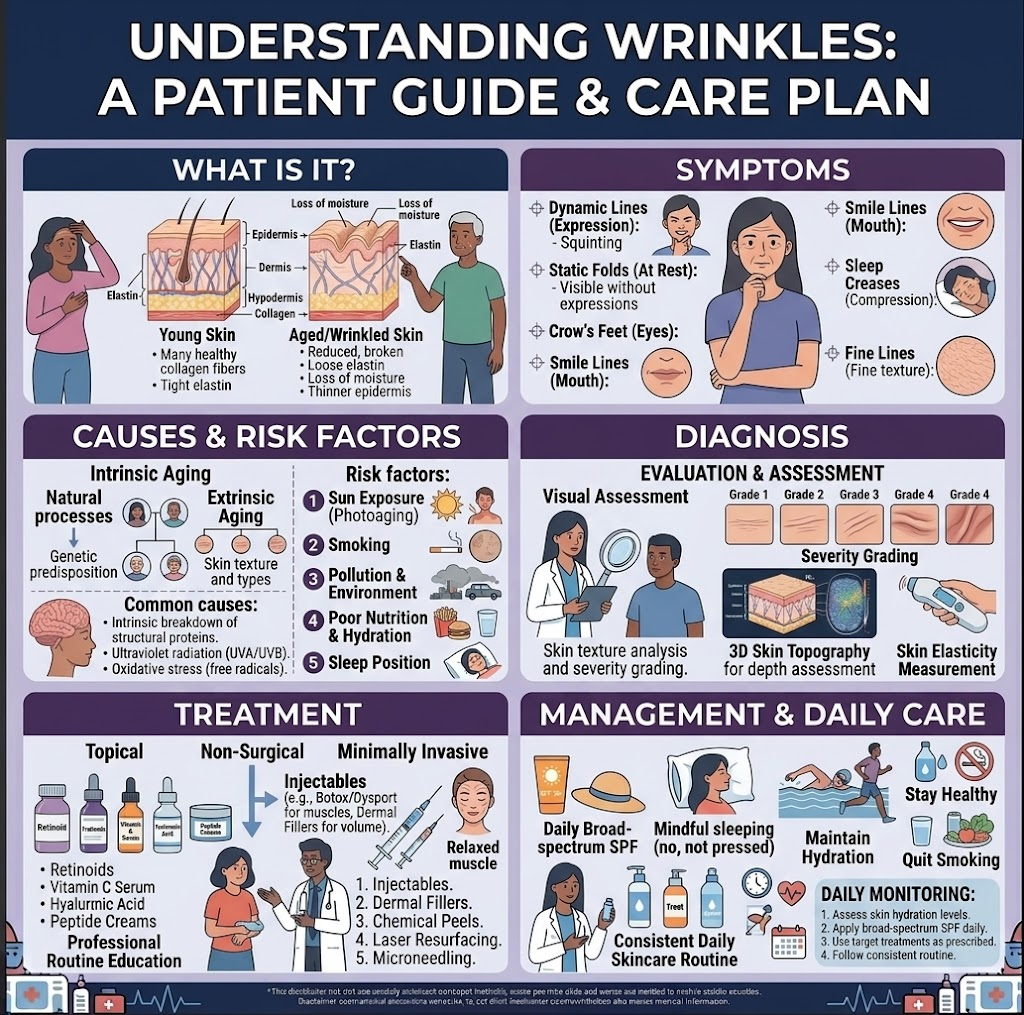
Wrinkles are a natural part of the aging process, appearing as lines and creases in the skin. They are most common on areas frequently exposed to the sun, such as the face, neck, hands, and forearms. Factors like sun exposure, environmental pollutants, and smoking can accelerate their formation. While a natural occurrence, various options are available to help smooth wrinkles or make them less visible if they are a personal concern.
Understanding the Condition
Common Symptoms
Lines and Creases: Wrinkles are visible lines and folds that form on the skin. Over time, some can become deeper and more prominent, particularly around the eyes, mouth, and neck.
Consultation Guide
Which Specialist to Meet
Consultation Guide
Muscle-Relaxing Injections: Injections use a purified protein to temporarily relax specific facial muscles responsible for wrinkles caused by repetitive expressions, such as frown lines and crow's feet. (Duration: Effects typically last 3 to 6 months)
Diagnostic Procedures
Clinical Skin Assessment
What to Expect
During the assessment, the doctor will visually inspect your skin, often using magnified light, to evaluate its texture, elasticity, and specific areas of concern. They will ask questions about your skin history, sun protection habits, and current skincare routine. This is a non-invasive process and typically involves no discomfort.
Treatment Options
Wrinkles: Understanding, Prevention, and Treatment
Understanding the Condition
Wrinkles are a natural part of the aging process, appearing as lines and creases in the skin. They are most common on areas frequently exposed to the sun, such as the face, neck, hands, and forearms. Factors like sun exposure, environmental pollutants, and smoking can accelerate their formation. While a natural occurrence, various options are available to help smooth wrinkles or make them less visible if they are a personal concern.
Preparations Before Your Visit
Before your appointment, be prepared to discuss your specific skin concerns, your complete medical history, and your lifestyle habits, including sun exposure, smoking status, and any over-the-counter or prescription skincare products you currently use. This information helps your doctor develop a personalized assessment and treatment plan.
Book a doctor visit near me
A dermatologist will thoroughly examine your skin to evaluate its overall condition, identify the type and depth of wrinkles, and look for any related skin issues such as sun damage or discoloration. This detailed assessment is crucial for determining the most appropriate and effective treatment plan for your individual needs.
Home Remedies & Over-the-Counter Products
Daily Moisturizing: Regularly applying moisturizer helps hydrate the skin, temporarily plumping skin cells and making fine lines and wrinkles appear less visible. (Duration: Ongoing daily use)
Over-the-Counter Creams with Active Ingredients: Many non-prescription creams contain active ingredients like retinol, niacinamide, and vitamin C, which can help improve skin tone, texture, and the appearance of fine lines over time. A vitamin A-derived product is also available without a prescription. (Duration: Several weeks to months of consistent use to see potential results; ongoing for maintenance)
Prescription Medications
Topical Retinoids: Stronger forms of vitamin A derivatives are available by prescription. These medications are effective in significantly reducing fine lines and wrinkles and improving overall skin health. They are not recommended for use during pregnancy. (Duration: Long-term, consistent use under medical supervision)
Non-Surgical Procedures
Dermabrasion / Microdermabrasion: A rapidly spinning device is used to gently scrape off the top layer of skin. As new skin grows back, it appears smoother, which can reduce the visibility of fine lines, scars, and age spots. (Duration: Improvements can be long-lasting; repeated treatments may be recommended for optimal results)
Laser Resurfacing: This procedure uses focused light energy to either remove skin layer by layer (ablative lasers) or stimulate collagen production without removing outer layers (non-ablative lasers). Fractional lasers create microscopic columns of treated tissue, which shortens recovery time. It is used to reduce fine lines, age spots, and improve uneven skin texture. (Duration: Results can be long-lasting; multiple treatment sessions may be needed, especially with non-ablative or fractional lasers)
Surgical Procedures
Face-lift (Rhytidectomy): A surgical procedure that lifts and tightens facial soft tissues, removes excess skin, and repositions the remaining skin over newly contoured areas to create a younger appearance. It primarily addresses sagging skin and deep folds but does not correct surface wrinkles. (Duration: Results typically last 5 to 10 years)
Neck Lift: Often performed with a face-lift, this procedure removes excess skin and fat from around the jawline and neck to create a more defined and youthful-looking neck profile. While long-lasting, it does not halt the natural aging process. (Duration: Results can be long-lasting, often 10-15 years)
Prevention & Long-Term Wellbeing
Chemical Peels: A chemical solution is applied to the skin to remove its outermost layers, encouraging the growth of new, smoother skin. Peels can be light, medium, or deep, targeting varying degrees of wrinkles, sun damage, and discoloration. (Duration: Light peels may require multiple sessions, with results lasting weeks to months. Deeper peels offer more dramatic, longer-lasting results (years), but with extended recovery periods.)
Dermal Fillers: Gel-like substances are injected into or under the skin to plump up areas, smooth wrinkles, and restore lost volume. These materials are biodegradable and gradually dissolve over time. (Duration: Effects can last from 6 months to 2 years, depending on the type of filler and the treated area)
Prevention
Sun Protection: Limit direct sun exposure, especially during midday. Wear sun-protective clothing (wide-brimmed hats, long-sleeved shirts, sunglasses). Apply broad-spectrum sunscreen with an SPF of at least 30 daily, reapplying every two hours or after swimming/sweating. Avoid indoor tanning.
Consistent Skincare Routine: Gently wash your face daily and moisturize to keep skin well-hydrated. This prevents dryness, which can make fine lines more noticeable.
Quit Smoking: Smoking significantly accelerates skin aging. Quitting can improve your skin's health and prevent further wrinkling, even if you have smoked for many years.
Healthy Diet: Consume plenty of fruits and vegetables. Certain vitamins and antioxidants found in these foods may help protect the skin, although more research is needed on their direct role in wrinkle prevention.
Long-Term Skin Health
Regular Skin Monitoring: Pay attention to any changes in your skin and discuss new concerns with your dermatologist during routine check-ups.
Adapt Skincare as Needed: As your skin ages or your environment changes, your skincare needs may evolve. Consult with a professional to adjust your routine and products accordingly to maintain skin health.
Tags & Topics
Notice an error or need an update?
Help us keep medical information accurate. Report incorrect info or suggest an edit.


