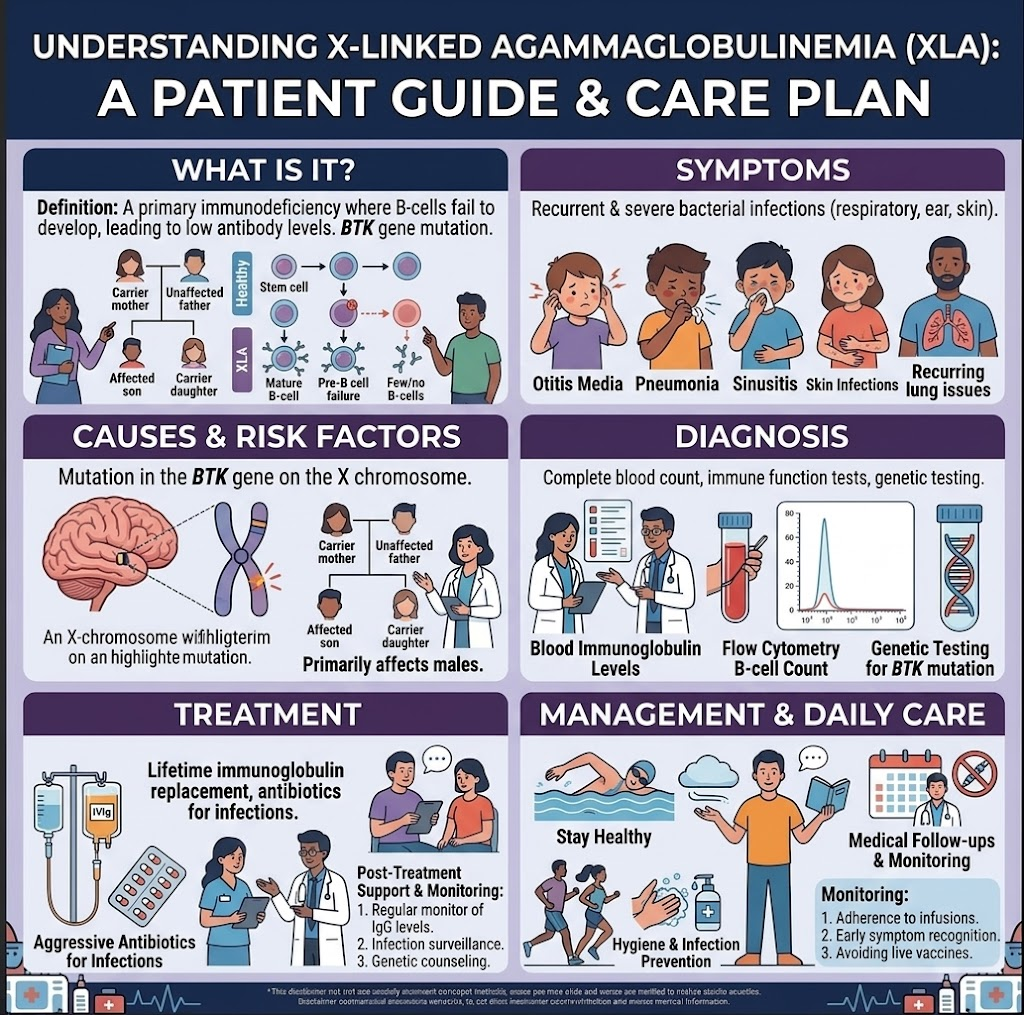
X-linked agammaglobulinemia (XLA), pronounced 'a-gam-uh-glob-u-lih-NEE-me-uh', is an inherited immune system disorder primarily affecting males. It makes it very difficult for the body to fight infections due to the inability to produce sufficient protective proteins called antibodies. This deficiency leads to recurrent and often severe infections in areas like the inner ears, sinuses, respiratory tract, bloodstream, and internal organs. While XLA almost exclusively affects males, females can carry the genetic change. Most individuals are diagnosed in infancy or early childhood after experiencing repeated infections, though some diagnoses occur later in adulthood.
Understanding the Condition
X-linked Agammaglobulinemia (XLA): Understanding a Genetic Immune Disorder
Understanding the Condition
Common Symptoms
Onset of Recurrent Bacterial Infections: Most newborns with XLA appear healthy for the first few months, protected by antibodies received from their mothers. Once these maternal antibodies naturally decrease, babies begin to experience frequent and often severe bacterial infections. These infections can be life-threatening if not properly managed.
Common Infection Sites: Infections commonly affect the ears (leading to frequent ear infections), lungs (causing pneumonia and bronchitis), sinuses (resulting in chronic sinusitis), and skin.
Physical Signs in Male Infants: Male infants born with XLA may exhibit specific physical characteristics due to the absence of antibody-producing cells. These include very small or absent tonsils and small or absent lymph nodes, both crucial parts of the immune system.
Consultation Guide
Which Specialist to Meet
Initially, consult your primary care physician, who can refer you to specialists such as an immunologist (immune system expert), an infectious disease specialist (for complex infections), and a genetic counselor (for hereditary aspects and family planning).
Preparations Before Your Visit
Before your appointment, prepare a list of all symptoms (onset, frequency, severity), gather your full medical history (illnesses, vaccinations, allergies), compile a detailed family medical history (especially immune disorders), list questions for the doctor, and bring copies of relevant medical records or test results.
Book a doctor visit near me
Consultation Guide
A healthcare professional draws a small blood sample, usually from a vein in your arm. This quick procedure typically causes only a brief pinch or discomfort, and the sample is sent for laboratory analysis.
Supportive Care and Complication Management: This involves managing long-term health problems caused by recurrent infections, such as chronic lung disease or joint issues. It may include respiratory therapies, physical therapy, and nutritional support. (Duration: Ongoing as needed, tailored to individual complications.)
Diagnostic Procedures
X-linked agammaglobulinemia (XLA), pronounced 'a-gam-uh-glob-u-lih-NEE-me-uh', is an inherited immune system disorder primarily affecting males. It makes it very difficult for the body to fight infections due to the inability to produce sufficient protective proteins called antibodies. This deficiency leads to recurrent and often severe infections in areas like the inner ears, sinuses, respiratory tract, bloodstream, and internal organs. While XLA almost exclusively affects males, females can carry the genetic change. Most individuals are diagnosed in infancy or early childhood after experiencing repeated infections, though some diagnoses occur later in adulthood.
Blood Tests for Antibody Levels (Immunoglobulins)
This test measures the levels of different types of antibodies (IgG, IgA, IgM) in the blood. Individuals with XLA typically have very low or absent antibody levels, indicating a compromised immune response.
What to Expect
Blood Test for B-cell Count
B cells are a specific type of white blood cell responsible for producing antibodies. This test counts the number of B cells in the blood; XLA patients typically have very few or no B cells.
What to Expect
Similar to the antibody level test, this involves a standard blood draw from a vein in the arm. The sample is then sent for specialized analysis to count the B cells.
This definitive test analyzes your DNA to identify specific changes or mutations in the *BTK* gene, which is essential for B cell development. Identifying a mutation confirms the XLA diagnosis.
What to Expect
Genetic testing usually requires a small blood sample (or sometimes saliva). The sample is sent to a specialized laboratory for DNA sequencing, and results can take several weeks.
Infection Work-up (Cultures)
What to Expect
The procedure depends on the infection site (e.g., blood draw, urine collection, coughing sputum into a container). These samples are then grown in a lab to identify the infectious agent.
Treatment Options
When infections occur, samples of blood, urine, or secretions (e.g., sputum) are collected to identify the specific bacteria causing the infection, guiding appropriate antibiotic treatment.
Medications
Immunoglobulin Replacement Therapy (IRT): The primary treatment for XLA involves regular infusions of donated antibodies (immunoglobulins) from healthy blood donors. These bolster the immune system, providing protection against bacterial infections. (Duration: Lifelong; administered intravenously (IVIG) every 3-4 weeks in a clinic, or subcutaneously (SCIG) weekly/bi-weekly at home.)
Antibiotics for Acute Infections: Specific antibiotic medications are prescribed to treat bacterial infections as they arise. Prompt and aggressive treatment is crucial to prevent severe complications. (Duration: Course-specific, typically 7-14 days for acute infections. Some individuals may receive preventive antibiotics long-term, especially for chronic issues.)
Therapies
Targeted Surgical Interventions: In rare instances, surgery might be necessary for severe, localized complications unresponsive to other treatments. Examples include drainage for chronic sinus infections or removal of severely damaged tissue. (Duration: Typically a one-time procedure with a recovery period, performed only when other methods fail.)
Early Detection and Treatment: Learn to recognize early signs of infection and seek medical attention promptly. Delayed treatment can lead to more severe outcomes.
Long-Term Monitoring and Management
Regular Specialist Appointments: Maintain a consistent schedule of follow-up visits with your immunologist and other specialists to monitor the condition, adjust treatment, and screen for potential complications.
Monitoring for Complications: Be vigilant for signs of chronic lung disease (e.g., persistent cough), joint problems (infectious arthritis), or an increased risk of certain cancers, discussing any concerns with your medical team.
Prevention & Long-Term Wellbeing
Lifestyle and Prevention
Infection Prevention Strategies: Crucial for managing XLA, these strategies include excellent hand hygiene, avoiding close contact with sick individuals, and maintaining a clean environment to reduce germ exposure. (Duration: Lifelong commitment.)
Prevention
Avoid Live Vaccines: Individuals with XLA must strictly avoid 'live' vaccines (e.g., MMR, chickenpox, oral polio) as their immune system cannot effectively fight the weakened vaccine virus, posing a risk of serious infection.
Strict Hygiene Practices: Regular and thorough handwashing is essential. Avoid touching your face with unwashed hands and maintain cleanliness to minimize germ exposure.
Avoid Exposure to Illness: Minimize contact with sick individuals, especially during peak cold and flu seasons. Be cautious in crowded indoor spaces which may increase germ exposure.
Nutritional Support: A balanced, nutritious diet is vital for overall health and recovery from infections. Discuss any dietary concerns with a healthcare provider.
Psychological and Emotional Support: Living with a chronic condition can be challenging. Seeking support from family, friends, support groups, or mental health professionals can help manage stress and maintain emotional well-being.
Genetic Counseling for Family Planning: If XLA is in your family, genetic counseling provides valuable information about the risks of passing the condition to future generations and discusses family planning options.
Tags & Topics
Notice an error or need an update?
Help us keep medical information accurate. Report incorrect info or suggest an edit.


