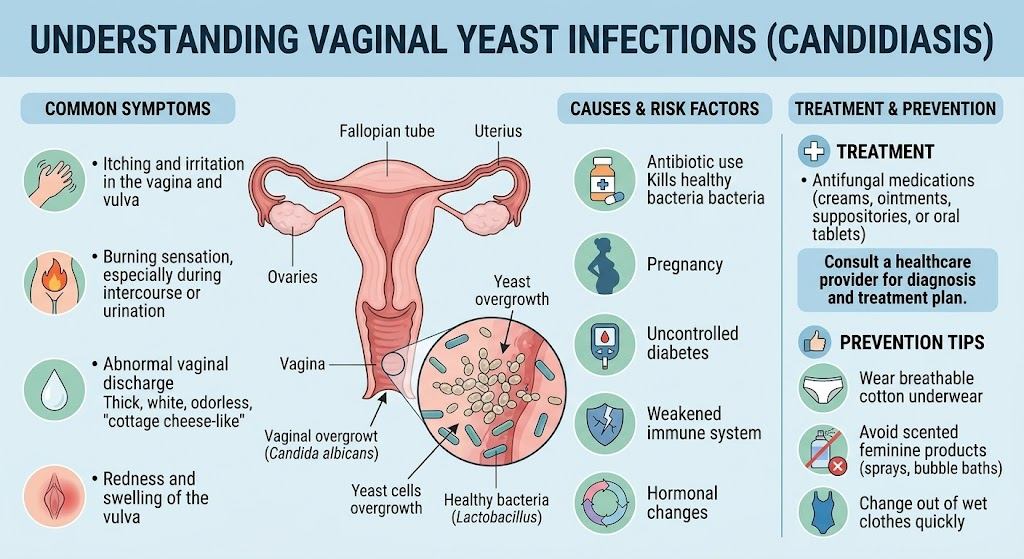
A vaginal yeast infection, also known as vaginal candidiasis, is a common fungal infection that affects the vagina and the surrounding outer area (vulva). It leads to uncomfortable symptoms such as irritation, itching, and unusual discharge. Most people assigned female at birth experience a vaginal yeast infection at some point, and many have repeat infections. While it's not considered a sexually transmitted infection, sexual activity can sometimes increase the risk, and it is treatable with various medicines.
Understanding the Condition
Vaginal Yeast Infection: A Comprehensive Guide
Understanding the Condition
A vaginal yeast infection, also known as vaginal candidiasis, is a common fungal infection that affects the vagina and the surrounding outer area (vulva). It leads to uncomfortable symptoms such as irritation, itching, and unusual discharge. Most people assigned female at birth experience a vaginal yeast infection at some point, and many have repeat infections. While it's not considered a sexually transmitted infection, sexual activity can sometimes increase the risk, and it is treatable with various medicines.
Common Symptoms
Itching and Irritation: Persistent itching and irritation in the vagina and the vulva (the tissues at the vaginal opening).
Burning Sensation: A burning feeling that may be most noticeable during sexual intercourse or while urinating.
Redness and Swelling: The vulva may appear red and swollen. It's important to note that redness can be more challenging to see on Black or brown skin compared to white skin.
Vaginal Pain and Soreness: Discomfort or tenderness in the vaginal area.
Unusual Vaginal Discharge: A thick, white, odorless discharge that often resembles cottage cheese in appearance. It consists of fluid and cells shed from the vagina.
Severe Symptoms: In some cases, symptoms can be more severe, including extreme redness, swelling, and intense itching that may lead to small tears, cracks, or sores in the vaginal skin. Frequent infections (four or more within a year), infections caused by unusual types of fungus, pregnancy, poorly managed diabetes, or a weakened immune system can also indicate a more complex infection.
Consultation Guide
Which Specialist to Meet
Before your appointment, make a note of all your symptoms, including when they started, how long they've lasted, and if anything makes them better or worse. List any over-the-counter or prescription medications you are currently taking. Avoid douching, using scented feminine products, or having sexual intercourse for at least 24-48 hours before your visit, as this can interfere with test results.
Book a doctor visit near me
During the pelvic exam, your doctor may take a sample of vaginal discharge using a cotton swab. This sample is then sent to a laboratory for microscopic examination or culture. This helps confirm the presence of yeast and identify the specific type of fungus causing the infection, especially if symptoms are severe or recurrent.
Consultation Guide
During the speculum part of the pelvic exam, the doctor will gently rub a cotton swab against the walls of your vagina or cervix to collect a small amount of discharge. This process is usually quick and causes minimal discomfort, similar to a light scratching sensation. The swab is then placed in a sterile container and sent to a lab for analysis. Results may take a few days, especially if a culture is needed to grow the fungus.
Discuss Recurrent Infections: If you experience frequent yeast infections, have an open conversation with your doctor to explore potential causes and develop a tailored prevention and treatment plan.
Diagnostic Procedures
You can consult your primary care physician, a gynecologist (a doctor specializing in women's reproductive health), or an urgent care provider. These healthcare professionals can diagnose and treat vaginal yeast infections.
Preparations Before Your Visit
A pelvic exam is a routine check of your reproductive organs, including the vulva, vagina, cervix, uterus, and ovaries. It helps the doctor assess the health of these areas and look for any signs of infection or other conditions.
What to Expect
You will be asked to undress from the waist down and lie on an exam table with your feet in stirrups. The doctor will first examine your vulva externally for any visible signs of infection, such as redness or swelling. Then, a speculum (a medical instrument) will be gently inserted into your vagina to hold the vaginal walls open, allowing the doctor to view your vagina and cervix. During this part, a Pap test (a screening for cervical cancer) may also be performed, which involves collecting a small sample of cells from your cervix. Finally, the doctor will remove the speculum and perform a bimanual exam by inserting two gloved fingers into your vagina while gently pressing on your lower abdomen with the other hand to feel your uterus and ovaries. You might feel some pressure, but it should not be painful.
Vaginal Swab and Lab Analysis
What to Expect
Treatment Options
Over-the-Counter Treatments
Vaginal Creams and Suppositories: Antifungal medications applied directly into the vagina. These are available without a prescription and come in various strengths and treatment durations. (Duration: Typically 1, 3, or 7 days of treatment, depending on the product.)
Prescription Medications
Oral Antifungal Medication: A single-dose pill taken by mouth that travels through your bloodstream to treat the infection. (Duration: Usually a single oral dose.)
Stronger Vaginal Medications: Prescription-strength antifungal creams, ointments, or suppositories that are applied inside the vagina. (Duration: May range from 7 to 14 days for more persistent infections.)
Management for Recurrent Infections
Extended Treatment Course: For individuals experiencing four or more yeast infections within a year, a longer initial treatment course may be prescribed to thoroughly clear the infection. (Duration: Initial treatment for up to two weeks.)
Maintenance Therapy: Following the extended initial treatment, a maintenance regimen may be recommended, which involves taking an oral antifungal pill or using a vaginal medication less frequently to prevent future infections. (Duration: Once weekly for six months, or as directed by your doctor.)
Review Hormonal Medications: If you are using birth control pills or hormone therapy and experience recurrent infections, discuss with your doctor if adjusting your medication could be beneficial, as higher estrogen levels can increase risk.
Prevention & Long-Term Wellbeing
Prevention Strategies
Choose Breathable Underwear: Wear cotton underwear, which helps absorb moisture and allows air circulation, reducing the warm, moist environment where yeast thrives. Avoid overly tight underwear or pantyhose.
Avoid Irritating Products: Do not use douches or scented feminine products such as bubble baths, perfumed soaps, menstrual pads, or tampons, as these can disrupt the natural balance of bacteria and yeast in the vagina.
Limit Time in Wet Clothing: Change out of wet swimsuits or sweaty workout clothes as soon as possible, as damp environments encourage yeast growth.
Be Mindful of Hot Water: Avoid prolonged use of hot tubs and very hot baths, which can create conditions favorable for yeast.
Use Antibiotics Judiciously: Only take antibiotics when necessary and as prescribed by your doctor. Antibiotics can kill beneficial bacteria in the vagina, which typically keep yeast in check, leading to an overgrowth.
Long-Term Monitoring and Management
Manage Underlying Health Conditions: If you have conditions like diabetes, work with your doctor to keep your blood sugar levels well-managed, as uncontrolled diabetes increases the risk of yeast infections. Similarly, if your immune system is weakened, discuss strategies with your healthcare provider to reduce infection risk.
Tags & Topics
Notice an error or need an update?
Help us keep medical information accurate. Report incorrect info or suggest an edit.


