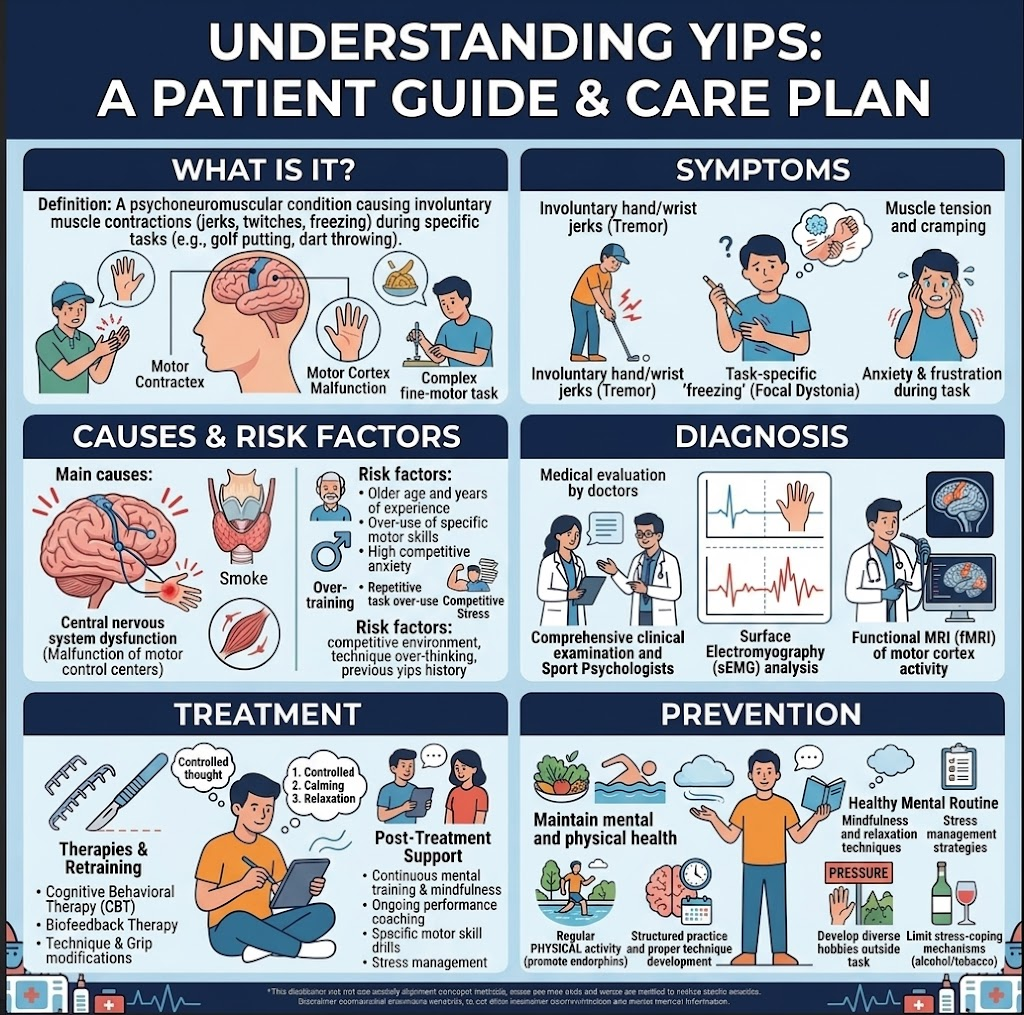
The yips refer to sudden, involuntary muscle spasms or jerks that most commonly affect athletes during precise movements, like putting in golf. While often associated with performance anxiety, the yips can also stem from a neurological condition called focal dystonia, which causes specific muscles to contract uncontrollably. This condition is frequently linked to the overuse of certain muscles. Modifying how the affected task is performed can often provide relief.
Understanding the Condition
The Yips: Understanding Involuntary Movements in Athletes
Understanding the Condition
Common Symptoms
Involuntary Muscle Jerks: Sudden, uncontrollable twitching or jerking movements in the affected muscle.
Tremors: Rhythmic, shaking movements in the affected area, making precise actions difficult.
Twitches: Small, localized muscle contractions that can be visually noticed under the skin.
Before your visit, make a detailed list of your symptoms, noting when they started, what activities trigger them, and anything that seems to make them better or worse. Include details of your complete medical history, any other health conditions, and all medications or supplements you currently take.
Book a doctor visit near me
During the exam, the doctor will review your medical history and symptoms. They will perform a series of tests to check your reflexes, muscle strength, coordination, balance, sensation, and mental status (e.g., memory, problem-solving). These tests are typically non-invasive and may involve tasks like walking in a straight line, touching your finger to your nose, or answering questions. The duration of the exam can vary from a few minutes to over an hour, depending on your symptoms and findings. Depending on the results, further tests like medical imaging might be recommended.
Integrate Mental Skills Training: Practice mental resilience techniques, visualization, and positive self-talk even when not experiencing symptoms. This builds a mental toolkit for managing pressure in high-stakes situations.
Continuous Technique Assessment: Remain open to slight modifications in your technique as needed, especially if new symptoms emerge or old ones return. Working with a coach or therapist can be beneficial for ongoing refinement.
Symptom Monitoring and Early Intervention: Be vigilant for early signs of the yips returning. Addressing minor symptoms promptly with technique adjustments or stress management can prevent escalation and help maintain performance.
Ongoing Professional Support: If the yips are persistent or significantly impact your quality of life, maintain regular check-ups with your healthcare team, including neurologists, therapists, or sports psychologists, to adjust your management plan as necessary.
Consultation Guide
The yips refer to sudden, involuntary muscle spasms or jerks that most commonly affect athletes during precise movements, like putting in golf. While often associated with performance anxiety, the yips can also stem from a neurological condition called focal dystonia, which causes specific muscles to contract uncontrollably. This condition is frequently linked to the overuse of certain muscles. Modifying how the affected task is performed can often provide relief.
Spasms: Sudden, sustained, involuntary muscle contractions that can cause stiffness or pain.
Freezing: A temporary inability to move or complete a movement, despite the intention to do so.
Consultation Guide
Which Specialist to Meet
Nerve Function Modulators: Medications that may be prescribed to help stabilize nerve signals and improve muscle control, particularly when focal dystonia is the underlying cause. (Duration: Long-term, as prescribed by a specialist)
Diagnostic Procedures
For diagnosis and management of the yips, you may consult a sports medicine physician, a neurologist (especially if a neurological condition like focal dystonia is suspected), a physical or occupational therapist, or a sports psychologist/mental health professional for anxiety-related cases.
Preparations Before Your Visit
Neurological Examination
A neurological exam is a comprehensive assessment that evaluates the function of your nervous system, including your brain, spinal cord, nerves, and muscles. It helps healthcare professionals identify potential issues with nerve pathways or muscle control that might be contributing to the yips, particularly if a condition like focal dystonia is suspected.
What to Expect
Treatment Options
Medications
Muscle Relaxants: Prescription medications that can help reduce involuntary muscle spasms and stiffness, particularly if the yips are severe and linked to excessive muscle activity. (Duration: Short-term use or as prescribed by a physician)
Anxiety-Reducing Medications: Certain medications may be considered for severe performance anxiety that significantly impairs function, used under strict medical supervision. (Duration: Short-term or as prescribed, with careful monitoring)
Targeted Muscle Injections: Injections of a specific agent directly into the overactive muscles to temporarily relax them and reduce involuntary contractions, often used for focal dystonia. This treatment helps improve muscle control and reduce spasms. (Duration: Effects typically last several months, requiring repeat injections as needed)
Prevention & Long-Term Wellbeing
Lifestyle and Self-Management
Technique Modification: Adjusting how you perform the affected task, such as altering your grip, stance, or even switching to your non-dominant hand for specific movements (e.g., putting left-handed for a right-handed golfer). This can help break established problematic movement patterns. (Duration: Ongoing adaptation and practice)
Stress Reduction Techniques: Practicing relaxation methods like deep breathing exercises, mindfulness meditation, or progressive muscle relaxation to manage anxiety and its physical manifestations, which can worsen yips. (Duration: Ongoing, as needed)
Physical and Occupational Therapy: Specialized exercises and retraining programs designed to improve muscle control, coordination, and motor skills for the specific movements affected by the yips. Therapists can help refine technique and strengthen supporting muscles. (Duration: Weeks to months, with potential for ongoing maintenance)
Sports Psychology and Cognitive Behavioral Therapy: Working with a professional to address performance anxiety, develop coping strategies, improve focus, and utilize mental visualization techniques to enhance confidence and reduce overthinking during performance. (Duration: Several sessions over weeks, with ongoing personal practice)
Biofeedback: A technique that uses electronic sensors to provide real-time information about physiological processes (like muscle tension), helping individuals learn to consciously control involuntary bodily responses. (Duration: Multiple sessions until skills are acquired)
Prevention Strategies
Optimize Technique and Equipment: Ensure your athletic technique is biomechanically sound and your equipment is properly fitted. Regular review with a coach or professional can prevent strain and poor movement patterns that may contribute to the yips.
Vary Practice Routines: Avoid excessive repetition of the same specific movement. Incorporate varied drills, cross-training, and rest days to prevent overuse injuries and muscular fatigue that can trigger yips.
Manage Stress and Anxiety: Develop and regularly use stress management techniques outside of performance settings. This includes adequate sleep, a balanced diet, and engaging in relaxing hobbies to maintain overall mental well-being.
Long-Term Management
Maintain Holistic Wellness: Prioritize overall physical and mental health. Regular exercise, a balanced diet, and sufficient rest contribute to nervous system health and stress resilience, which are crucial for managing the yips.
Tags & Topics
Notice an error or need an update?
Help us keep medical information accurate. Report incorrect info or suggest an edit.


