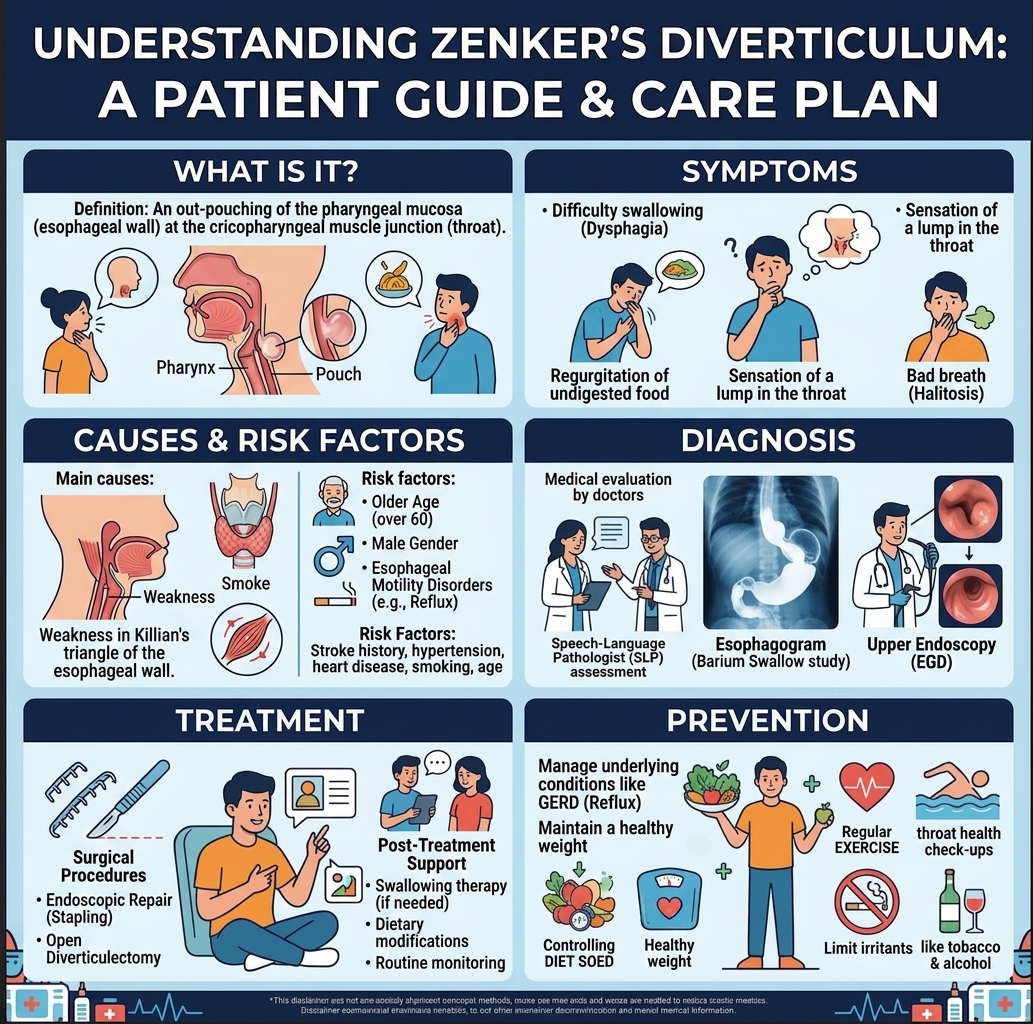
Zenker's diverticulum is a rare condition where a small, abnormal pouch forms at the very top of your esophagus, the muscular tube that carries food from your throat to your stomach. This pouch can trap food, pills, and even thick mucus, leading to swallowing difficulties and other issues. It most commonly affects men over the age of 60, and its exact cause is not fully understood. Treatment often involves surgery.
Understanding the Condition
Zenker's Diverticulum: Understanding the Esophageal Pouch
Understanding the Condition
Common Symptoms
Trouble Swallowing (Dysphagia): Difficulty getting food down, or a sensation that food is stuck in your throat.
Gurgling Noises: Sounds heard from the back of the throat during or after swallowing, as food or liquid moves in and out of the pouch.
Hoarseness: A change in your voice quality, which can be due to irritation or pressure on the vocal cords.
You should consult a gastroenterologist, a doctor specializing in digestive system disorders. In some cases, an Ear, Nose, and Throat (ENT) specialist, also known as an otolaryngologist, may also be involved, especially if symptoms affect your voice or breathing.
Preparations Before Your Visit
Before your appointment, prepare by making a detailed list of all your symptoms, including when they started, what makes them better or worse, and how often they occur. Bring a complete list of all medications, supplements, and vitamins you are currently taking, along with any relevant medical history. Write down any questions you have for your doctor.
Book a doctor visit near me
Manage Acid Reflux (GERD): If you experience symptoms of gastroesophageal reflux disease (GERD), work with your doctor to manage it effectively through lifestyle changes or prescribed medications, as GERD may be a contributing risk factor.
Mindful Eating Practices: Always eat slowly, take small bites, and chew food thoroughly to reduce the strain on your swallowing muscles and prevent food from becoming lodged.
Regular Follow-Up: Attend all scheduled follow-up appointments with your gastroenterologist to monitor your recovery, assess for any recurrence of symptoms, and address any potential complications.
Symptom Awareness: Be vigilant for any return of swallowing difficulties, regurgitation, persistent bad breath, or any new concerning symptoms, and report them promptly to your healthcare provider.
Consultation Guide
Zenker's diverticulum is a rare condition where a small, abnormal pouch forms at the very top of your esophagus, the muscular tube that carries food from your throat to your stomach. This pouch can trap food, pills, and even thick mucus, leading to swallowing difficulties and other issues. It most commonly affects men over the age of 60, and its exact cause is not fully understood. Treatment often involves surgery.
Bad Breath: Unpleasant breath caused by old, trapped food and particles decaying within the pouch.
Coughing or Spitting Up Food (Regurgitation): Undigested food, sometimes from hours earlier, may come back up into your mouth or throat, especially when lying down or bending over.
Feeling of Food Stuck: A persistent sensation of a lump or something lodged in the throat, even after swallowing.
Breathing Food into Lungs (Aspiration): If trapped food or liquid spills out of the pouch and is accidentally inhaled into the airways, it can lead to coughing, choking, or serious lung infections.
Consultation Guide
Which Specialist to Meet
Diagnostic Procedures
Barium Swallow (Esophagram)
This is an X-ray imaging test that allows doctors to see how you swallow and visualize the shape and function of your esophagus. You drink a special liquid called barium, which coats the inside of your esophagus and shows up clearly on X-rays, revealing any pouches, blockages, or other abnormalities.
What to Expect
You will be asked to drink a chalky, flavored liquid (barium) while standing or lying on an X-ray table. A radiologist will take a series of X-ray images as you swallow. You may be asked to hold different positions or take deep breaths. The procedure typically takes 15-30 minutes. You may experience temporary constipation from the barium afterward, and your stool might appear white for a day or two.
Upper Endoscopy (Esophagogastroduodenoscopy - EGD)
An upper endoscopy is a procedure where a thin, flexible tube with a camera and light (endoscope) is gently passed through your mouth, down your esophagus, and into your stomach and the first part of your small intestine. This allows the doctor to visually inspect the lining of these organs. For Zenker's diverticulum, this procedure is often performed with caution after a barium swallow has identified the pouch, or as part of an endoscopic treatment.
What to Expect
Treatment Options
Before the procedure, you will likely receive medication to help you relax (sedation) and a local anesthetic to numb your throat. You will lie on your side, and a mouth guard will be placed to protect your teeth. The endoscope is then gently guided into your esophagus. You may feel some pressure or fullness, but you should not feel pain due to the sedation. The procedure usually lasts 15-30 minutes. Afterward, you'll spend some time recovering from the sedation and will need someone to drive you home.
Long-Term Monitoring and Post-Treatment Care
Prevention & Long-Term Wellbeing
Home Remedies and Lifestyle Adjustments
Dietary Adjustments: Eat smaller, more frequent meals. Take small bites and chew your food very thoroughly before swallowing. (Duration: Ongoing as needed)
Food Choices: Opt for soft, moist foods. Avoid very dry, tough, or sticky foods that are more likely to get trapped. (Duration: Ongoing as needed)
Hydration: Drink plenty of fluids during and between meals to help food pass more easily and keep the esophagus lubricated. (Duration: Ongoing as needed)
Post-Meal Posture: Remain upright for at least one to two hours after eating to help gravity assist food in moving down the esophagus and prevent reflux. (Duration: Ongoing as needed)
Endoscopic Diverticulotomy: This is a minimally invasive procedure performed using an endoscope. The surgeon inserts the endoscope through your mouth and uses specialized instruments to divide the muscle wall (cricopharyngeal muscle) that separates the pouch from the main esophageal tube. This essentially opens the pouch, allowing food to pass directly into the esophagus instead of getting stuck. The pouch itself is not removed. (Duration: Often an outpatient procedure or requires a short hospital stay of 1-2 days. Full recovery, including dietary restrictions gradually easing, typically takes a few weeks.)
Open Surgical Diverticulectomy: This is a more traditional surgical approach, usually reserved for very large pouches or when endoscopic methods are not suitable. An incision is made in the neck to access the esophagus. The pouch is then carefully dissected and removed, and the muscle wall may also be cut. The incision is then closed. (Duration: Requires a hospital stay of several days (typically 3-7 days). Recovery at home can take several weeks, involving dietary changes and restrictions on physical activity during the healing period.)
Prevention
Adhere to Dietary Recommendations: Continue following any specific dietary guidelines provided by your healthcare team, especially regarding food texture and meal timing, to optimize your swallowing function and prevent issues.
Tags & Topics
Notice an error or need an update?
Help us keep medical information accurate. Report incorrect info or suggest an edit.


